Quasi-Direct-Drive Motors: The Backdrivable Joint Revolution in Humanoid Robotics
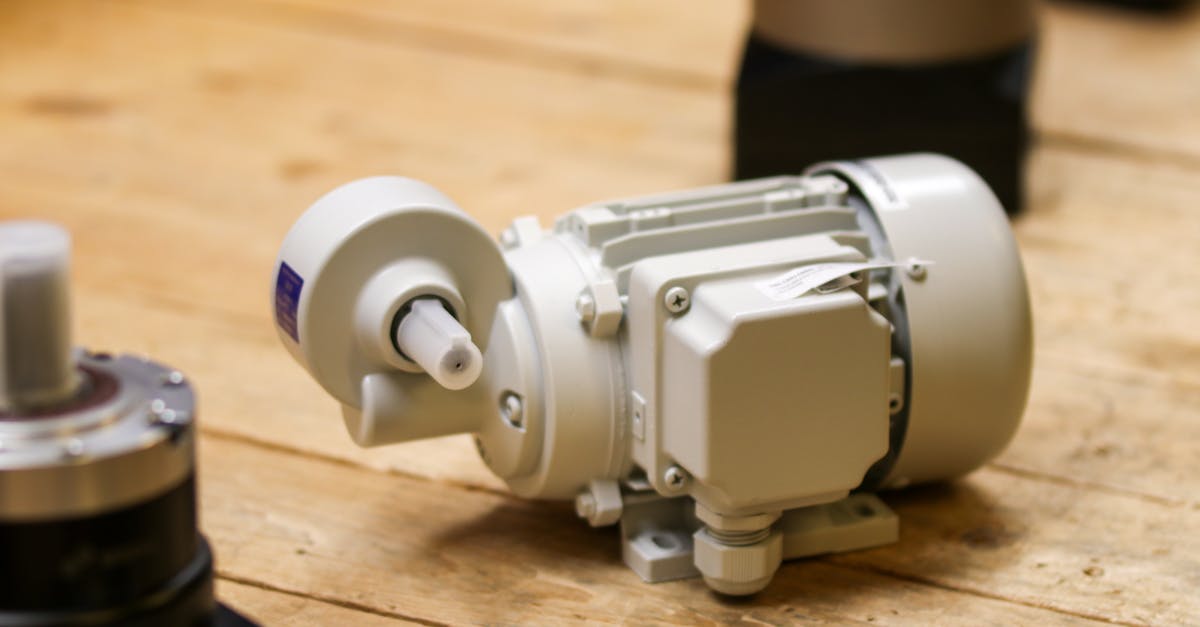
The Engineering Premise: Why QDD?
Quasi-Direct Drive (QDD) represents a deliberate middle ground in electromechanical actuator design. The topology pairs a low-ratio planetary or cycloidal gearbox (typically 5:1 to 10:1) with a high-torque-density permanent magnet synchronous motor and a high-resolution absolute encoder. Unlike traditional high-ratio reductions (50:1 to 100:1) that maximize torque output at the expense of backdrivability, QDD minimizes the reflected inertia mismatch between the motor rotor and the load. This architectural choice directly addresses two persistent constraints in humanoid robotics: compliance control stability and joint impedance tunability.
Traditional geared actuators excel in static torque capacity but suffer from significant cogging, friction hysteresis, and mechanical coupling that limit backdrivability. Pure direct drive motors eliminate gearing entirely, offering near-zero transmission backlash and excellent compliance, but demand impractically large rotor diameters and high current densities to achieve joint-level torque. QDD resolves this trade-off by retaining a compact form factor while preserving enough mechanical compliance to enable force-based control strategies without excessive motor sizing or thermal throttling.
Torque Density vs. Inertia Mismatch
The core metric driving QDD adoption is the inertia ratio, defined as the load inertia reflected to the motor shaft divided by the motor rotor inertia. High-ratio gearboxes reduce this ratio mathematically but amplify friction nonlinearities and require larger motors to overcome transmission losses. QDD maintains an inertia ratio typically below 10:1, allowing standard servo drives to maintain phase margin during rapid impedance transitions. This enables tighter compliance control loops without the instability that often plagues high-ratio systems operating in contact-rich environments.
Manufacturers that have published QDD specification sheets consistently report torque densities in the range of 80 to 120 Nm/kg for joint-class modules. The low-ratio reduction preserves motor cooling surface area and allows direct thermal coupling to the joint housing, which simplifies duty cycle management during continuous torque application. For humanoid applications, this translates to fewer current limiters engaging during dynamic gait transitions.
Backdrivability and Impedance Control
Backdrivability is not a binary property but a function of friction coefficients, gear ratio, and encoder resolution. QDD joints typically achieve backdrivability thresholds below 15% of rated torque, permitting external forces to rotate the joint without stalling the motor or triggering protective braking. This characteristic is essential for safety-critical humanoid architectures where collision tolerance and fall recovery depend on mechanical compliance rather than software overrides.
Impedance control algorithms require accurate torque estimation at the joint. QDD architectures support this through dual-stage encoder feedback: a high-resolution motor-side encoder for velocity/position loops and a joint-torque estimation derived from the known gear ratio and motor current. The reduced transmission backlash allows these estimations to remain within ±2% of actual load torque under static conditions, which is sufficient for most compliant gait controllers.
Hardware Grading: Shipping Units, Pilots, and Announcements
Evaluating QDD implementations requires strict grading against deployed hardware rather than conceptual renders. The following tier system reflects actual shipping status, pilot deployment scale, and public technical disclosure.
Tier 1: Proven in Commercial Shipment
Hardware that has shipped to commercial customers or completed multi-month pilot deployments with published technical breakdowns.
- Unitree G1 and G1 Pro: Utilizes custom QDD-style actuators with integrated torque sensors and low-ratio reductions. Unitree has released open-source hardware documentation and demonstrated continuous torque application during stair climbing and rapid stance transitions. Shipping units are available globally, including India, with documented duty cycles and thermal profiles.
- Figure 02 (Figure AI): Figure's technical disclosures confirm a custom actuator stack optimized for backdrivable joints. The robot has completed pilot deployments in warehouse logistics and manufacturing lines, with Figure publishing joint torque limits, encoder specifications, and control architecture details. Hardware is in active commercial service.
- Tesla Optimus Gen 2/3 Demonstrations: Tesla's actuator evolution references QDD principles in patent filings and public demonstrations. While Tesla does not publish full spec sheets, on-stage demos show continuous torque application during object manipulation and balance recovery, consistent with low-ratio backdrivable architectures. Hardware is in limited pilot deployment at Tesla Gigafactories.
Tier 2: Pilot Deployments and Technical Breakdowns
Hardware in active testing environments with limited commercial distribution or partial technical disclosure.
- Agility Robotics Digit: Uses custom actuators with QDD characteristics. Digit has completed pilot deployments in logistics facilities across North America and Europe. Agility has published joint torque ranges and compliance tuning parameters, confirming backdrivable joint behavior during pallet handling.
- Sanhe/PhantomX and Chinese Servo Adaptations: Several Chinese servo manufacturers have released QDD-class modules tailored for humanoid research. These units are available through distributor networks and have been integrated into university robotics labs. Technical sheets are publicly available, though long-term reliability data remains limited.
Tier 3: Research Platforms and Announcements
Concepts, pre-production prototypes, or vendor announcements without shipped hardware or verified pilot data.
- Kollmorgen QDD Line: Kollmorgen (Elmo Motion Control) markets QDD as a product category. While the motors are manufactured and shipped, their deployment in humanoids remains primarily research-focused. Spec sheets are available, but joint-level integration data is not publicly validated in commercial humanoid systems.
- Academic and Open-Source Joint Modules: Several university groups have published QDD joint designs using off-the-shelf planetary gearboxes and high-torque motors. These platforms are valuable for control research but lack the integrated torque sensing and thermal management required for commercial deployment.
Control Architecture and System Integration
QDD actuators impose specific requirements on motor drives, control loops, and system integration. The reduced gear ratio increases the burden on the drive to manage current ripple and torque ripple, while the backdrivable nature demands robust encoder synchronization.
Encoder Resolution and Compliance Tuning
Compliant control relies on accurate joint angle measurement. QDD joints typically require absolute encoders with resolution exceeding 17 bits to maintain position accuracy within ±0.05 degrees across the full torque range. Incremental encoders introduce drift during power cycling, which is unacceptable for humanoid reset protocols. Manufacturers that publish encoder specifications consistently recommend magnetic absolute encoders for temperature stability and shock resistance.
Compliance tuning involves adjusting the virtual stiffness and damping parameters in the impedance controller. QDD architectures allow stiffness values to be scaled dynamically without destabilizing the control loop, provided the current controller bandwidth exceeds 500 Hz. Lower bandwidth drives exhibit phase lag that can manifest as joint oscillation during contact transitions.
Thermal Management and Duty Cycles
Thermal limits define the practical torque envelope of QDD joints. Unlike high-ratio gearboxes that concentrate heat in the transmission, QDD joints distribute thermal load across the motor housing and joint structure. Manufacturers typically specify continuous torque at 60-70% of peak torque, with duty cycles limited by winding resistance and thermal time constants.
Active cooling is rarely required in commercial QDD joints, as conduction through the joint housing and convection from the outer surface maintain winding temperatures below 85°C under standard gait profiles. Forced air or liquid cooling is reserved for high-frequency torque applications, such as rapid grasping or high-impact landing recovery.
India Availability and Landed Cost Estimates
QDD actuators are not manufactured at scale in India. Procurement relies on imported modules from North American, European, and Chinese suppliers. Availability is mediated through industrial automation distributors, robotics component vendors, and direct import channels.
For engineers and procurement teams evaluating QDD joints for humanoid or collaborative robot projects, the following landed cost estimates apply. These figures are derived from distributor catalogs, import duty structures, and GST applicability, and should be treated as baseline estimates rather than fixed quotes.
- 50 Nm Class Joints: Landed cost approximately ₹18,000–₹24,000 per unit. Available through robotics component distributors and open-source hardware vendors. Suitable for upper-limb and ankle actuators.
- 100 Nm Class Joints: Landed cost approximately ₹28,000–₹36,000 per unit. Commonly used in hip and knee joints. Available through industrial automation channels and direct manufacturer distributors.
- 150 Nm+ Class Joints: Landed cost approximately ₹38,000–₹48,000 per unit. Requires custom integration and thermal validation. Typically sourced through engineering procurement channels or joint development agreements.
Import duties for motor assemblies and gearboxes range from 10% to 15% depending on HS code classification, with 18% GST applicable on the landed value. Lead times for standard QDD modules average 4 to 8 weeks from order placement. Custom torque sensor integration or joint housing modifications extend lead times to 12 to 16 weeks.
For Indian research labs and startups, the most cost-effective procurement path involves purchasing standard QDD modules and integrating custom torque sensors and encoder synchronization in-house. Direct joint-level imports from Chinese manufacturers offer lower unit costs but require validation of thermal duty cycles and compliance control compatibility.
References
- Kollmorgen. Quasi-Direct Drive Motors. https://www.kollmorgen.com/en-us/products/motors/quasi-direct-drive
- Figure AI. Technical Specifications and Joint Actuator Architecture. https://www.figure.ai/
- Unitree Robotics. G1 Open-Source Hardware and Technical Documentation. https://www.unitree.com/g1
- Tesla. Optimus Actuator Development and Patent Disclosures. https://www.tesla.com/ai
- Agility Robotics. Digit Technical Whitepaper and Joint Specifications. https://www.agilityrobotics.com/digit
- IEEE Robotics and Automation Magazine. Backdrivability and Impedance Control in Humanoid Joints. https://ieeexplore.ieee.org
- Indian Customs Tariff and GST Council. HS Code 8501/8504 Import Duty and GST Structure. https://customs.gov.in
✓ Key takeaways
- •Hands-on view of Quasi-Direct-Drive Motors: The Backdrivable Joint Revolution in Humanoid Robotics inside our Quasi-Direct-Drive Motors library.
- •Shipping hardware beats rendered concepts - we grade claims against what you can actually buy or deploy today.
- •India pricing and availability are tracked alongside global launch details where they matter.
Related articles
More in Quasi-Direct-Drive Motors →