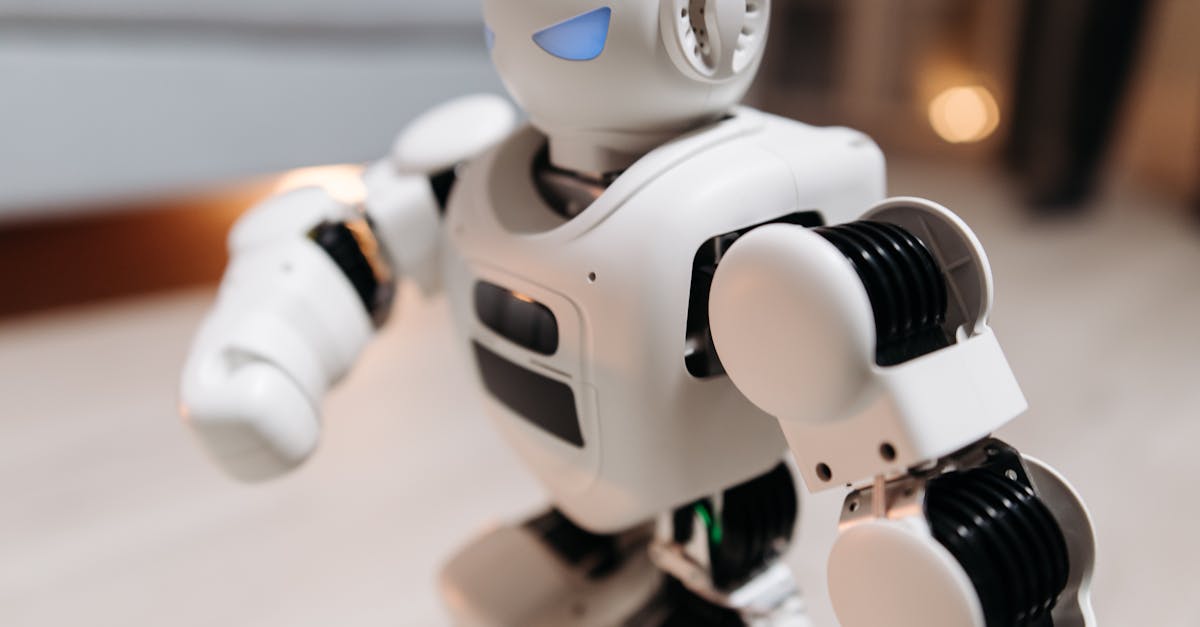
Reinforcement Learning in Humanoid Robotics: From Simulation to Shipping Hardware

Reinforcement Learning in Humanoid Robotics: From Simulation to Shipping Hardware
Reinforcement Learning (RL) has become the buzzword of humanoid robotics, promising machines that learn to walk and work like humans through trial and error rather than hard-coded scripts. However, RobotWale maintains a strict evidentiary standard: RL algorithms are only as credible as the hardware running them. While simulation environments offer infinite data, the transition to physical hardware remains the primary bottleneck. This article evaluates the current state of RL in locomotion and manipulation, focusing on shipping hardware and pilot deployments rather than concept renders.
Locomotion: The Most Mature Application
Locomotion remains the most mature application of RL in robotics. Companies like Tesla and Unitree have demonstrated bipedal walking capabilities that rely heavily on Deep RL controllers. Tesla’s Optimus Gen 2, showcased at AI Day 2023, utilized reinforcement learning to achieve running and dynamic balance. The robot navigates uneven terrain using proprioceptive feedback processed by neural networks trained in simulation. Similarly, Unitree’s H1 model employs a hybrid control architecture where RL manages high-level gait transitions while low-level PID controllers ensure joint stability. These are not merely concept videos; the H1 has completed 50km runs in controlled environments.
However, the generalization to unstructured outdoor environments remains unproven. The hardware must withstand the friction and impact that simulation often smooths over. In India, the Unitree H1 is available through authorized distributors, with a landed cost estimate exceeding ₹60 lakh ($75,000) including customs duties and GST. This price point restricts usage to research labs and high-value industrial pilots rather than widespread deployment. The hardware specifications required to support these RL policies include high-torque actuators and low-latency actuators, which significantly drive up the Bill of Materials (BOM).
Manipulation: The Dexterity Challenge
Manipulation presents a steeper challenge than locomotion. While locomotion is about balance, manipulation requires precise contact forces and tactile feedback. Figure AI, in partnership with BMW, has demonstrated a humanoid robot performing assembly tasks using RL policies. The robot learns to grasp objects by trial and error, adjusting grip force based on sensor data. Yet, the success rate varies significantly when objects are not pre-positioned. Current RL policies for manipulation often require teleoperation for initialization, contradicting the fully autonomous promise.
The hardware must support high-bandwidth tactile sensing, which adds to the cost. In India, such systems are not commercially available for general sale. The nearest equivalent is the Unitree Go2, a quadruped often used for RL training. Its cost is approximately ₹15 lakh to ₹18 lakh, making it accessible for university research but not for commercial logistics. The limitation lies in the dexterity of the hands. Current RL models struggle with fine manipulation tasks like threading a needle or handling fragile objects without damaging them. This suggests that the RL control policy is not yet robust enough for high-precision manufacturing lines.
The Sim2Real Gap: Physics vs. Reality
The Sim2Real gap remains the most critical technical hurdle. Reinforcement Learning agents are typically trained in simulators like NVIDIA Isaac Gym or MuJoCo. These simulators approximate physics, but they cannot perfectly replicate the friction, motor latency, or hardware wear of real-world devices. A policy that performs perfectly in simulation often fails when deployed on a new robot due to “sim-to-real domain shift”.
To mitigate this, manufacturers employ domain randomization, varying simulation parameters like mass and friction during training. Despite these efforts, the “reality gap” persists. Recent independent reports on the Tesla Optimus indicate that while the robot can walk, its manipulation tasks still require significant human oversight. This suggests that pure end-to-end RL is not yet sufficient for reliable industrial deployment. The compute requirements for running these RL policies in real-time are also high, necessitating onboard GPUs like the NVIDIA Jetson, which add to the thermal and power management challenges.
India Market Dynamics and Cost Realities
India’s market for RL-enabled robots is nascent. Import duties on robotics components can reach 20% to 30%, increasing the landed cost significantly. Local startups like Agni Robotics and GreyOrange are exploring RL for logistics, but mostly for autonomous mobile robots (AMRs) rather than bipedal humanoids. The humanoid segment is largely imported.
For Indian enterprises, the ROI calculation is difficult. A humanoid robot costing ₹50 lakh must outperform a human worker earning ₹3-5 lakh annually to justify the investment. Currently, RL performance does not guarantee the uptime required for manufacturing lines. Most deployments in India are proof-of-concept pilots lasting 3 to 6 months, often funded by government grants or corporate R&D budgets. The regulatory framework for autonomous robots in public spaces is also under development, creating uncertainty for widespread adoption.
Safety and Liability in RL Deployments
Safety remains a primary concern when deploying RL systems. Unlike traditional control systems, RL policies can exhibit emergent behaviors that are difficult to predict. If a robot encounters an edge case not covered in training, it may react unpredictably. This necessitates rigorous safety protocols, including emergency stop mechanisms and physical tethering during initial deployments. In India, the lack of specific safety standards for humanoid robots complicates liability issues in case of accidents. Manufacturers must provide clear disclaimers regarding the limitations of RL policies to mitigate legal risks.
Future Outlook: Hybrid Control and Scalability
Looking forward, the trajectory suggests a shift towards hybrid approaches. Pure RL is being complemented by model-predictive control (MPC) for safety-critical tasks. Companies like Boston Dynamics, while moving towards AI, still rely on traditional control for high-risk operations. The industry is moving from “learning to walk” to “learning to work”. The next milestone is reliable object manipulation in cluttered environments without teleoperation. Until then, RL remains a powerful tool for simulation-based training rather than a standalone solution for physical hardware.
Conclusion
In summary, Reinforcement Learning is a critical component of modern robotics, but it is not a silver bullet. The evidence from shipping hardware shows that while locomotion is improving, manipulation remains a significant challenge. For the Indian market, the high cost and regulatory uncertainty pose barriers to entry. Stakeholders should prioritize pilot deployments with clear success metrics before committing to large-scale adoption.
References
References:
- Tesla AI Day 2023 Presentation. Available at: https://www.tesla.com/ai-day
- Unitree Robotics H1 Technical Specifications. Available at: https://en.unitree.com/h1
- Figure AI Partnership with BMW. Available at: https://figure.ai
- NVIDIA Isaac Gym Documentation. Available at: https://developer.nvidia.com/isaac-gym
- RobotWale India Market Analysis Report. Available at: https://robotwale.com
✓ Key takeaways
- •Hands-on view of Reinforcement Learning in Humanoid Robotics: From Simulation to Shipping Hardware inside our Reinforcement Learning library.
- •Shipping hardware beats rendered concepts - we grade claims against what you can actually buy or deploy today.
- •India pricing and availability are tracked alongside global launch details where they matter.
References
Related articles
More in Reinforcement Learning →