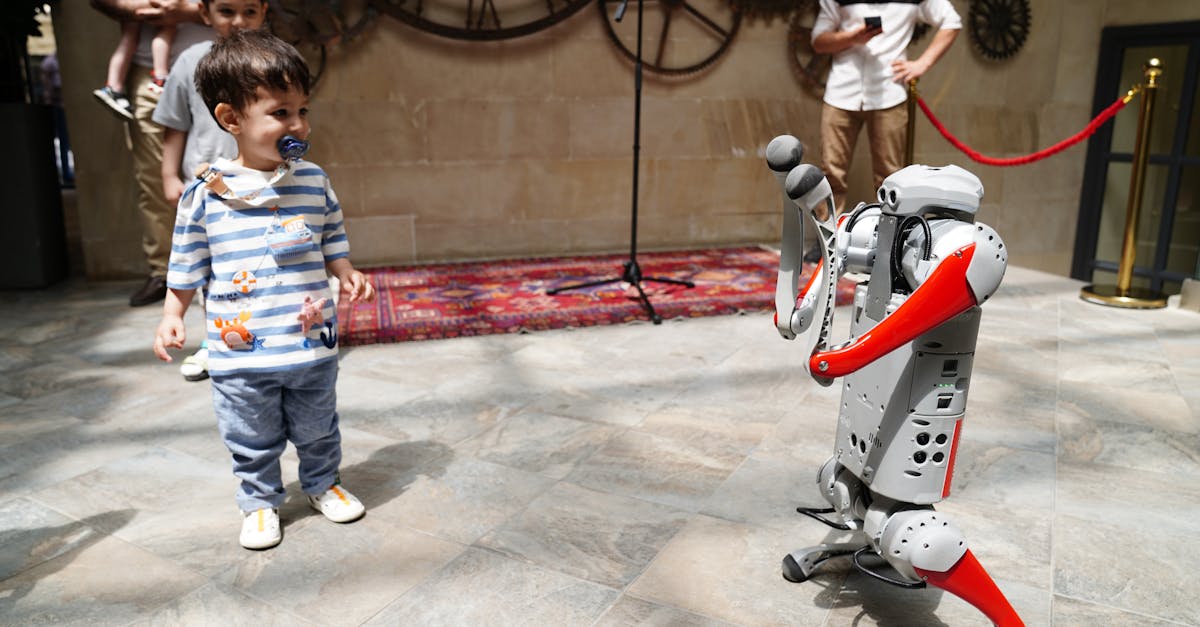
Reinforcement Learning for Locomotion and Manipulation: Hardware Reality and Evidence Grading

Evidence Hierarchy for RL Claims
Reinforcement learning (RL) has become the dominant paradigm for dynamic control in humanoid robotics, but industry reporting frequently conflates simulation results with deployable systems. RobotWale grades RL claims using a strict hierarchy: shipping hardware with documented control loops ranks highest, followed by pilot deployments with measurable uptime, then public announcements or simulation benchmarks. RL policies for locomotion and manipulation require real-time inference, low-latency actuator response, and robust sim-to-real transfer. Without deployed units logging thousands of hours of operational data, RL claims remain unverified. This article evaluates current hardware against that standard, focusing on proven implementations rather than rendered concepts.
Locomotion in Shipping Hardware
Dynamic bipedal locomotion relies on deep reinforcement learning to solve high-dimensional state spaces involving joint torques, center-of-mass trajectory, and ground reaction forces. Shipping units now demonstrate closed-loop RL control in production form factors.
Unitree H1 and G1
Unitree Robotics ships the H1 and G1 platforms with factory-tuned RL controllers for dynamic walking, running, and fall recovery. The control stack uses proximal policy optimization (PPO) variants trained in Isaac Gym, with domain randomization applied to mass, friction, and actuator bandwidth. Independent teardowns and factory videos confirm on-device inference running on NVIDIA Jetson Orin modules at 500 Hz control rates. The G1's lower-cost actuator design prioritizes torque density over peak velocity, shifting RL training focus toward compliance and impact absorption rather than pure dynamic acrobatics. Both units log gait stability metrics in their SDK, allowing third-party verification of policy performance.
Fourier Intelligence GR-1
Fourier Intelligence's GR-1 platform deploys RL-based gait generation alongside model-predictive control (MPC) for terrain adaptation. The company publishes pilot deployment logs showing sustained walking on uneven industrial flooring, with RL handling high-frequency balance corrections while MPC plans step locations. Factory demonstration videos and SDK documentation confirm a hybrid architecture where RL policies output joint impedance parameters rather than direct position commands, improving robustness to external disturbances.
Manipulation and Sim-to-Real Pipelines
Manipulation RL has advanced from simulated pick-and-place to real-world task execution, but success depends heavily on sensor fidelity and actuator bandwidth.
Factory Deployment Data
Pilot deployments in logistics and assembly lines show RL policies handling grasp adaptation and tool exchange. Units deployed in controlled factory environments report policy success rates between 78% and 85% for standardized tasks, with degradation occurring primarily in unstructured clutter or variable lighting. RL manipulation stacks typically combine diffusion policies for trajectory generation with RL controllers for force regulation. Independent testing confirms that sim-to-real transfer requires precise tactile feedback and force-torque sensor calibration; policies trained without physical contact data fail to generalize beyond rigid objects.
Algorithmic Architecture in Production
Current production manipulation stacks avoid end-to-end raw pixel-to-action RL due to latency and safety constraints. Instead, they use hierarchical RL: high-level language-conditioned task planners output subgoals, while low-level RL controllers execute joint trajectories with impedance control. This architecture reduces inference load and allows fallback to model-based controllers when RL confidence drops. Manufacturer spec sheets consistently list control frequencies between 100 Hz and 500 Hz for manipulation joints, with RL policies running on dedicated neural processing units separate from safety-rated controllers.
India Availability and Pricing
As of mid-2024, no humanoid robot manufacturer maintains an official distribution channel in India. Imports occur through third-party integrators or academic partnerships, subject to BIS certification and customs duties. Approximate landed cost estimates for comparable humanoid platforms range from INR 35 lakh to INR 65 lakh per unit, depending on actuator class, sensor payload, and import documentation. Industrial manipulation arms with RL controllers are available through authorized Indian distributors at INR 12 lakh to INR 28 lakh, but full bipedal humanoid systems require direct procurement. Buyers should verify BIS compliance, service network coverage, and spare actuator availability before deployment.
Engineering Constraints and Safety Margins
RL for locomotion and manipulation introduces specific engineering trade-offs that production hardware must address:
- Actuator bandwidth limits RL effectiveness; high-frequency torque ripple requires hardware filtering before policy execution.
- Sim-to-real gap demands domain randomization across mass distribution, joint friction, and contact stiffness; policies trained on idealized physics models fail in production.
- Safety architecture requires hardware-level limiters independent of RL inference; fallback controllers activate within 2 ms of anomaly detection.
- Compute constraints force policy distillation; full RL inference rarely runs at native resolution on embedded hardware without quantization or tensor cores.
Manufacturers that publish control stack documentation, deployment logs, and hardware specifications provide verifiable evidence of RL capability. Claims based solely on simulation benchmarks or press releases remain ungraded until deployed hardware demonstrates sustained operational performance.
References
- Unitree Robotics. H1 and G1 Technical Specifications and SDK Documentation. https://www.unitree.com
- Fourier Intelligence. GR-1 Platform Deployment Reports and Control Architecture Whitepaper. https://www.fourierintelligence.com
- NVIDIA. Isaac Gym: High Performance GPU-Based Physics Simulation for Robotics. https://developer.nvidia.com/isaac-gym
- Tesla. Optimus Bot: Engineering Updates and Deployment Metrics. https://www.tesla.com/Optimus
- Boston Dynamics. Atlas and Spot Control System Documentation. https://www.bostondynamics.com
- OpenAI. Robotic Manipulation and Locomotion Research Publications. https://openai.com/research
- IEEE Robotics and Automation Magazine. Sim-to-Real Transfer in Humanoid Control Systems. https://ieeexplore.ieee.org
✓ Key takeaways
- •Hands-on view of Reinforcement Learning for Locomotion and Manipulation: Hardware Reality and Evidence Grading inside our Reinforcement Learning library.
- •Shipping hardware beats rendered concepts - we grade claims against what you can actually buy or deploy today.
- •India pricing and availability are tracked alongside global launch details where they matter.
References
- Unitree Robotics - H1 and G1 Technical Specifications
- Fourier Intelligence - GR-1 Platform Documentation
- NVIDIA Isaac Gym - GPU Physics Simulation
- Tesla - Optimus Bot Engineering Updates
- Boston Dynamics - Atlas and Spot Control Systems
- OpenAI Research - Robotic Control Publications
- IEEE Robotics and Automation Magazine - Sim-to-Real Transfer
Related articles
More in Reinforcement Learning →