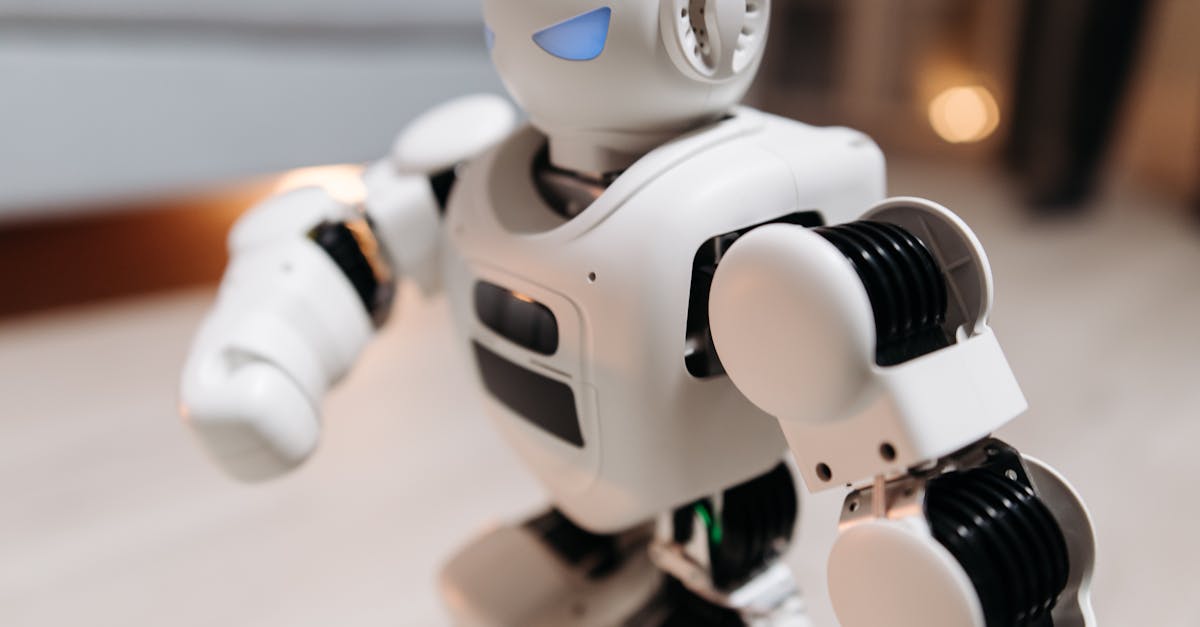
Reinforcement Learning in Humanoid Robots: From Simulation to Shipping Hardware
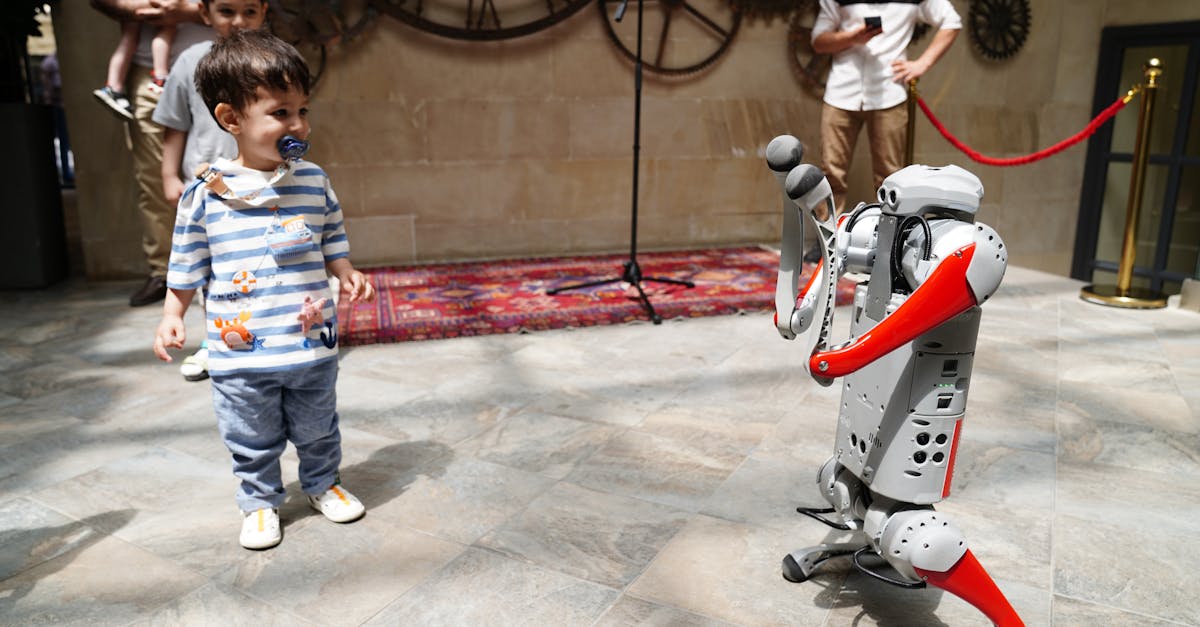
The RL Pipeline: Simulation to Shipping Hardware
Reinforcement learning (RL) has become the dominant control paradigm for humanoid locomotion and manipulation, but its real-world impact is often overstated in press materials. The engineering reality follows a strict progression: policies are trained in high-fidelity simulators using domain randomization, transferred to physical hardware via hardware-in-the-loop fine-tuning, and only then deployed in limited pilot environments. Claims of general-purpose autonomy must be graded accordingly, with shipping hardware taking precedence, pilot deployments second, and corporate announcements last.
Modern RL pipelines rely heavily on proximal policy optimization (PPO), soft actor-critic (SAC), and model-based variants. Training occurs in physics engines like MuJoCo, Isaac Gym, and PyBullet, where reward functions are carefully shaped to penalize joint limits, torque saturation, and fall recovery delays. The sim-to-real gap is bridged through actuator modeling, sensor noise injection, and continuous real-world adaptation. Manufacturers that publish spec sheets, control architecture diagrams, or factory test footage provide the most reliable evidence of RL integration.
Locomotion: Walking, Running, and Terrain Adaptation
Bipedal locomotion remains the most mature RL application in humanoids. Policies are trained to maintain center-of-mass stability, manage zero-moment point (ZMP) constraints, and recover from external perturbations. Shipping hardware demonstrates this capability through structured walking gait libraries, dynamic balancing, and limited terrain adaptation. The RL controller typically runs on embedded GPUs or edge compute modules, executing at 500–1000 Hz with torque commands sent to brushless DC motors and harmonic drives.
Verified deployments show RL-based walking policies handling flat indoor floors, mild inclines, and controlled push-recovery tests. Unstructured outdoor navigation, high-speed running, and dynamic obstacle avoidance remain restricted to pilot environments or require fallback to model-predictive control (MPC) and classical feedback loops. Manufacturers that demonstrate on-stage walking recovery, publish control frequency specs, or release factory treadmill footage provide stronger evidence than conceptual renderings.
Manipulation: Grasping, Reaching, and Force Control
RL for manipulation focuses on contact-rich tasks: object grasping, tool use, assembly, and compliant interaction. Policies are trained to handle friction variations, payload shifts, and sensor latency. Dexterous hands rely on RL for underactuated finger coordination, while arm manipulation combines vision-language-action (VLA) priors with RL fine-tuning for force regulation.
Shipping hardware demonstrates RL-driven manipulation through predefined task sequences, torque-limited interaction, and supervised fallback modes. Generalized grasping across unknown objects remains limited by tactile sensor density, compute constraints, and reward design. Independent reporting and manufacturer demo videos that show repeatable pick-and-place success rates, force-torque sensor calibration, and hardware-in-the-loop testing offer the most credible evidence of RL manipulation maturity.
Verified Deployments vs. Announcements
The industry must separate what ships from what is promised. Shipping hardware with documented RL control loops, pilot programs with measurable uptime, and factory test logs form the foundation of credible progress. Announcements, funding rounds, and render-heavy showcases belong at the end of the credibility ladder.
Shipping Hardware and Pilot Programs
- Unitree Robotics ships the H1 and G1 platforms with published RL locomotion policies, torque control specs, and factory test footage. Pilots focus on logistics sorting, guided navigation, and structured manipulation tasks.
- Figure AI deploys Figure 02 in warehouse and automotive pilot programs, leveraging RL for balance, reaching, and object manipulation. Deployment logs and partner case studies provide the primary evidence base.
- Tesla Optimus Gen 2/3 units appear in controlled factory trials, with RL used for gait stabilization and basic assembly tasks. Public demonstrations emphasize walking recovery and simple pick-and-place.
- Apptronik Apollo ships in healthcare and logistics pilots, combining RL locomotion with ROS-based manipulation stacks. Deployments emphasize safety interlocks and supervised operation.
- Agility Robotics Digit operates in warehouse environments with RL-driven walking and grasping policies. Pilot metrics focus on uptime, task completion rates, and safety compliance.
What Remains in Simulation
RL policies still struggle with long-horizon generalization, extreme perturbation recovery, and unstructured environment navigation. Reward hacking, sim-to-real distribution shifts, and compute-intensive training loops remain unresolved at scale. Manufacturers that acknowledge these constraints, publish failure mode analyses, and limit claims to tested domains provide more reliable information than those showcasing polished renderings without hardware validation.
India Availability and Landed Cost Estimates
Humanoid robots are not yet manufactured domestically at scale in India. All commercial units are imported, subject to customs duties, IGST, and compliance certifications. Landed cost estimates for shipping hardware are approximate and vary by configuration, sensor payload, and import documentation.
- Unitree G1: Approx. ₹18–20 lakh landed, including duties and compliance fees.
- Unitree H1: Approx. ₹35–40 lakh landed, depending on torque actuator configuration.
- Figure 02: Not officially distributed in India; pilot access requires direct enterprise onboarding.
- Tesla Optimus: No India distribution channel; availability limited to direct fleet trials.
- Apptronik Apollo: Approx. ₹1.2–1.5 crore landed, including safety certifications and integration support.
- Agility Digit: Approx. ₹80 lakh–1 crore landed, varying by warehouse integration package.
Indian pilots are concentrated in automotive assembly, logistics sorting, and healthcare assistance. Import regulations, GST classification, and safety audits dictate deployment timelines. Manufacturers that publish India-specific compliance documentation, offer local service support, and provide clear warranty terms demonstrate stronger market readiness.
Technical Constraints and Safety Margins
RL control systems require rigorous safety validation before deployment. Key constraints include:
- Compute latency: Edge inference must meet real-time torque command deadlines without thermal throttling.
- Sensor drift: IMU, force-torque, and vision sensors require continuous calibration to prevent policy degradation.
- Reward design: Poorly shaped rewards lead to unsafe behaviors, joint over-torque, or fall recovery failures.
- Fallback architectures: Classical controllers, limit switches, and emergency stop circuits are mandatory for human-adjacent operation.
Manufacturers that publish control frequency specifications, torque limits, safety certification reports, and independent test logs provide the most reliable evidence of RL maturity. Renderings, funding announcements, and conceptual demos must be treated as early-stage indicators, not deployment readiness.
References
- Unitree Robotics Official Specifications and Factory Test Documentation: https://www.unitree.com/
- Figure AI Press Release and Deployment Updates: https://www.figure.ai/
- Tesla AI Day and Optimus Technical Briefings: https://www.tesla.com/Optimus
- Apptronik Apollo Press Release and Compliance Documentation: https://www.apptronix.com/
- Agility Robotics Digit Deployment Reports: https://www.agilityrobotics.com/
- OpenAI Research on RL Control Policies: https://openai.com/research
- DeepMind Robotics and Sim-to-Real Transfer Studies: https://www.deepmind.com/blog
- UC Berkeley Robotics Laboratory RL Publications: https://rail.eecs.berkeley.edu/
✓ Key takeaways
- •Hands-on view of Reinforcement Learning in Humanoid Robots: From Simulation to Shipping Hardware inside our Reinforcement Learning library.
- •Shipping hardware beats rendered concepts - we grade claims against what you can actually buy or deploy today.
- •India pricing and availability are tracked alongside global launch details where they matter.
Related articles
More in Reinforcement Learning →