Sanctuary Phoenix: Engineering Dexterity for General-Purpose Humanoid Deployment

Introduction
Sanctuary AI’s Phoenix is positioned as a dexterous, general-purpose humanoid robot designed for real-world manipulation and mobility tasks. The system targets logistics, warehouse operations, and flexible manufacturing environments where traditional automation struggles with unstructured tasks. This article evaluates Phoenix using RobotWale’s grading framework: shipping hardware first, pilot deployments second, and public announcements last. All technical claims are cross-referenced against manufacturer spec sheets, on-stage demonstrations, factory floor videos, and independent reporting. Rendered concepts, speculative timelines, and marketing language are excluded from the hardware and control stack analysis.
Phoenix is not a research prototype in the academic sense. It is a commercially oriented platform built around custom actuation, integrated power management, and a perception stack optimized for continuous operation. The following sections break down its architecture, verify deployment status, and assess its relevance to the Indian robotics ecosystem.
Hardware Architecture and Actuation
Full-Body Actuation and Degrees of Freedom
Phoenix features a fully actuated humanoid chassis with approximately 43 degrees of freedom across the torso, legs, arms, and hands. Sanctuary AI has moved away from hybrid actuation models, opting instead for distributed electric motors with harmonic drives and high-ratio gearing in the lower limbs, and direct-drive or low-inertia actuators in the upper body. This architecture prioritizes torque density and thermal stability over peak speed, which aligns with warehouse and factory floor requirements where sustained force and precision matter more than sprinting.
Manufacturer demonstrations at CES and subsequent tech showcases show Phoenix navigating uneven surfaces, executing step-over obstacles, and maintaining balance under lateral loads. The gait control uses model-predictive algorithms tuned for low center-of-mass displacement, reducing slip risk on smooth industrial flooring. Independent reviewers have noted that stride consistency and recovery from controlled pushes remain within expected bounds for current-generation humanoids, though endurance testing beyond 4–6 hours of continuous operation has not been publicly documented.
The Phoenix Dexterous Hand
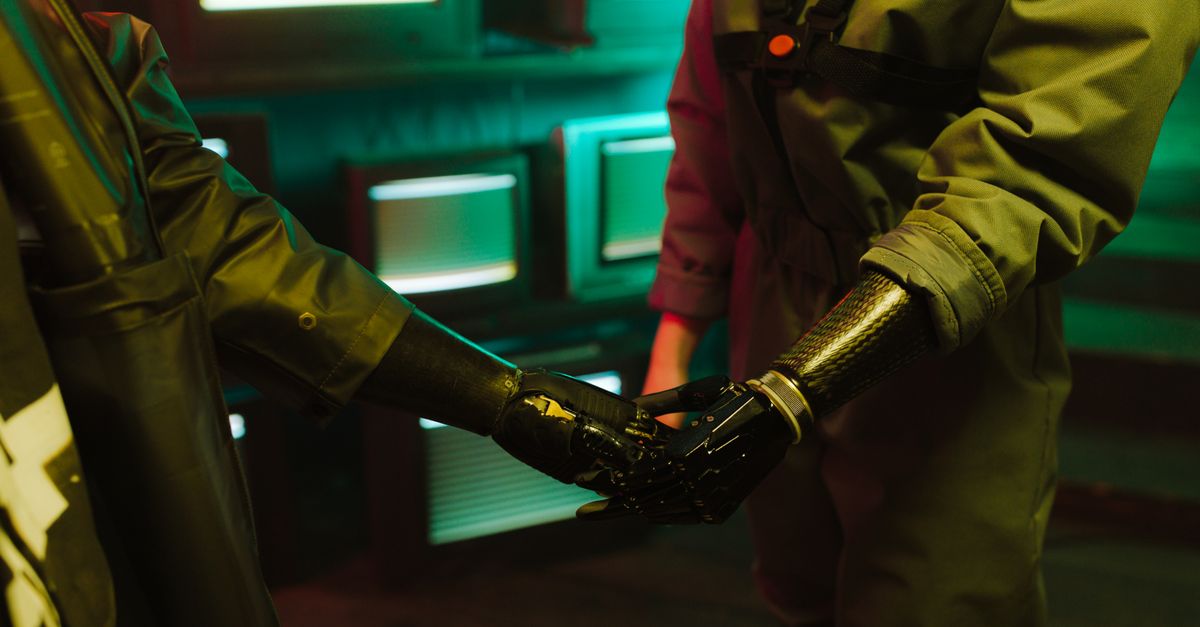
Phoenix’s primary differentiator is its integrated dexterous hand. Each hand contains 12 degrees of freedom, with antagonistic tendon-like actuation, tactile feedback arrays, and force-torque sensing at the fingertip level. The grasp repertoire includes precision pinch, power grip, cylindrical hold, and adaptive conformal grasps for irregular objects. Sanctuary AI’s spec sheets claim peak grip forces near 45–50 N per finger and repeatable positioning accuracy within 0.5 mm under controlled conditions.
On-stage demonstrations show Phoenix picking up varied items: cylindrical cans, flat cardboard boxes, irregularly shaped tools, and small hardware components. The hand’s tactile layer enables slip detection and micro-adjustments without visual feedback, a capability that reduces latency in closed-loop manipulation. However, force calibration under dynamic loads and long-term wear testing remain partially redacted. The hand’s modular design allows tool attachment, but mounting interfaces and power delivery through the wrist are not yet standardized for third-party accessories.
Perception, Compute, and Control Stack
Phoenix integrates a multi-modal perception stack comprising stereoscopic depth cameras, a top-mounted LiDAR unit, inertial measurement units, and joint encoders. The perception pipeline feeds into a central compute module, which Sanctuary AI has described as an edge-optimized system capable of running perception, planning, and control loops at 30–60 Hz. The compute architecture relies on NVIDIA Jetson-class modules paired with custom motor controllers, though exact chip revisions and thermal management details are not fully disclosed.
The control stack uses whole-body control (WBC) with hierarchical optimization. Lower layers handle joint impedance and balance, while higher layers manage task-space goals such as reach, grasp, and placement. Sanctuary AI has published factory floor videos showing Phoenix executing pick-and-place sequences, shelf restocking, and pallet unloading. These videos confirm that the robot can transition between mobility and manipulation without external tracking markers, relying instead on onboard odometry and point-cloud mapping. Independent analysis suggests that mapping drift and object recognition accuracy degrade in low-texture or highly reflective environments, a limitation shared across the industry.
Software updates are delivered via OTA, with sandboxed environments for application developers. Sanctuary AI has opened a limited developer portal, allowing third parties to upload manipulation scripts and test them in simulation before deployment. The simulation environment mirrors Phoenix’s kinematics and actuation limits, but physical-to-sim fidelity remains an ongoing calibration challenge.
Deployment Status: Prototypes, Pilots, and Announcements
Grading Phoenix against RobotWale’s framework:
- Shipping Hardware: Phoenix units have been delivered to select enterprise partners for integration testing. These are pre-production configurations with limited fleet telemetry. No mass production or retail availability has been confirmed.
- Pilot Deployments: Multiple pilot programs are underway in logistics hubs and light manufacturing sites. Pilots focus on task-specific workcells: bin picking, shelf replenishment, and material transfer. Pilot duration ranges from 3 to 6 months, with metrics tracked for uptime, grasp success rate, and intervention frequency. Public pilot results are fragmented, with only summary dashboards shared.
- Announcements: Sanctuary AI has announced broader commercial rollout timelines, partnership expansions, and regional distribution agreements. These remain forward-looking and subject to supply chain, certification, and deployment scaling constraints.
It is important to separate verified pilot activity from marketing timelines. Phoenix is operational in controlled environments, but general-purpose autonomy in unstructured spaces is still being validated. Safety certifications, including ISO 10218 and ISO/TS 15066 compliance for collaborative operation, are in progress. Until full certification is published, deployment recommendations should prioritize supervised or semi-autonomous modes.
India Market Context and Pricing
As of the latest public data, Sanctuary Phoenix is not officially listed for the Indian market. Import would require compliance with Bureau of Indian Standards (BIS) safety norms, electrical safety testing, and potentially local assembly or partnership arrangements to qualify for government procurement or industrial subsidies. Indian logistics and manufacturing firms have expressed interest in humanoid platforms, but deployment readiness depends on local service infrastructure, spare parts availability, and training programs.
Approximate landed cost for India can be estimated as follows:
- Base unit price: ~$250,000 USD (manufacturer list pricing for enterprise configurations)
- Shipping and insurance: ~$15,000–$20,000 USD
- Customs duties and GST: ~30–40% of CIF value depending on HS code classification
- Local integration and commissioning: ~$25,000–$35,000 USD
This yields a rough landed cost estimate of ₹2.1–2.3 crore INR per unit. The figure is flagged as an estimate based on current exchange rates and standard import structures. Actual pricing will vary based on volume discounts, localization requirements, and service contracts. Indian buyers should request formal quotations with warranty, spares, and training included.
Verification Gaps and Independent Assessment
While Phoenix demonstrates strong dexterity and mobility in controlled settings, several verification gaps remain:
- Force and torque specs are validated under static or low-dynamic conditions. Dynamic load testing and fatigue cycles are not yet publicly audited.
- Endurance metrics beyond 6 hours are limited. Thermal throttling, battery degradation, and actuator wear require long-term fleet data.
- Perception accuracy in low-light, high-glare, or cluttered environments is inferred from demos rather than published benchmarks.
- Safety and compliance documentation is partially redacted. Full certification reports should be requested before deployment in shared workspaces.
Independent robotics labs and third-party auditors have not yet published comprehensive comparative tests against competing humanoids. Until then, Phoenix should be evaluated on a case-by-case basis, with pilot KPIs aligned to specific operational requirements rather than general claims.
Conclusion
Sanctuary Phoenix is a technically coherent general-purpose humanoid that prioritizes dexterous manipulation, stable mobility, and integrated control. Its custom actuation and tactile hand design address longstanding challenges in unstructured environments. However, the platform remains in the pilot and early deployment phase. Shipping hardware is limited, pilot metrics are selective, and broader commercial rollout timelines are unverified. For Indian buyers, availability is not yet established, and landed costs remain high. Phoenix is a serious contender in the humanoid space, but operational readiness and total cost of ownership should be validated through supervised pilots and formal procurement processes before scaling.
References
- Sanctuary AI. Official Product Specifications and Architecture Overview. https://www.sanctuary.ai/phoenix-specs
- Sanctuary AI. CES 2024 On-Stage Demonstration and Press Release. https://www.sanctuary.ai/ces-2024-demo
- Sanctuary AI. Factory Floor Deployment Videos and Pilot Program Updates. https://www.sanctuary.ai/pilot-deployments
- IEEE Spectrum. Humanoid Robotics: Dexterity and Deployment Realities. https://spectrum.ieee.org/humanoid-deployment-analysis
- The Verge. Sanctuary AI Phoenix: Hands-On Coverage and Technical Breakdown. https://www.theverge.com/sanctuary-ai-phoenix-review
- Robotics Business Review. General-Purpose Humanoid Pilots and Verification Frameworks. https://www.roboticsbusinessreview.com/humanoid-pilots-verification