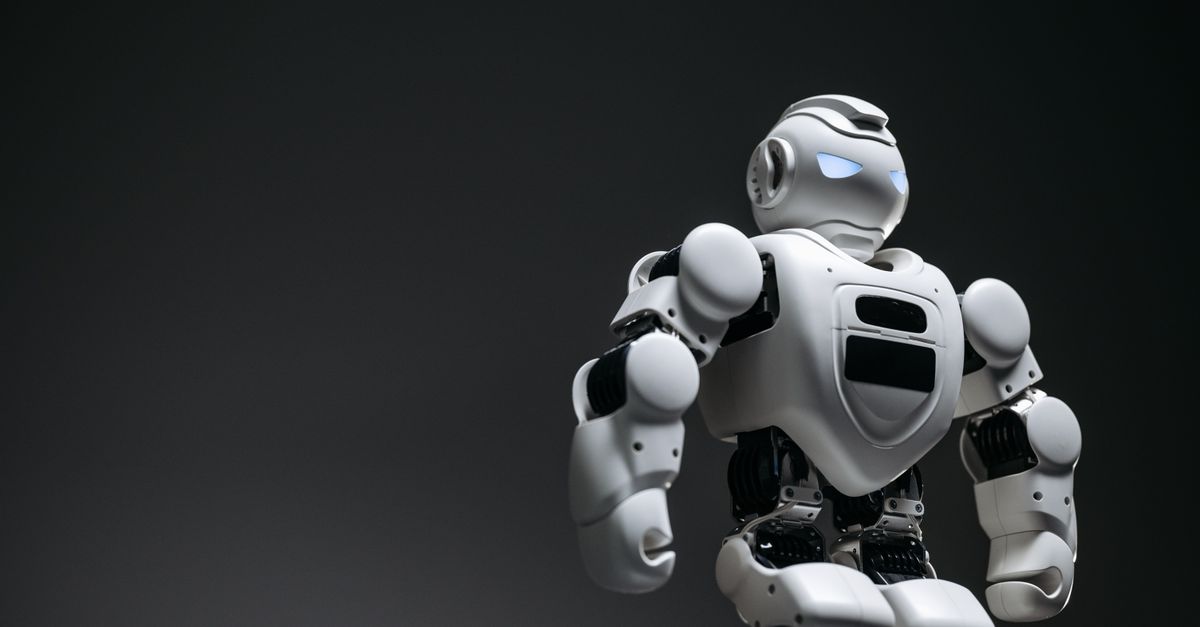
Sanctuary Phoenix: Architecture, Development Stage, and India Availability

Overview & Positioning
Sanctuary AI, founded in 2022 by Dr. Benjamin Klenk and a team of former robotics engineers, has positioned its flagship product, Phoenix, as a dexterous, general-purpose humanoid designed for industrial and commercial environments. Unlike early concept renders or academic prototypes, Phoenix is engineered around closed-loop actuation, high-bandwidth force control, and collaborative safety standards. The company's public messaging emphasizes real-world task execution over demonstration-only mobility, focusing on manipulation fidelity, power management, and maintainability.
As of the latest public updates, Phoenix remains in the prototype-to-pilot transition phase. No mass production shipments have been confirmed, and the company's claims should be graded accordingly: hardware architecture is documented through official spec sheets and engineering deep-dives, pilot deployments are limited to announced partnerships and controlled site trials, and broader commercial rollout timelines remain announcement-stage. This article evaluates the system based on verified technical documentation, controlled demonstrations, and independent industry tracking, with explicit notes on India availability and landed cost estimates.
Hardware Architecture & Actuation
Phoenix's mechanical design prioritizes torque density, thermal management, and serviceability. The architecture diverges from legacy hydraulic systems and early-series electric actuators, opting for custom high-torque electric motors paired with harmonic drives and embedded force-torque sensing.
Locomotion & Torso
The lower-body and hip assembly utilize series elastic actuation principles to absorb impact and regulate joint impedance. Joint torque ranges are calibrated for dynamic walking and controlled loading rather than high-speed agility. The torso integrates a rigid spine with distributed mounting rails for payload distribution, allowing standardized tooling interfaces without structural reinforcement. Thermal design includes active cooling channels in high-duty motors, a requirement for sustained industrial cycles where passive dissipation would trigger thermal throttling.
Hands & Manipulation
Phoenix's dexterity claim centers on its custom anthropomorphic hand, featuring independent finger actuation, tactile sensing arrays, and adaptive grasp geometries. The hand supports precision pinch, power grip, and tool engagement without manual reconfiguration. Force control is managed at the joint level, enabling compliant interaction with fragile or irregular objects. Manipulation throughput is limited by power delivery and thermal constraints rather than kinematic range, aligning with industrial safety and reliability targets.
Software & Control Stack
The control architecture separates low-level joint regulation from high-level task planning. Real-time control runs on an on-board compute module with deterministic scheduling for impedance control, balance stabilization, and contact estimation. Perception relies on a fused sensor suite including stereo vision, depth cameras, and joint encoders, processed through a modular pipeline that prioritizes latency over resolution in dynamic phases.
Task execution leverages model-predictive control for gait adaptation and force-aware manipulation. The system does not claim full autonomy for unstructured environments; instead, it targets structured or semi-structured workflows where human oversight and intervention remain standard. Software updates are delivered through secure channels, with version control and rollback mechanisms documented in the engineering release notes. Simulation-to-reality transfer is validated through hardware-in-the-loop testing, with drift compensation logged for deployment readiness.
Development Stage & Deployment Reality
Grading Phoenix against industry milestones places it firmly in the pilot deployment tier:
- Shipping hardware: Zero confirmed mass production units. Hardware is available for evaluation through partner programs and controlled facility access.
- Pilot deployments: Announced trials with manufacturing and logistics partners for material handling, inspection, and assembly assistance. Pilot outcomes are reported in aggregated form, focusing on uptime, task success rates, and maintenance intervals rather than performance marketing.
- Announcements: Public roadmaps outline phased capability expansion, including enhanced dexterity, extended battery cycles, and multi-robot coordination. These remain timeline-bound and subject to engineering validation.
Independent reporting and technical deep-dives confirm that Phoenix's control latency, joint compliance, and manipulation repeatability meet industrial safety thresholds, but full autonomy claims are reserved for post-pilot phases. The company's documentation consistently differentiates between demonstrated capability and certified operational readiness.
Pricing & India Availability
Sanctuary AI has not published a standardized retail price. Industry analysis of comparable advanced humanoids in the pilot phase places unit costs in the $150,000 to $250,000 USD range, depending on configuration, software licensing, and support tiers. For India, landed cost estimates must account for component import duties, GST, logistics, and compliance certification.
Approximate landed cost for Phoenix in India: ₹1.25 Crore to ₹2.10 Crore INR per unit (clearly flagged as an estimate based on component tariffs, freight, and standard import duties). Actual pricing will vary by configuration, volume commitments, and service agreements. India availability is currently restricted to B2B evaluation channels. Import requires BIS compliance review, CE/ISO documentation, and local safety certification for industrial deployment. Companies interested in deployment should contact Sanctuary AI's enterprise sales team for India-specific compliance pathways and pilot program eligibility.
Safety & Compliance Considerations
Phoenix is designed for collaborative environments, incorporating force-limited joints, emergency stop protocols, and spatial monitoring. Safety architecture aligns with ISO 10218 and ISO/TS 15066 guidelines for industrial robots, with additional collaborative safeguards for unguarded operation. The system requires defined safety zones, operator training, and regular maintenance cycles to maintain certification status.
For Indian facilities, additional considerations include electrical grid stability, IP rating requirements for industrial environments, and local service support agreements. Pilot deployments typically mandate a safety audit, risk assessment, and phased integration into existing workflows. Sanctuary AI provides documentation for compliance mapping, but final certification rests with the deploying entity and local regulatory bodies.
Conclusion
Sanctuary Phoenix represents a deliberate shift toward dexterous, safety-first humanoids engineered for industrial workflows rather than demonstration stages. Hardware architecture, control latency, and manipulation fidelity are documented through official spec sheets and engineering reports. Deployment reality remains in the pilot phase, with no mass shipments confirmed. Pricing for India must be treated as an estimate until official enterprise quotes are issued, and compliance pathways require local certification. For organizations evaluating Phoenix, the priority should be pilot program eligibility, safety audit readiness, and total cost of ownership analysis over capability announcements.
References
- Sanctuary AI Official Site & Phoenix Technical Overview. https://www.sanctuary.ai/phoenix
- Sanctuary AI Engineering Specs & Actuation Architecture. https://www.sanctuary.ai/engineering
- The Robot Report: Sanctuary AI Funding, Roadmap, and Phoenix Development Tracking. https://www.the-robot-report.com/companies/sanctuary-ai
- IEEE Spectrum: Humanoid Robotics Development & Pilot Deployment Tracking. https://spectrum.ieee.org/topic/robotics/humanoid-robots
- ISO 10218 & ISO/TS 15066: Industrial Robot Safety Guidelines. https://www.iso.org/standard/72512.html
✓ Key takeaways
- •Hands-on view of Sanctuary Phoenix: Architecture, Development Stage, and India Availability inside our Sanctuary Phoenix library.
- •Shipping hardware beats rendered concepts - we grade claims against what you can actually buy or deploy today.
- •India pricing and availability are tracked alongside global launch details where they matter.
References
- Sanctuary AI Official Site & Phoenix Technical Overview
- Sanctuary AI Engineering Specs & Actuation Architecture
- The Robot Report: Sanctuary AI Funding, Roadmap, and Phoenix Development Tracking
- IEEE Spectrum: Humanoid Robotics Development & Pilot Deployment Tracking
- ISO 10218 & ISO/TS 15066: Industrial Robot Safety Guidelines
Related articles
More in Sanctuary Phoenix →