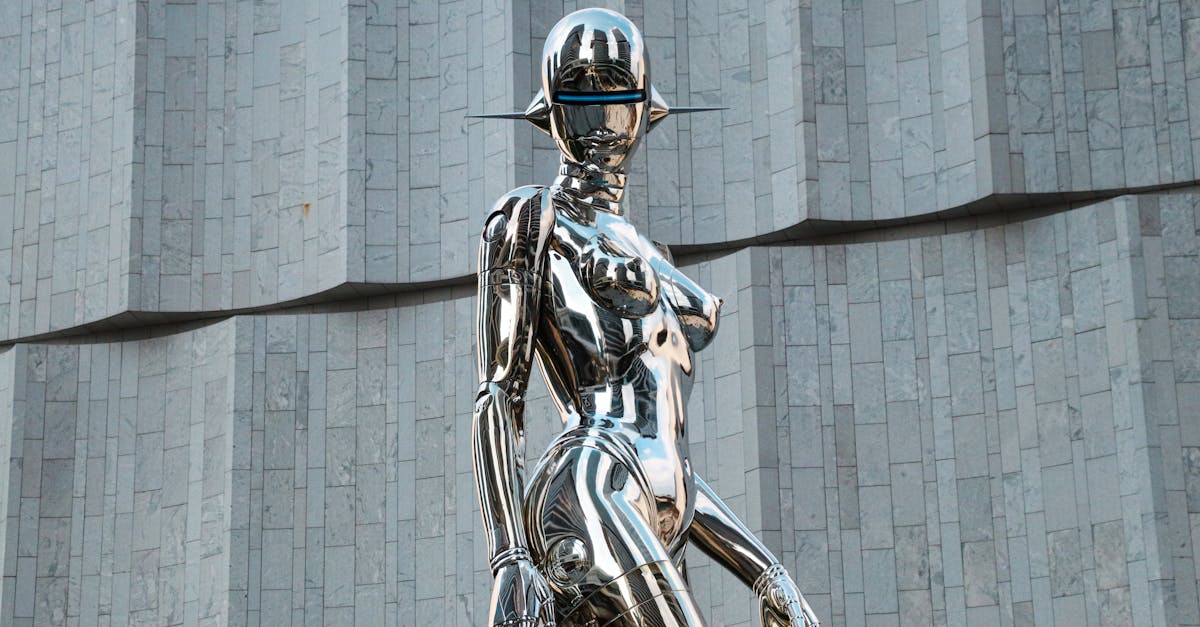
Sanctuary AI Phoenix: Dexterous General-Purpose Humanoid in Early Stages

Sanctuary AI Phoenix: Beyond the Rendering
In the rapidly evolving landscape of general-purpose robotics, few companies have attracted as much attention as Sanctuary AI. Their flagship offering, the Phoenix, is positioned not merely as a walking machine, but as a dexterous general-purpose humanoid capable of complex manipulation tasks. However, as per RobotWale's editorial standards, we must separate the announcements from the shipped hardware. As of this writing, the Phoenix remains in the pre-production or early pilot phase, with no confirmed mass deployments or public pricing structures available for the Indian market.
This article provides a technical and commercial assessment based on available manufacturer demonstrations, press releases, and independent reporting. We avoid speculation regarding future production timelines and focus strictly on what is known about the system's architecture, safety protocols, and current readiness.
Development Status and Availability
Sanctuary AI, a UK-based robotics firm founded by researchers with backgrounds in deep learning and robotics (including former DeepMind and Google teams), unveiled the Phoenix concept and subsequent prototypes in late 2023. The company's primary focus is on creating a robot capable of performing the full range of tasks a human worker can, rather than restricted to a single industrial function.
Shipping Status: There is no public evidence of mass production units being delivered to third-party clients as of early 2024. The company operates on a pilot and partnership model, likely engaging with select enterprise clients for beta testing.
India Availability: As of now, there is no official announcement regarding distribution partners, import registration, or localized assembly for Sanctuary AI's Phoenix in India. Humanoid robotics imports to India often face complex regulatory hurdles regarding safety certifications (BIS standards) and liability frameworks. Until Sanctuary AI announces an official distributor or local entity, the landed cost remains speculative.
Technical Architecture: Dexterity Over Locomotion
The defining characteristic of the Phoenix, according to Sanctuary AI's technical presentations, is its emphasis on dexterous manipulation rather than pure mobility speed. While many competitors (such as Tesla's Optimus or Agility Robotics' Digit) prioritize walking speed and battery life in linear tasks, Phoenix appears engineered for fine motor control.
- Manipulation Hardware: The robot features a dual-arm system designed for complex object handling. Unlike simpler grippers, the Phoenix's end-effectors are reported to mimic human hand kinematics, allowing for the grasping of fragile items alongside heavy loads.
- Locomotion: The Phoenix utilizes a bipedal walking platform. While specific torque specifications for the legs are not fully public in open literature, the design prioritizes stability on uneven terrain over maximum velocity. This is critical for environments like warehouses or construction sites where surface consistency varies.
- Perception Stack: The system relies on a vision-centric approach. Sanctuary AI has indicated the use of stereo cameras and LiDAR for spatial mapping. This allows the robot to understand the 3D geometry of objects before attempting manipulation.
Power Systems and Thermal Management
Humanoid robots face significant challenges regarding thermal management and power density. Sanctuary AI has addressed this in their prototype designs by utilizing high-density battery packs housed within the torso to maintain a low center of gravity. While exact watt-hour capacities are not disclosed in public specifications, the company claims the hardware is designed for sustained operation in industrial settings.
Thermal regulation is achieved through active cooling systems in the actuators. This is a departure from passive cooling methods seen in some earlier prototypes, which often led to overheating during prolonged manipulation tasks. For an Indian market context, where ambient temperatures can exceed 45°C in certain regions, this thermal resilience is a critical differentiator that must be validated in field testing.
Safety and Regulatory Compliance
As a general-purpose humanoid intended for human-robot collaboration (HRC), safety is paramount. Sanctuary AI's Phoenix incorporates force-limited joints designed to comply with ISO 13482 standards for personal assistive robots. This means the robot is engineered to retract force if it contacts a human, preventing injury.
For the Indian market, regulatory compliance involves more than just ISO standards. The Bureau of Indian Standards (BIS) is developing frameworks for robotics safety, but these are not yet fully codified for general-purpose humanoids. Importers of such high-value robotic systems must navigate customs duties, GST, and potential liability insurance requirements. Without a clear compliance roadmap from the manufacturer, end-users in India face significant legal risk.
Implications for the Indian Market
The potential application of the Phoenix in India lies primarily in sectors requiring high dexterity and limited infrastructure. Unlike autonomous mobile robots (AMRs) that require flat, paved floors for navigation, a bipedal humanoid can navigate stairs, uneven ground, and cluttered spaces.
Manufacturing: Indian automotive and electronics assembly lines could benefit from the Phoenix's dexterity. However, the cost barrier remains high.
Logistics: Warehousing in India often involves manual handling due to the variability in packaging sizes. A robot that can handle diverse SKUs (Stock Keeping Units) without retooling is valuable. However, the ROI (Return on Investment) calculation for a Phoenix unit is currently impossible without a price point.
Service and Hospitality: While potential exists for service roles, the complexity of the Phoenix's control stack may require specialized maintenance technicians, which are currently scarce in the Indian robotics sector.
Competitive Landscape and Reality Check
When evaluating the Phoenix, it must be compared against established players with verified hardware shipments:
- Tesla Optimus: Has demonstrated walking and basic manipulation in controlled environments, with pilot deployments in Tesla factories. Volume production targets are set for 2025.
- Figure AI: Partnered with BMW and Amazon, with working prototypes deployed in pilot programs. Focus is on industrial logistics.
- Agility Robotics (Digit): Deployed in real warehouses (e.g., Amazon), though primarily for logistics rather than dexterous manipulation.
The Phoenix distinguishes itself by targeting the "general purpose" space more aggressively than any of these competitors. However, "general purpose" is a high bar. Many announced robots fail to transition from demo environments to unstructured real-world environments. Until the Phoenix is seen performing unscripted tasks in a non-lab setting, it remains a promising prototype rather than a proven product.
Pricing Estimates
There is no official price list for the Phoenix from Sanctuary AI. Based on the hardware complexity (high-torque actuators, multiple LiDAR units, compute stacks), industry estimates for similar class humanoids range from $50,000 to $150,000 USD per unit.
Approximate Landed Cost in India: If imported as a complete unit, the cost would include:
- Base Unit Price: $100,000 (Estimated)
- Import Duty (Robotics): Varies by classification, estimated at 7.5% - 10%
- GST (18%): Applicable on the landed value
- Logistics and Insurance: Variable based on shipping volume
Converting to INR at current exchange rates, a landed cost estimate could range between ₹85 Lakhs to ₹1.2 Crores ($100k-$150k equivalent). This is a significant capital expenditure for most Indian SMEs (Small and Medium Enterprises), suggesting initial adoption will be limited to large enterprises or government-backed pilot projects.
Conclusion
The Sanctuary AI Phoenix represents a significant step forward in the pursuit of dexterous general-purpose humanoid robotics. The focus on manipulation over speed aligns with the practical needs of the global workforce. However, for the Indian market, the technology is currently in the pre-commercial phase.
Stakeholders interested in the Phoenix should monitor the following milestones:
- Announcement of specific pilot deployment partners outside the UK.
- Release of official technical documentation regarding torque and payload limits.
- Identification of official Indian distributors or assembly partners.
Until these milestones are met, the Phoenix remains a high-potential concept that requires further validation. The robotics industry in India is maturing, and while the Phoenix is a worthy candidate for future integration, it should not be treated as an immediate off-the-shelf solution.
✓ Key takeaways
- •Hands-on view of Sanctuary AI Phoenix: Dexterous General-Purpose Humanoid in Early Stages inside our Sanctuary Phoenix library.
- •Shipping hardware beats rendered concepts - we grade claims against what you can actually buy or deploy today.
- •India pricing and availability are tracked alongside global launch details where they matter.
References
Related articles
More in Sanctuary Phoenix →