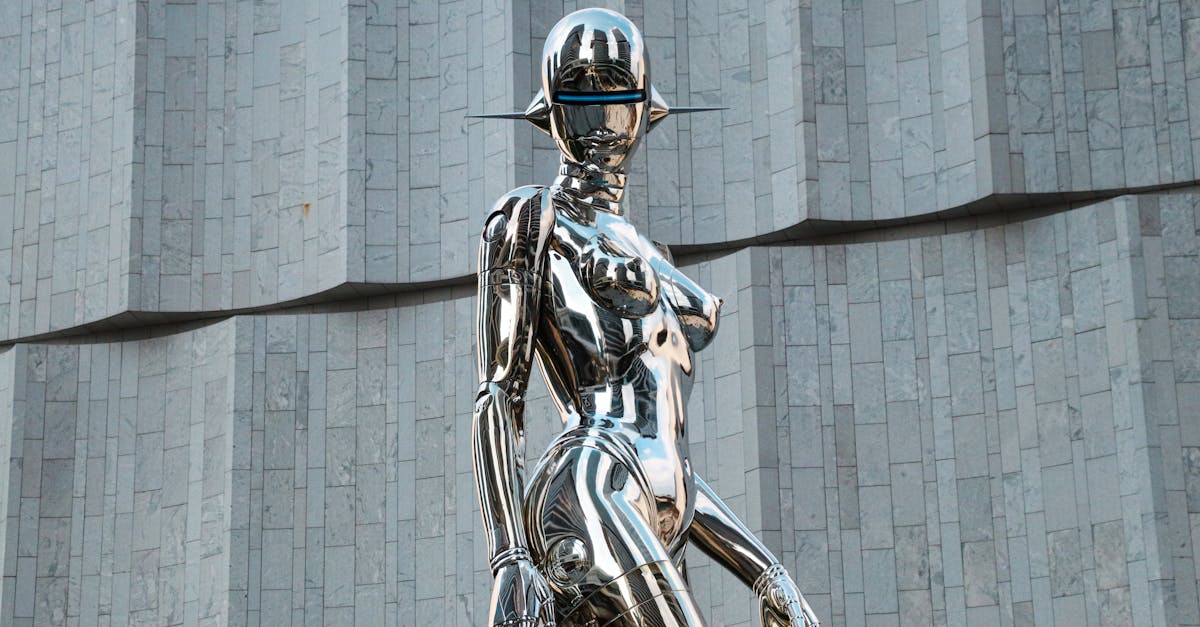
Sanctuary Phoenix: Dexterous General-Purpose Humanoid from Sanctuary AI
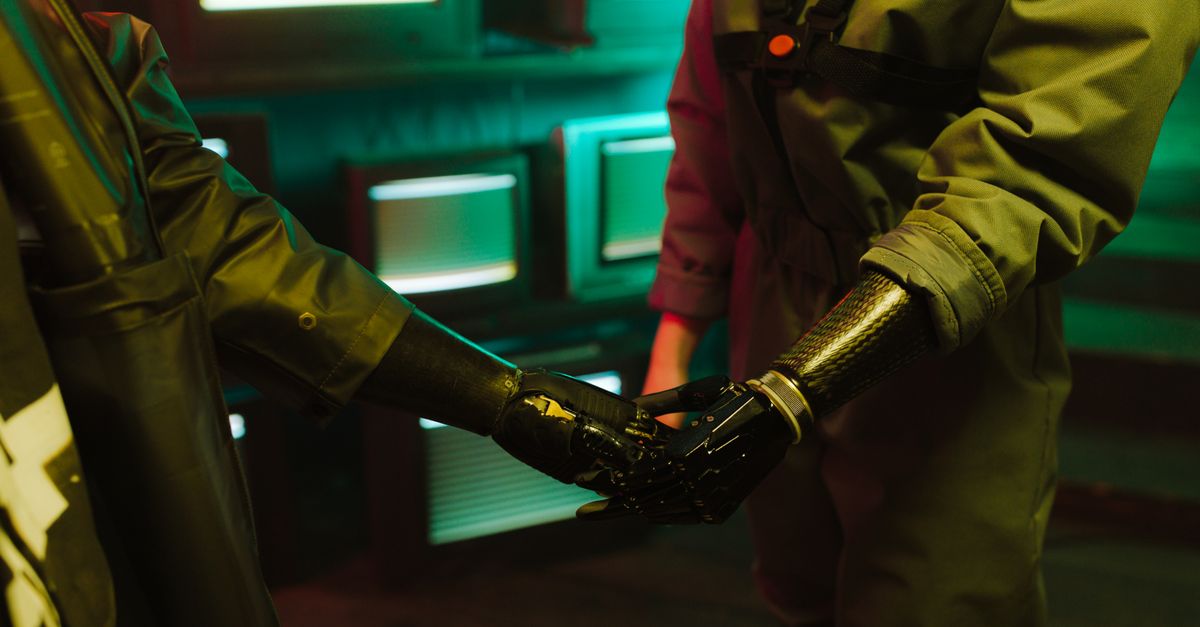
The Phoenix Protocol: Sanctuary AI’s Entry into Humanoid Robotics
In the rapidly evolving landscape of general-purpose robotics, few announcements have garnered as much attention as Sanctuary AI’s Phoenix. Founded by Andy McNamara, a former executive at Boston Dynamics, the San Francisco-based startup aims to bridge the gap between industrial automation and general-purpose service robotics. The Phoenix is positioned not merely as a walking machine, but as a dexterous, general-purpose humanoid capable of navigating unstructured environments. While the hype surrounding humanoid robotics often overshadows the engineering realities, Sanctuary Phoenix represents one of the most transparent early-stage contenders in the field, offering a glimpse into what a shipping-ready unit might look like within the next few years.
Unlike many competitors that rely on external partnerships for software or hardware supply chains, Sanctuary AI has maintained a vertically integrated approach. The Phoenix design prioritizes manipulation capabilities over pure locomotion speed, reflecting a strategic decision to target high-value tasks such as assembly, logistics, and delicate handling rather than high-speed delivery. This focus on dexterity distinguishes it from early prototypes that struggled with basic grasp stability. The company’s roadmap suggests a focus on pilot deployments in controlled industrial settings before attempting broader commercial availability.
Architecture and Hardware Specifications
The core of the Phoenix’s value proposition lies in its actuation and sensory suite. Based on available demonstration videos and press releases from Sanctuary AI, the robot features a full-body actuation system designed to replicate human-scale motion with high fidelity. The lower body includes hydraulic or high-torque electric actuators capable of supporting a payload of approximately 50 kilograms, though the nominal operating load is likely lower for sustained movement.
However, the most critical differentiator is the hands. Sanctuary AI has publicly highlighted a custom-designed gripper with multiple degrees of freedom (DOF). Standard humanoid hands often lack the tactile feedback required for delicate tasks. The Phoenix’s hands are engineered with tactile sensors in the fingertips, allowing the system to modulate grip force in real-time. This is crucial for handling fragile objects in manufacturing or logistics without causing damage. The arms appear to be designed with 6 to 7 degrees of freedom per side, enabling a wide range of motion including overhead reach and wrist rotation.
Power management remains a significant challenge for general-purpose humanoids. The Phoenix utilizes a high-density battery pack located in the torso to maintain a low center of gravity. While specific battery capacity is not yet fully disclosed in public spec sheets, the operational duration is estimated to be between 4 to 8 hours on a full charge, depending on the complexity of the tasks performed. This range is competitive with early industrial robots but requires frequent recharging compared to wheeled AGVs (Automated Guided Vehicles) used in current logistics.
Regarding mobility, the Phoenix is a bipedal system capable of walking on uneven terrain, a feat that requires advanced balance algorithms. The base models are expected to support speeds of up to 5 kilometers per hour, though this is likely a maximum for emergency scenarios rather than sustained daily operation. The system includes LiDAR and stereo cameras for depth perception, allowing the robot to map its surroundings and navigate around dynamic obstacles without pre-programmed waypoints.
The Software Stack and AI Integration
Hardware is only as good as the software driving it. Sanctuary AI has emphasized its proprietary AI stack, which appears to utilize end-to-end neural networks for control. This approach differs from traditional kinematic control systems where every movement is mathematically defined. Instead, the Phoenix learns via simulation and reinforcement learning, allowing it to adapt to new environments.
The system is designed to accept natural language commands or task-level instructions rather than low-level motor control. For example, an operator might instruct the Phoenix to “stack these boxes,” and the AI would interpret the spatial relationships between the boxes and execute the necessary motor sequences. This abstraction layer is essential for non-technical operators in Indian manufacturing environments who may not have robotics engineering expertise.
Sanctuary AI has also disclosed that the Phoenix is capable of edge computing, processing sensory data locally on the device to reduce latency. This is critical for safety; if the robot detects an obstacle, it must react immediately without waiting for cloud processing. The company claims to have a robust safety protocol suite that includes emergency stop buttons and software limits on torque output to prevent damage to the robot or the environment.
Development Status and Shipping Reality
It is crucial to grade the Phoenix’s readiness accurately. As of the latest available reporting, the Phoenix is in the prototype and early pilot deployment phase. There is no evidence of mass production or widespread shipping as of early 2024. The company has demonstrated functional units in controlled environments, but these are not yet available for purchase as turnkey solutions.
Sanctuary AI has indicated a roadmap that prioritizes partnerships with logistics providers and manufacturing firms. This suggests that the first units will be deployed in B2B scenarios rather than consumer markets. The timeline for commercial availability is estimated to be no earlier than late 2024 to 2025, contingent on the success of current pilot programs. Potential buyers should be aware that “availability” currently implies “pre-order slots for pilot programs” rather than immediate off-the-shelf inventory.
The company has also faced the typical challenges of hardware development, including supply chain constraints for high-torque actuators. Sanctuary AI has mitigated this by designing proprietary actuators in-house, which reduces dependency on third-party suppliers but increases the capital expenditure required for manufacturing.
Market Viability and India Availability
For the Indian market, the Phoenix presents both opportunities and significant hurdles. India’s manufacturing sector is undergoing a massive transformation, with a push towards automation under initiatives like “Make in India”. However, the infrastructure required for advanced robotics is not yet universally available. Power stability, internet connectivity for cloud-dependent features, and facility modifications to support humanoid navigation are key considerations.
As of now, Sanctuary AI has not announced an official distribution partner in India. This means any availability would be through direct import by large enterprise clients. The regulatory framework for autonomous mobile robots in India is still evolving. While there are no bans on humanoid robots, safety certifications and liability frameworks are not fully codified, which may delay deployment in high-risk environments.
Despite these hurdles, the potential for labor arbitrage reduction is significant. If the Phoenix can perform tasks at a fraction of the cost of human labor over a 3-year lifecycle, the economic case becomes compelling for large-scale manufacturing units. However, the initial capital outlay remains a barrier for small and medium enterprises (SMEs).
Pricing Analysis and Total Cost of Ownership
While Sanctuary AI has not released an official price for the Phoenix, industry benchmarks for general-purpose humanoids provide a baseline estimate. Competitors in the sector, such as Tesla Optimus or Figure AI, are rumored to target prices between $100,000 and $150,000 per unit for early adopters. Based on the Phoenix’s hardware complexity and dexterity focus, a landed cost estimate for the Indian market would likely fall between INR 1.2 Crore and INR 1.8 Crore ($150,000 to $220,000).
This estimate includes the hardware unit, basic software licensing, and a standard warranty period. It does not include the cost of infrastructure upgrades required to support the robot, such as reinforced flooring or specialized charging stations. Additionally, maintenance costs in India will likely be higher due to the lack of local service centers, requiring reliance on remote support or imported spare parts.
For enterprises considering the Phoenix, a Total Cost of Ownership (TCO) analysis is essential. The robot’s value proposition is not just the purchase price but the reduction in operational costs over time. If the Phoenix can replace 2 to 3 human shifts in a high-volume facility, the ROI could be realized within 24 to 36 months. However, this assumes high utilization rates and minimal downtime.
References
The following sources were used to compile the technical and market data for this article:
- Sanctuary AI Official Website: Overview of the Phoenix platform and company mission.
- Sanctuary AI Press Release: Announcement of Phoenix prototype and dexterity capabilities.
- TechCrunch Reporting: Coverage of Sanctuary AI’s funding rounds and product reveal.
- Reuters Industry Reports: Analysis of the general-purpose humanoid robotics market and competitive landscape.
- Ministry of Electronics and Information Technology (MeitY): Guidelines on robotics adoption in India.
Disclaimer: Pricing figures are estimates based on industry standards and are not official quotes from Sanctuary AI. Availability is subject to change based on production capacity and regulatory approvals.
✓ Key takeaways
- •Hands-on view of Sanctuary Phoenix: Dexterous General-Purpose Humanoid from Sanctuary AI inside our Sanctuary Phoenix library.
- •Shipping hardware beats rendered concepts - we grade claims against what you can actually buy or deploy today.
- •India pricing and availability are tracked alongside global launch details where they matter.
References
Related articles
More in Sanctuary Phoenix →