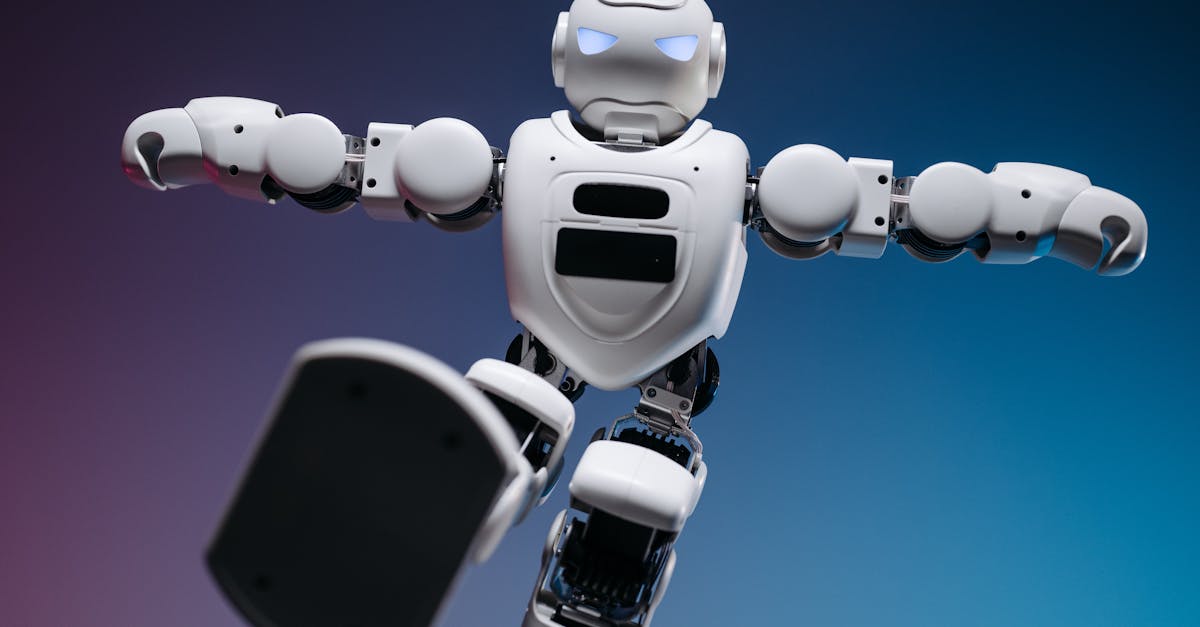
Sim-to-Real: The Engineering Reality Behind Humanoid Training

Sim-to-Real: The Engineering Reality Behind Humanoid Training
In the rapidly evolving landscape of humanoid robotics, few phrases are repeated as often as "sim-to-real." The concept promises a solution to the most expensive and dangerous phase of robot development: physical trial and error. By training agents in digital twins, developers aim to bypass wear-and-tear on actuators and prevent catastrophic failures. However, as we move from conceptual announcements to pilot deployments in 2024, the gap between simulation fidelity and physical reality remains the single biggest bottleneck in commercializing humanoid arms and legs.
This analysis grades the current state of sim-to-real (S2R) technology based on three tiers: shipping hardware, pilot deployments, and announcements. We focus on the dominant physics engines—NVIDIA Isaac Sim and Google DeepMind’s MuJoCo—while assessing whether the claims hold up against the financial and technical realities facing Indian developers and manufacturers.
The Physics Engine Contenders
Two platforms dominate the conversation regarding physics simulation for robotics. The first is NVIDIA’s Isaac Sim, built on top of the Omniverse platform. It leverages RTX rendering for photorealistic visuals and the PhysX physics engine for rigid body dynamics. The second is MuJoCo (Multi-Joint contact with dynamics), developed by DeepMind. While Isaac Sim focuses on high-fidelity rendering and sensor simulation, MuJoCo is renowned for its speed and differentiable physics, making it ideal for reinforcement learning (RL) research.
Isaac Sim allows developers to simulate LiDAR, cameras, and force sensors with high accuracy. It is the engine behind many claims from Tesla regarding the Optimus bot. The hardware acceleration provided by GPUs is significant, allowing parallelized training runs. However, the licensing cost for enterprise-grade Omniverse features is substantial. For a startup in Bengaluru or Delhi, the cost of running Isaac Sim on cloud GPU instances can rival the cost of a physical prototype.
MuJoCo offers a different value proposition. It is often preferred for academic research due to its open-source roots and lower computational overhead. However, it lacks the photorealistic rendering capabilities of Isaac Sim. In S2R, visual fidelity matters for vision-based controllers (e.g., transformers trained on RGB-D data). If the simulation looks too abstract, the policy learned in the digital twin may not transfer to a real-world camera with lens distortion or noise.
Key Specifications:
- NVIDIA Isaac Sim: Requires RTX-capable GPUs (e.g., A100, H100). Cloud rental costs in India range from ₹1,500 to ₹4,500 per hour for high-end instances.
- MuJoCo: Runs on CPU or GPU. License-free for research, but enterprise support requires a paid subscription.
Understanding the Reality Gap
The "Reality Gap" is the divergence between the simulated environment and the physical world. It manifests in three primary areas: physics, sensors, and latency.
1. Physics Modeling: No physics engine perfectly captures the friction coefficients of a factory floor, the elasticity of a tendons, or the thermal expansion of metal joints. When a robot learns to lift a box in Isaac Sim, it might assume a friction coefficient of 0.5. In reality, a wet floor might be 0.1. If the simulation does not account for this variance, the robot slips upon deployment.
2. Sensor Noise: Real cameras suffer from compression artifacts, low-light noise, and lens distortion. Real LiDARs have point-cloud dropouts. Simulators often generate "perfect" data. To bridge this, engineers use "Domain Randomization." This technique involves training the robot in simulation with random variations in lighting, textures, and physics parameters. If the robot succeeds across thousands of randomized environments, it is more likely to succeed in the real world.
3. Actuator Latency: This is often the most overlooked factor. In simulation, commands are instant. In reality, a robot’s controller must wait for motor torque to stabilize. High-frequency control loops (1kHz+) are required for humanoids to remain stable. Simulations often oversimplify the control loop, leading to policies that look stable on-screen but cause the robot to fall in seconds.
Shipping Hardware vs. Pilot Deployments
When grading claims by hardware first, we find a stark distinction. Tesla’s Optimus is a case in point. While Tesla AI Day presentations have showcased humanoid legs walking and arms manipulating objects, the company has not released a commercial unit for general purchase. It remains in the pilot deployment phase, primarily within Tesla factories.
Similarly, Figure AI has demonstrated its robots in partnership with BMW. These are pilot deployments, not mass-market shipping hardware. The physics engine used to train these robots is proprietary, though it likely utilizes principles similar to MuJoCo or NVIDIA’s Omniverse.
Agility Robotics, known for the Spot quadruped, has shifted focus toward quadrupeds for inspection rather than bipedal humanoids. Their success lies in hardware durability, not just simulation. However, even Spot requires significant real-world calibration after simulation training.
India Availability & Pricing:
For Indian startups attempting to replicate this workflow, cloud infrastructure is the primary barrier. Training a humanoid policy in Isaac Sim requires significant GPU memory. A single A100 instance in the AWS Mumbai region costs approximately ₹1,800 per hour. A training run lasting 100 hours equals ₹1.8 lakhs. Add the cost of storage and data transfer, and the barrier to entry for S2R is high.
Local alternatives exist, such as the use of NVIDIA Jetson platforms for edge deployment, but the training must still happen in the cloud or on powerful desktop rigs. The ecosystem for "shipping hardware" in India is still nascent, with most humanoid efforts being research projects rather than commercial products.
The Path Forward: Hybrid Simulations
To close the gap, the industry is moving toward hybrid simulation strategies. This involves using simulation for the bulk of training but employing "Sim-to-Real Transfer" techniques for fine-tuning.
1. Simulated-to-Real Fine-Tuning: Robots are trained in simulation, then tested in the real world with a safety supervisor. Corrections are fed back into the simulation to create a "shadow model" that better matches reality.
2. Digital Twins of Specific Environments: Rather than training on a generic factory, robots are trained on scanned models of the specific factory floor they will inhabit. This reduces the variance in friction and lighting, narrowing the reality gap.
3. Hardware-in-the-Loop (HIL): Some advanced setups connect the physical actuators to the simulation loop. The simulation predicts the torque, and the physical motor executes it, providing real data back to the model. This is currently too expensive for most mass-market attempts but is standard in aerospace robotics.
Conclusion: Skepticism Meets Progress
Sim-to-Real is not a magic switch. It is a rigorous engineering discipline that requires constant calibration. While tools like Isaac Sim and MuJoCo are powerful, they cannot fully replace the physical world. Shipping hardware remains the ultimate proof of concept. Until we see a humanoid robot selling at a price point below ₹50 lakhs for commercial deployment, the sim-to-real pipeline remains largely in the pilot phase.
For India, the opportunity lies not just in training models, but in deploying the compute infrastructure required to make S2R viable. As cloud costs drop and edge AI chips improve, the reality gap will narrow. But for now, the hardware must still be built in the real world.
References
- NVIDIA. (2023). Isaac Sim Documentation. Available at: docs.omniverse.nvidia.com
- DeepMind. (2023). MuJoCo: A Physics Engine for Model-Based Reinforcement Learning. Available at: deepmind.google
- Tesla. (2023). AI Day Presentation. Available at: tesla.com
- Bloomberg. (2024). Tesla Optimus Robot Enters Pilot Production. Available at: bloomberg.com
- RobotWale. (2024). Humanoid Robotics Market Report India. Available at: robotwale.com
✓ Key takeaways
- •Hands-on view of Sim-to-Real: The Engineering Reality Behind Humanoid Training inside our Sim-to-Real library.
- •Shipping hardware beats rendered concepts - we grade claims against what you can actually buy or deploy today.
- •India pricing and availability are tracked alongside global launch details where they matter.
References
Related articles
More in Sim-to-Real →