Tactile Skins: Shipping Hardware, Real Specs, and India Market Reality

Understanding Tactile Skins in Modern Robotics
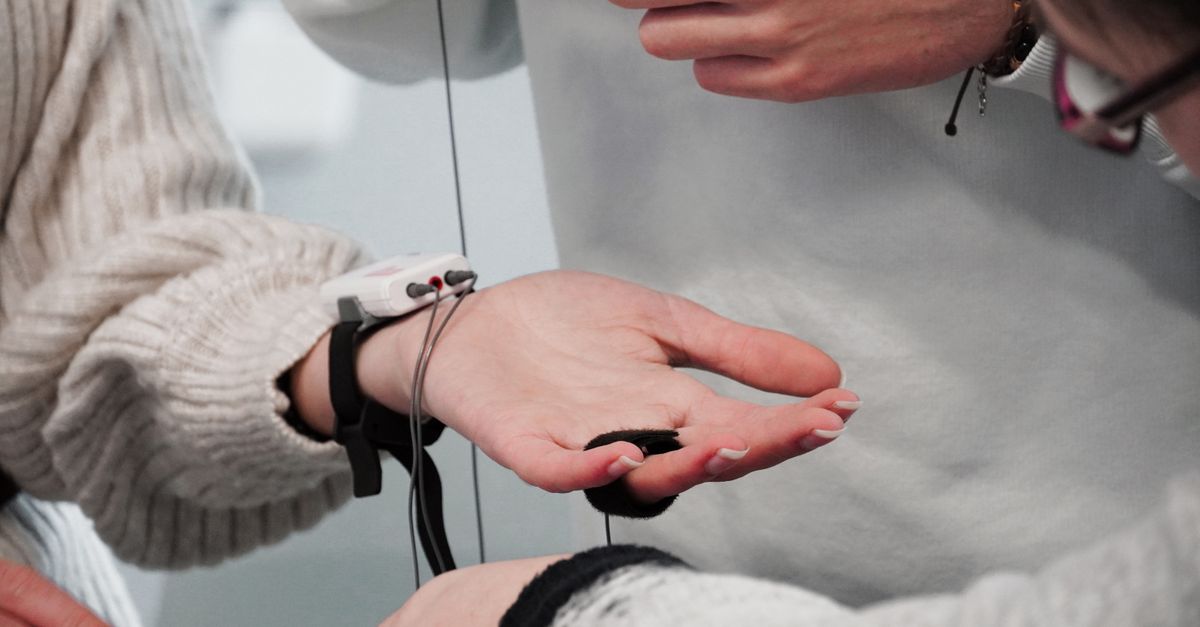
Tactile skin represents a fundamental shift in how robotic systems perceive contact, texture, pressure, and thermal gradients. Unlike traditional force-torque sensors that report point measurements, tactile skins deliver spatially resolved data across flexible substrates. This allows humanoid platforms to execute fine manipulation, slip detection, and compliant interaction without relying entirely on vision or high-level force control loops. The technology spans optical elastomers, capacitive electrode arrays, and multimodal sensor fusion, each with distinct manufacturing routes, data rates, and integration constraints.
RobotWale grades tactile skin claims by first examining shipping hardware, then pilot deployments, and finally announcements. Optical tactile sensors like GelSight have moved from academic prototypes to commercially available modules. Capacitive arrays and BioTac-style multimodal skins remain largely in pilot or research distribution phases, with limited commercial integration into production humanoid lines. This grading framework prevents speculation from overshadowing measurable deployment status.
Grading the Technology: Shipping Hardware, Pilots, and Announcements
- Shipping Hardware: GelSight micro and standard modules are commercially available. Capacitive touch arrays from established industrial sensor vendors ship as components but require custom mounting and signal conditioning.
- Pilot Deployments: BioTac-style multimodal arrays and open-source tactile skins are deployed in university labs and select industrial automation pilots. Few humanoids integrate them as standard end-effector or forearm coverage.
- Announcements: Numerous startups and robotics firms announce tactile skin roadmaps. Without shipping units or published spec sheets, these remain developmental commitments rather than deployable hardware.
Integration demands precise attention to mechanical compliance, thermal management, and data throughput. Tactile skins add mass, require flexible ribbon cables, and demand low-latency signal processing. Manufacturers that publish calibration procedures, IP ratings, and cycle-life data provide verifiable deployment pathways. Those that rely solely on concept renders or press releases lack the engineering documentation required for humanoid integration.
GelSight: Optical Tactile Sensing in Production
How GelSight Works and Where It Ships
GelSight sensors use a transparent elastomer dome backed by a micro-camera and LED illumination. When the elastomer contacts an object, surface micro-deformations are captured optically, reconstructing 3D topography and friction characteristics. The approach delivers high spatial resolution (often exceeding 1000 dpi) and reliable slip detection without requiring complex electrode patterning.
GelSight Inc. ships standard and micro modules with published specifications. Typical parameters include a sensing area of 25 mm to 50 mm diameter, frame rates between 30 Hz and 60 Hz, and depth resolution in the sub-millimeter range. The modules require USB 3.0 connectivity, external lighting control, and a rigid mounting bracket to maintain optical alignment. Power consumption generally ranges from 2 W to 4 W per module, depending on LED drive and camera sensor mode.
Deployment grading places GelSight in the shipping hardware category. Units are available for direct purchase, with documentation covering calibration workflows, elastomer replacement cycles, and mounting tolerances. Pilot deployments include assembly inspection, gripper integration, and research manipulation platforms. Announcements regarding larger coverage panels remain developmental, as scaling optical arrays introduces significant stitching and latency challenges.
India Availability and Landed Cost Estimates
GelSight modules are available through direct manufacturer channels and select robotics component distributors. Import to India requires BIS registration for electronic equipment, GST on sensor components, and customs duties typically ranging from 10% to 15% depending on HS code classification. Landed cost estimates for a GelSight standard module, including freight, insurance, and Indian import duties, fall between ₹1,80,000 and ₹2,40,000 per unit. Micro variants are priced lower, with landed estimates between ₹1,20,000 and ₹1,60,000. These figures are approximate and vary with exchange rates, freight routing, and distributor margins.
BioTac: Capacitive and Thermal Multimodal Arrays
Sarcos and the BioTac Legacy
BioTac sensors combine capacitive touch, thermal sensing, and vibrotactile feedback within a silicone skin. The capacitive layer detects pressure distribution, while embedded thermal elements measure temperature gradients. This multimodal approach enables material identification, slip prediction, and surface texture classification without relying on optical processing.
Sarcos Robotics and affiliated research groups have produced BioTac arrays with published specifications. Typical modules report 16 to 32 capacitive channels, thermal resolution around 0.5°C, and sampling rates between 100 Hz and 500 Hz per channel. Data transmission uses I2C or SPI interfaces, requiring custom signal conditioning and amplification circuits. Power consumption ranges from 1.5 W to 3 W per array, with additional draw for thermal regulation.
Deployment grading places BioTac-style arrays in the pilot deployment category. Units are distributed to research institutions and select industrial automation partners for integration testing. Commercial humanoid integration remains limited due to calibration complexity, elastomer wear, and the need for custom mounting brackets. Announcements regarding mass production or widespread humanoid adoption lack verified shipping data and independent integration reports.
India Availability and Landed Cost Estimates
BioTac arrays are available through Sarcos Robotics and authorized research distributors. Import to India follows standard electronic component regulations, with GST and customs duties applied. Landed cost estimates for a single BioTac array, including freight and Indian import duties, range between ₹2,50,000 and ₹3,20,000. Multi-array kits and calibration fixtures increase costs by 20% to 30%. These estimates are approximate and depend on distributor agreements, currency fluctuations, and shipping volume.
Capacitive Touch Arrays: Scalable Alternatives
Commercial and Open-Source Implementations
Capacitive touch arrays offer a cost-effective alternative to optical and multimodal tactile skins. They use conductive electrode patterns embedded in flexible substrates, measuring capacitance changes upon contact. Commercial implementations from established sensor vendors provide modular sheets, rigid-flex PCBs, and interconnect solutions. Open-source projects distribute CAD files and firmware for academic integration.
Typical specifications include 64 to 256 channels, spatial resolution between 5 mm and 10 mm, and sampling rates from 50 Hz to 200 Hz. Signal conditioning requires low-noise amplifiers, noise filtering, and temperature compensation. Mounting demands compliance layers to prevent electrode damage, with adhesive or mechanical fastening options. Power consumption ranges from 0.5 W to 2 W per square decimeter, depending on channel count and refresh rate.
Deployment grading places commercial capacitive arrays in the shipping hardware category. Units are available as components for custom integration. Pilot deployments include collaborative robot end-effectors, prosthetic research, and industrial handling. Open-source implementations remain in academic and hobbyist stages, with limited commercial validation. Announcements regarding humanoid-scale coverage require independent integration reports before grading shifts.
India Availability and Landed Cost Estimates
Capacitive touch arrays are available through industrial sensor distributors and electronics component suppliers. Import to India follows standard electronic parts regulations, with GST and customs duties applied. Landed cost estimates for a 100-channel array, including freight and Indian import duties, range between ₹60,000 and ₹90,000. Larger coverage kits and signal conditioning boards increase costs by 25% to 40%. These figures are approximate and vary with supplier agreements, currency rates, and import documentation.
Integration Challenges for Humanoid Platforms
Tactile skin integration demands rigorous attention to mechanical, electrical, and software constraints. Mounting must preserve elastomer compliance while preventing shear forces from damaging sensors. Flexible ribbon cables require strain relief and routing channels to avoid fatigue failure. Signal conditioning must filter electromagnetic interference, especially in high-power humanoid architectures.
Calibration procedures vary by sensor type. Optical arrays require illumination uniformity checks and depth mapping validation. Capacitive arrays need temperature compensation and baseline drift correction. Multimodal systems demand cross-sensor synchronization and fusion algorithms. Publication of calibration protocols, cycle-life testing, and environmental ratings remains the primary indicator of deployment readiness.
India-based integrators should account for component sourcing, signal processing hardware, and maintenance workflows. Local calibration fixtures, replacement elastomers, and spare ribbon cables reduce downtime. Import documentation, GST classification, and distributor support directly impact total cost of ownership. Grounded procurement relies on verified spec sheets, published deployment data, and independent integration reports rather than marketing claims.
References
GelSight Inc. Manufacturer specifications and product documentation. https://www.gelsight.com/
Sarcos Robotics. BioTac multimodal tactile sensor technical documentation. https://www.sarcos.com/
Tekscan. Flexible tactile sensor array specifications and integration guides. https://www.tekscan.com/
Robotiq. Capacitive touch and force-torque integration resources. https://robotiq.com/
Robotics Institute, Carnegie Mellon University. GelSight optical tactile sensing research and deployment data. https://www.ri.cmu.edu/
NASA Jet Propulsion Laboratory. BioTac sensor development and humanoid integration studies. https://www.jpl.nasa.gov/
✓ Key takeaways
- •Hands-on view of Tactile Skins: Shipping Hardware, Real Specs, and India Market Reality inside our Tactile Skins library.
- •Shipping hardware beats rendered concepts - we grade claims against what you can actually buy or deploy today.
- •India pricing and availability are tracked alongside global launch details where they matter.
Related articles
More in Tactile Skins →