Tesla Optimus: Grading the Humanoid Bet Against Production Reality

The Gap Between Demo and Deployment
Since its initial reveal at the 2021 AI Day, Tesla’s Optimus humanoid programme has oscillated between the extremes of industry hype and engineering skepticism. Unlike the consumer vehicle line, where delivery timelines are tracked quarterly, the humanoid robot timeline remains opaque regarding mass production. However, recent updates from the company’s quarterly reports and AI Day presentations provide a clearer picture of the hardware maturity required for the “shipping first” mandate.
The critical distinction for RobotWale readers lies in differentiating between a prototype that can stand upright and a unit capable of performing repetitive industrial tasks without human intervention. As of early 2024, Tesla has confirmed that Optimus units are working within the Fremont and Austin factories. This is not a staged demo for investors; it is a pilot deployment intended to gather real-world data for the neural networks driving the robot’s perception and motor control systems.
Hardware Evolution: From Gen 1 to Gen 2
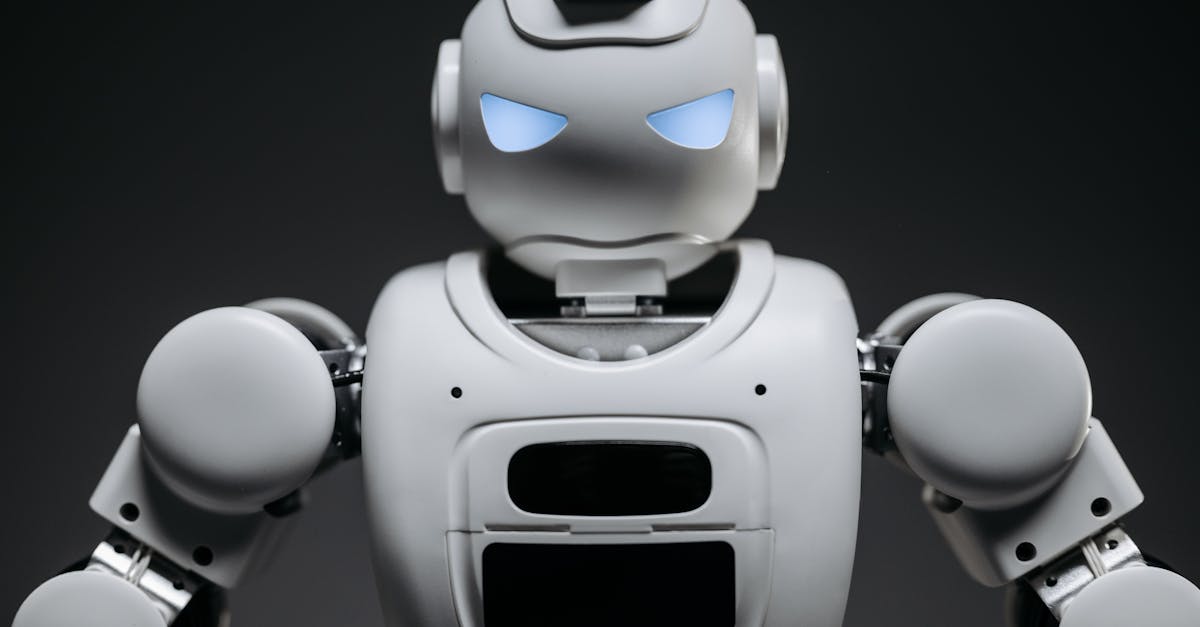
The transition from the Optimus Gen 1 to the Gen 2 prototype marks the most significant shift in the programme’s trajectory. In the Gen 1 iteration, the robot’s design was largely conceptual, with visible wiring and limited range of motion. The Gen 2, showcased at the 2024 AI Day, introduced a refined design focused on cost reduction and functional reliability.
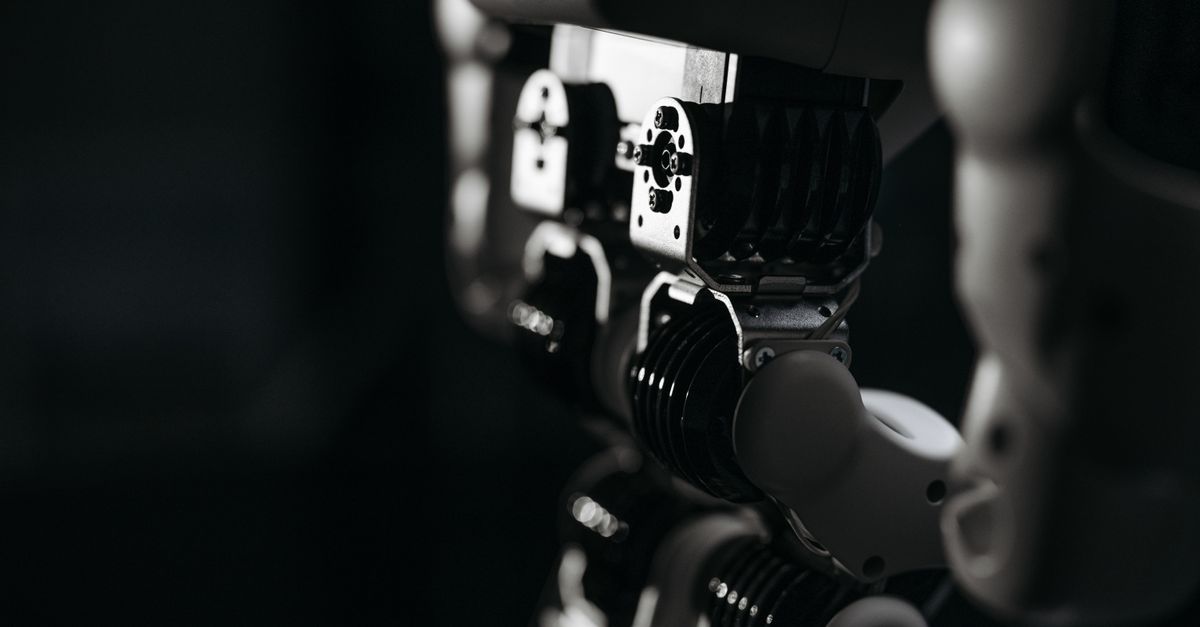
Key technical specifications for the Gen 2 hardware include a reduction in the total actuator count, despite the addition of more complex hand dexterity. The robot is designed to utilize approximately 50 actuators, down from earlier estimates that suggested higher complexity. This reduction is driven by Tesla’s in-house motor design strategy, aiming to eliminate reliance on third-party suppliers like Harmonic Drive Systems. The weight of the robot has also been reduced, with the Gen 2 standing lighter than the previous iteration, facilitating easier energy management during operation.
The hands represent the most critical area of scrutiny. Optimus Gen 2 now features tactile sensors in the fingertips, allowing for force feedback during manipulation tasks. This is essential for the intended use cases in manufacturing: handling fragile components, organizing parts, and operating machinery. While the robot’s walking gait has improved from a shuffle to a more fluid stride, the primary focus remains on the manipulation of objects rather than agility on uneven terrain.
Actuator and Sensor Claims
- Actuators: In-house designed motors with integrated encoders. Cost targets suggest a BOM (Bill of Materials) significantly lower than competitors.
- Vision: Pure vision approach. No LiDAR. Reliance on Tesla’s FSD (Full Self-Driving) training data for spatial awareness.
- Software: End-to-end neural networks. The robot learns via imitation learning from human demonstrations.
The $20,000 Equation
Tesla CEO Elon Musk has repeatedly projected that the Optimus unit could eventually sell for less than $20,000 USD. This pricing target is aggressive compared to competitors like Boston Dynamics’ Atlas (which is not for sale) or Figure AI’s partnership models. For context, industrial robotic arms from Fanuc or ABB often start in the $25,000 to $50,000 range, but they lack general-purpose dexterity.
Currently, no official price list exists for the Optimus. The $20,000 figure is a long-term target dependent on achieving economies of scale. The current cost of the Gen 2 prototype is likely higher, potentially exceeding $50,000 per unit during the pilot phase. The cost reduction relies heavily on the vertical integration of the supply chain, specifically the motors and custom ASICs designed by Tesla’s AI team.
India Availability and Market Context
For the Indian robotics community, the Optimus programme presents a complex question of availability and regulation. As of this writing, Tesla Optimus is not commercially available in India. There are no authorized dealers, no local importers, and no official distribution channels listed on Tesla India’s website.
The regulatory environment for importing advanced humanoid robots into India involves several hurdles. The Department for Promotion of Industry and Internal Trade (DPIIT) and the Bureau of Indian Standards (BIS) require strict safety certifications for autonomous machines. Furthermore, the current import duty structure on robotics hardware can push landed costs significantly higher than the global base price.
Estimated Landed Cost
While the target is $20,000 USD, the landed cost in India would likely reflect the pilot pricing rather than the target pricing. Assuming a base price of $40,000 USD (conservative estimate for pilot units) plus logistics and customs duties:
- Base Price: ~$40,000 USD
- Import Duty (approx): 10-15% (varies by HS Code)
- Logistics and Insurance: ~$2,000 USD
- GST (18%): Applicable on the total assessable value
Note: The above calculation is an estimate based on current Indian customs policies for specialized automation equipment. It does not constitute a commercial quote.
At a projected landed cost of INR 35 to 40 Lakhs, Optimus would be prohibitively expensive for the average Indian SME (Small and Medium Enterprise). However, for large-scale manufacturing hubs like the Delhi-Mumbai Industrial Corridor (DMIC), the value proposition shifts. If the robot can replace a shift of 5 to 10 workers, the ROI becomes viable despite the high upfront capital expenditure.
The Deployment Reality Check
Despite the lack of public availability, the deployment strategy inside Tesla’s own factories provides the strongest evidence of progress. The units are being used to handle simple tasks, such as sorting parts or moving materials. This is a controlled environment, not a general public deployment. The robot must operate safely alongside humans, requiring redundant sensors and emergency stop protocols.
Tesla’s approach differs from traditional industrial robotics companies. They are not selling a pre-programmed arm; they are selling a data-driven system that improves with every hour of operation. This requires significant infrastructure support in India, including reliable power grids and high-speed connectivity for cloud-based model updates.
Conclusion: A Long-Term Bet
Tesla Optimus remains in the “Development” phase rather than the “Revenue” phase. The programme’s success depends on two factors: the ability to manufacture the actuators at scale and the regulatory clearance in key markets like India. While the engineering ambition is evident in the Gen 2 hardware, the commercial timeline remains uncertain.
For Indian manufacturers, the immediate focus should remain on established automation solutions (SCARA arms, collaborative robots) while monitoring Optimus for potential partnerships or licensing opportunities as the technology matures.
✓ Key takeaways
- •Hands-on view of Tesla Optimus: Grading the Humanoid Bet Against Production Reality inside our Tesla Optimus Programme library.
- •Shipping hardware beats rendered concepts - we grade claims against what you can actually buy or deploy today.
- •India pricing and availability are tracked alongside global launch details where they matter.
References
Related articles
More in Tesla Optimus Programme →