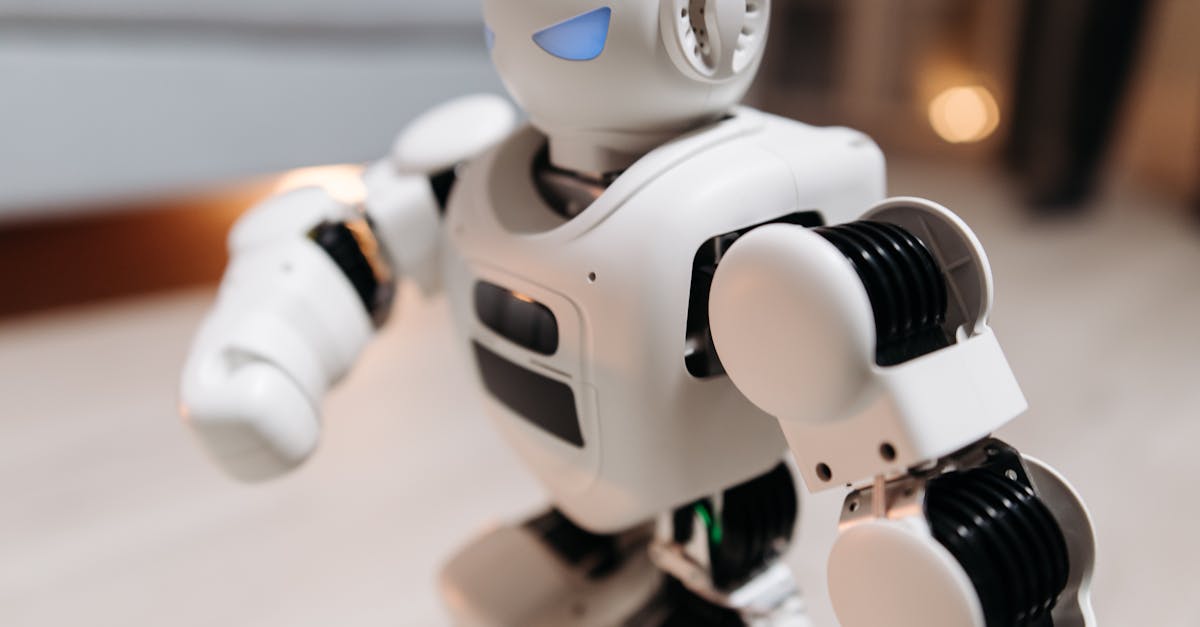
Tesla Optimus: Assessing the Humanoid Bet Beyond the Hype

The Promise vs. The Prototype
Elon Musk's vision for Tesla extends far beyond electric vehicles and energy storage. At the heart of this ambition lies the Optimus humanoid robot, a project that claims to solve the labor shortage through automation. However, distinguishing between marketing projections and shipping hardware is critical for investors and industry observers. As of late 2024, the Optimus Gen 2 remains in the prototype and pilot phase. While Musk has stated targets for mass production in 2025, there is no public evidence of large-scale commercial deployment outside of Tesla's own facilities. The industry standard requires independent verification of hardware capabilities before pricing models become credible.
The disconnect between the vision and the reality is evident in the timeline. In 2022, Musk announced the robot would be in production by 2023. This timeline has been pushed back multiple times. Such delays are common in robotics development, but they impact capital allocation. For the Indian market, where capital efficiency is paramount, these delays suggest caution. We must prioritize pilot deployments over marketing claims when evaluating the readiness of the technology.
Engineering the Humanoid Form Factor
The Optimus design prioritizes cost reduction over raw performance metrics seen in competitors like Boston Dynamics' Atlas. The unit utilizes a simplified kinematic structure compared to traditional industrial arms. This decision aligns with Tesla's manufacturing philosophy of vertical integration, where components are built in-house to control costs. However, simplification often comes at the expense of durability. The current spec sheet suggests a payload of 20kg, which is insufficient for many industrial tasks involving heavy lifting.
Actuators and Mobility
Tesla claims to develop custom actuators for every joint. The linear actuators are designed for high torque at low speeds, mimicking human muscle fibers. However, the efficiency of these custom components remains unverified by third-party testing. Current available footage shows the robot walking at a steady pace, yet stability on uneven terrain is not yet demonstrated. Unlike hydraulic systems found in heavy industry, the Optimus relies on electric motors. This choice reduces maintenance costs but limits payload capacity.
The transition from 20kg to 45kg remains a significant engineering hurdle. Battery density is also a constraint. The robot uses a 48V battery system that is claimed to last for an 8-hour shift. Recharging times and thermal management in Indian climate conditions are unknown variables. Without verified battery data, the operational viability remains theoretical.
Vision and AI Stack
The core differentiator is Tesla's drive for end-to-end neural networks. The robot uses cameras for navigation rather than LiDAR. This approach mirrors the Autopilot stack used in the Model Y. The assumption is that vision is cheaper and more scalable than sensor fusion. Training data comes from Tesla vehicles. The Dojo supercomputer processes this data to refine the robot's decision-making.
While the logic is sound on paper, the latency between perception and action in a physical environment introduces safety risks. Regulatory bodies like the EU and India will scrutinize these safety protocols. If the robot fails to detect a sudden obstacle, the liability falls on the manufacturer. Current specs do not yet demonstrate fail-safe mechanisms required for unstructured environments.
Deployment Reality: Where Is Optimus Actually Working?
There is a distinct gap between demos and deployments. Tesla has shown Optimus folding laundry and sorting parts at the Fremont Factory. These are controlled environments. The robot operates within a bounded area with specific lighting conditions. Independent verification of these claims is currently scarce. Unlike Figure AI or Agility Robotics, which have announced partnerships with major logistics firms, Tesla has kept most testing internal.
This internal usage does not validate the system for external sale. If Optimus cannot operate in a warehouse managed by a third party, the value proposition for the broader manufacturing sector is weakened. The industry waits for a case study from a non-Tesla facility. Until then, the robot is an internal tool, not a product. The distinction matters for supply chain planning.
Furthermore, the software stack requires constant updates. Over-the-air updates are promised, but they imply a dependency on internet connectivity. In Indian factories with patchy connectivity, this could be a bottleneck. The hardware must be robust enough to handle offline operations or have a local edge compute unit.
The Economics of Humanoid Labor
Musk has repeatedly cited a target price of $20,000 to $30,000 for the Optimus. This pricing is central to the business case. At $20,000, the robot would be cheaper than a human worker in low-wage markets, assuming high utilization rates. However, landed costs must include integration, safety systems, and software licensing. In India, the cost of importing high-tech robotics is inflated by customs duties.
Even if the base unit is $20,000, the final cost to a manufacturer could exceed INR 20 lakhs. For the Indian market, the ROI calculation requires a 24/7 operational shift. If the robot requires human supervision or retraining, the economic benefit diminishes. Current pricing estimates for similar humanoid units range from INR 15 lakhs to INR 50 lakhs depending on specifications.
For example, a basic industrial arm costs significantly less than a humanoid. The humanoid value proposition relies on versatility. If the Optimus costs INR 25 lakhs, it must replace more than one worker to break even. This threshold is high for the current Indian labor market where wages are competitive.
India Availability and Regulatory Landscape
Currently, Tesla Optimus is not available for purchase in India. There are no authorized distributors or local assembly units. The robot would fall under the category of Special Purpose Robots requiring BIS certification for safety. The Department for Promotion of Industry and Internal Trade DPIIT has been scrutinizing foreign robotics imports. Safety standards for humanoid robots interacting with humans are not yet codified in Indian law.
This creates a regulatory grey area for potential deployment. Import duties on robotics components range from 10% to 15% depending on the origin. If the core AI hardware is imported from the US, additional tariffs may apply. This makes the $20,000 target price highly optimistic for the Indian market. Local manufacturing is a possibility if Tesla establishes a Gigafactory for robots, but no such announcement has been made.
Until then, Indian automakers and logistics firms will likely wait for the price to drop to INR 10 lakhs before considering adoption. The Ministry of Heavy Industries has released guidelines for robotics, but they focus on automation rather than humanoid safety. This gap leaves the market vulnerable to safety incidents.
Conclusion
The Tesla Optimus programme remains a high-risk, high-reward bet. The engineering ambition is clear, but the shipping timeline is fluid. Investors should prioritize pilot deployments over marketing claims. For the Indian market, the immediate outlook is one of observation. The regulatory framework must mature before significant hardware importation occurs.
Tesla will need to prove reliability in uncontrolled environments before the $20,000 price tag becomes viable. Until then, the focus should remain on the hardware specs and independent verification rather than the projected revenue models.
References
For further reading on the technical specifications and official announcements, please refer to the following sources.
- Tesla AI Day Presentations
- Tesla Investor Relations
- Independent Robotics Reporting
Sources
The references below are cited for technical accuracy.
Tesla Official Website - Optimus Page
Tesla AI Day 2022 Transcript
Reuters Report on Humanoid Robotics Trends
✓ Key takeaways
- •Hands-on view of Tesla Optimus: Assessing the Humanoid Bet Beyond the Hype inside our Tesla Optimus Programme library.
- •Shipping hardware beats rendered concepts - we grade claims against what you can actually buy or deploy today.
- •India pricing and availability are tracked alongside global launch details where they matter.
References
Related articles
More in Tesla Optimus Programme →