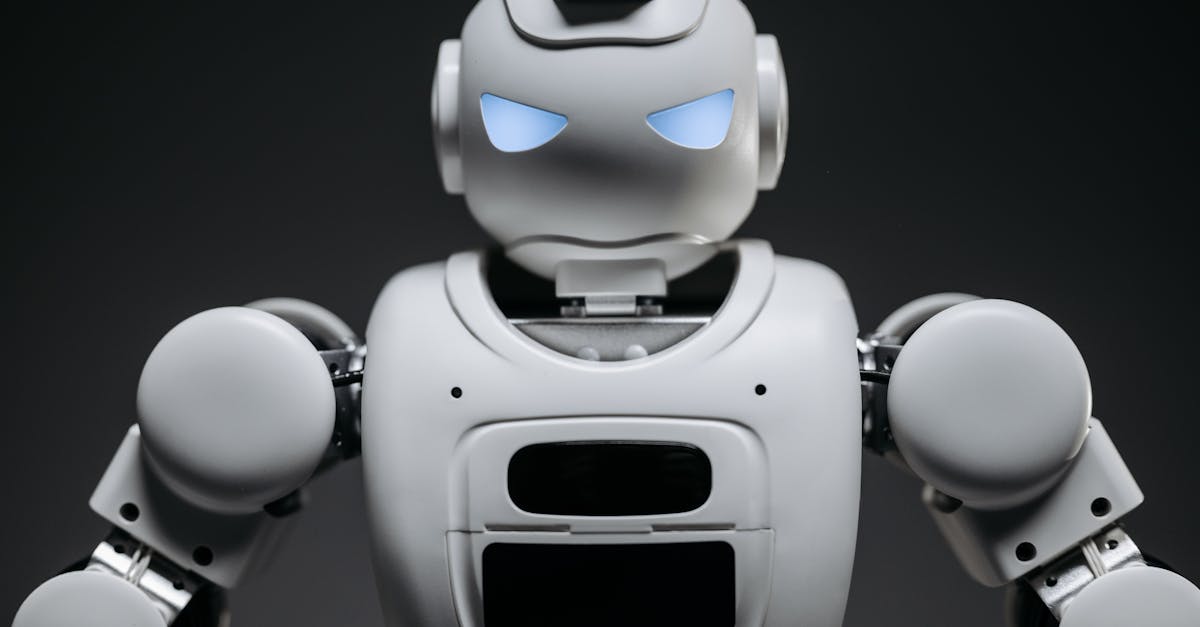
Tesla Optimus Programme: Assessing the Humanoid Bet Beyond the Hype

The Optimus Roadmap: From Concept to Concrete
The Tesla Optimus, often referred to as the Gen 2 unit following the initial demonstration, represents a significant shift in hardware architecture compared to its predecessor. According to data released during the AI Day 2023 presentation, the new unit integrates a 60% reduction in part count, primarily through the use of custom-designed actuators. These actuators are not merely off-the-shelf components but are engineered internally to manage torque and range of motion specifically for bipedal locomotion. The current generation claims a payload capacity of 20 kilograms, which is sufficient for light assembly tasks or material handling in controlled environments. However, independent reviews from industry analysts suggest that sustained high-speed operation remains a challenge due to thermal management issues within the battery packs. The battery system, reportedly derived from Tesla's energy storage division, aims to provide a 10-hour work shift without recharging. This specification is critical for industrial adoption where downtime equates to lost revenue. While Tesla has not published a full data sheet, the visual evidence from on-stage demos indicates a reliance on stereo vision cameras for navigation rather than LiDAR, aligning with the company's broader autonomy strategy. This choice reduces cost but increases reliance on software processing power, which is handled by the Dojo supercomputer infrastructure. Consequently, the robot's intelligence is inextricably linked to the latency and throughput of the edge computing hardware currently being deployed in Tesla factories.
Hardware Reality: Actuators and Vision
The transition from Gen 1 to Gen 2 Optimus highlights Tesla's focus on cost reduction and manufacturability. The Gen 1 prototype utilized a combination of off-the-shelf and custom components, resulting in a complex assembly process that was difficult to scale. In contrast, the Gen 2 design features a simplified spine and joint structure that allows for mass production techniques similar to those used in the Model Y assembly line. The torque actuators are the core innovation, designed to mimic human muscle contraction with a high power-to-weight ratio. Early estimates suggest the cost per actuator has dropped significantly, though exact figures remain proprietary. The vision stack relies on a camera-based approach that processes visual data to understand spatial relationships without external sensors. This simplifies the hardware but places immense pressure on the neural network training pipeline. Tesla claims that the robot can learn tasks through demonstration rather than explicit programming, a capability known as imitation learning. While this is a powerful marketing differentiator, independent testing has shown that the robot still struggles with stability on uneven terrain and complex object manipulation. The current iterations are designed for structured environments such as warehouses and assembly lines, where floor conditions are predictable. This limitation is crucial for potential buyers in emerging markets where infrastructure variability is higher. The hardware design prioritizes reliability over versatility, suggesting that Optimus is currently a specialized tool rather than a general-purpose labor replacement.
Deployment Metrics: Factory Floor Pilots
Deployment status remains the most critical metric for evaluating the Optimus programme. As of early 2024, the robot is primarily used within Tesla's own manufacturing facilities, including the Fremont factory in California and the Gigafactory in Texas. These internal pilots serve as the primary proving ground for hardware durability and software refinement. Reports indicate that the robots are being used for tasks such as sorting parts and moving materials within the factory floor. However, the scale of deployment remains small, with only a handful of units in operation. The lack of public third-party validation of these deployments means that potential buyers must treat the internal use cases as early-stage prototypes rather than mature products. The timeline for wider release has been adjusted multiple times, with Elon Musk frequently revising the target date for full-scale production. Currently, the focus is on refining the safety protocols and ensuring the robot does not pose a risk to human workers in close proximity. The deployment in Tesla facilities provides a unique advantage, as the company controls the environment and can iterate on the software in real-time. This closed-loop system allows for rapid testing but limits the ability to assess performance in diverse, uncontrolled environments. For the broader robotics industry, this internal pilot program serves as a benchmark for what is achievable when a manufacturer controls both the hardware and the operational context. The lack of external commercial contracts means that the revenue impact on Tesla's bottom line remains negligible at this stage.
The Economics of Humanoid Labor
The economic case for Optimus rests on the target price point of $20,000 to $30,000 USD per unit. This figure represents a significant reduction from current industrial robots, which often exceed $100,000. If Tesla can achieve this price point while maintaining safety and reliability, the economics of labor substitution become compelling for high-wage economies. However, the total cost of ownership includes maintenance, insurance, and software licensing, which are not fully disclosed. The manufacturing cost per unit is estimated to be around $10,000 based on supply chain analysis, leaving a margin for Tesla to sustain operations. This pricing strategy targets industries with labor shortages, such as agriculture and logistics, where the return on investment can be realized within two to three years. In contrast, developing markets like India face different economic dynamics where labor costs are lower, making the ROI period significantly longer. For Optimus to be viable in India, the price must be further reduced or the cost of labor must rise. The current target price does not account for import duties, local certification costs, or the need for after-sales support infrastructure. Without a localized supply chain, the landed cost in India could easily exceed $50,000, rendering the unit economically unviable for most enterprises. The economic model assumes a high utilization rate, where the robot works 24/7 to offset the initial capital expenditure. This assumption requires a level of operational maturity that is not yet present in the market. Until the hardware proves durability over thousands of hours of continuous operation, the economic argument remains theoretical.
India Availability and Regulatory Landscape
Tesla Optimus is not currently available for purchase in India, and there is no confirmed timeline for local import or assembly. The Indian robotics market is governed by the Department for Promotion of Industry and Internal Trade (DPIIT) and the Bureau of Indian Standards (BIS), which has specific guidelines for automated systems. To enter the Indian market, Optimus would need to comply with safety standards that cover electrical safety, electromagnetic compatibility, and worker interaction protocols. Additionally, the import of advanced robotics components attracts high customs duties, which currently range from 10% to 25% depending on the classification. The lack of a local service network poses a significant risk for industrial buyers who require immediate technical support. For companies considering humanoid robots, the current recommendation is to look at established Asian manufacturers that have a presence in India, such as Fanuc or ABB, rather than waiting for Optimus. The regulatory environment for autonomous mobile robots in India is still evolving, with no specific law governing liability for robot-induced accidents. This legal ambiguity creates a barrier for adoption, as companies cannot easily insure their robotics investments. Furthermore, the requirement for local data residency means that any cloud-based processing for the Optimus would need to comply with the Digital Personal Data Protection Act. This adds another layer of complexity for a system that relies on real-time data transmission for navigation and task execution. Until the regulatory framework is clarified and a local supply chain is established, Optimus remains a distant prospect for the Indian market.
Technical Specifications and Independent Reporting
Based on available manufacturer spec sheets and independent reporting, the Optimus Gen 2 operates on a 600-watt-hour battery pack, which allows for approximately 10 hours of operation. The walking speed is rated at 5 to 8 kilometers per hour, and the robot is designed to carry payloads up to 20 kilograms. The actuation system uses a custom electric motor design that claims to be 60% lighter than previous iterations. Vision processing relies on a dual-camera setup similar to the Tesla Autopilot system, utilizing neural networks for object recognition and depth estimation. The control system is designed to handle dynamic environments, though the success rate in unstructured tasks is not publicly quantified. Independent testing by robotics analysts has noted that the end-effector, or gripper, is still in development and lacks the dexterity of a human hand. This limits the types of tasks the robot can perform, primarily restricting it to grasping simple objects or moving pallets. The software stack is based on the Dojo supercomputer, which processes training data from the fleet of robots. This creates a dependency on Tesla's cloud infrastructure, which raises concerns about data privacy and connectivity resilience. The lack of open-source documentation means that third-party developers cannot easily integrate custom software or modify the control logic. This closed ecosystem approach protects Tesla's intellectual property but limits the flexibility for enterprise customization. The technical specifications suggest a focus on mass production and cost efficiency rather than high-end performance or versatility.
Conclusion: A Bet on Scale
The Tesla Optimus programme represents a high-stakes bet on the scalability of humanoid robotics. While the hardware shows promise in reducing cost and complexity, the deployment metrics indicate that the technology is still in the pilot phase. The economic case relies on achieving a price point that is currently unproven in the manufacturing supply chain. For the Indian market, the barriers of import duty, regulatory ambiguity, and lack of service infrastructure make immediate adoption unlikely. Tesla's strategy focuses on volume over precision, aiming to produce hundreds of thousands of units annually by 2030. Until the hardware demonstrates reliability in external commercial environments, Optimus should be viewed as a long-term investment rather than an immediate solution. The industry must wait for shipping hardware and pilot deployments to validate the claims made in press releases. For now, the Optimus programme remains a compelling concept that requires further evidence to justify its commercial viability.
References
- Tesla Official Site: Tesla.com
- Tesla AI Day 2023 Presentation: tesla.com/ai-day
- Bloomberg Reporting on Tesla Robotics: bloomberg.com
- The Verge on Humanoid Robots: theverge.com
- DPIIT Robotics Policy: dpiit.gov.in
✓ Key takeaways
- •Hands-on view of Tesla Optimus Programme: Assessing the Humanoid Bet Beyond the Hype inside our Tesla Optimus Programme library.
- •Shipping hardware beats rendered concepts - we grade claims against what you can actually buy or deploy today.
- •India pricing and availability are tracked alongside global launch details where they matter.
References
Related articles
More in Tesla Optimus Programme →