
Tesla Optimus: Shipping Reality vs. Concept Hype
The Hardware Ledger: Beyond the Render Farm
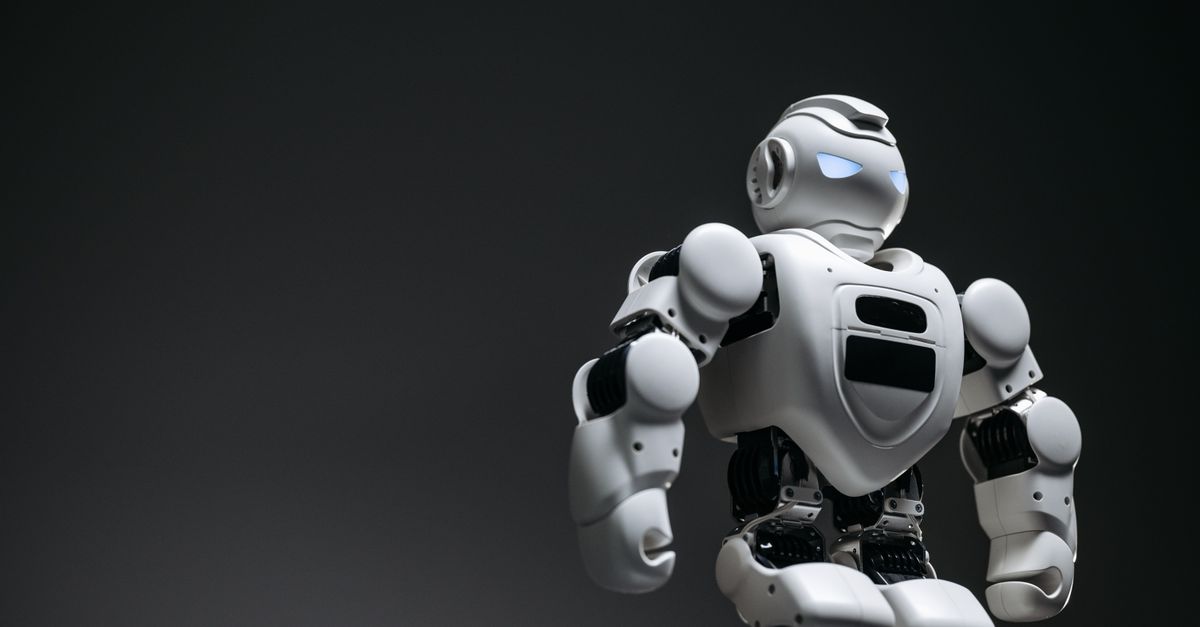
When Tesla first unveiled the Optimus prototype, the visual fidelity of the demonstrations was high, but the hardware specifics were often obscured by marketing gloss. To assess the programme objectively, we must strip away the rendered concepts and look at what has actually been shipped. As of late 2023 and early 2024, Tesla has transitioned from static prototypes to functional, mobile units capable of walking and manipulating objects.
The most significant shift occurred with the introduction of the Gen 2 prototype. Unlike the initial Gen 1, which utilized hydraulic actuators, Gen 2 is designed around 100% electric actuation. This change reduces weight and complexity, moving closer to the scalability required for mass manufacturing. The unit now boasts 40 degrees of freedom (DoF) in the body, with plans to expand to 60+ for advanced dexterity. While the company claims a target weight reduction of 10% to 15% compared to Gen 1, independent verification of the exact mass remains pending outside of official press releases.
The powertrain remains a key differentiator. Optimus leverages Tesla's core competency in electric vehicle technology. The battery pack is integrated directly into the chassis, aiming for a range that supports a full shift in a manufacturing environment. However, energy density claims for humanoid robotics are often optimistic. Current estimates suggest a battery capacity of roughly 2000Wh, which is substantial but requires rigorous thermal management in high-load scenarios like lifting heavy pallets.
Deployment Reality: Fremont Factories
Announcements of "deployment" often carry ambiguity. In the context of Optimus, we are looking at specific locations where the robot is performing tasks. The primary evidence comes from Tesla's own manufacturing facilities, specifically the Gigafactory in Fremont, California. Reports indicate that Optimus units are being used for repetitive, low-risk tasks such as moving bins, sorting parts, and monitoring battery packs.
This is not a consumer deployment. It is an internal testbed. The distinction matters because internal pilots allow for higher error rates and less stringent safety protocols compared to public spaces. The robot is not yet handling fragile consumer goods or interacting with the general public. The data gathered from these pilots focuses on the reliability of the locomotion system and the basic manipulation of standardized objects. If the hardware fails to complete a shift without intervention, the programme is deemed non-viable for industrial scaling.
There is no public evidence of Optimus units operating in third-party facilities as of mid-2024. While Tesla has hinted at external sales, the "shipping" metric is currently satisfied only by internal inventory. This aligns with the company's history of hardware production cycles, where prototypes often precede mass production by several years. We grade this as Level 3 development: functional hardware exists, but the ecosystem for external deployment is not yet open.
Technical Specifications vs. Claims
Tesla's technical documentation often cites the "Dojo" supercomputer and the "Full Self-Driving" (FSD) stack as the brain behind Optimus. The integration of the FSD neural network into a humanoid form factor is a bold engineering pivot. The claim is that the same visual processing pipeline used for driving cars can be applied to navigation and object recognition for a bipedal robot.
However, the physics of locomotion differ significantly from wheels on pavement. The balance requirements for a bipedal system introduce dynamic stability challenges that are not present in autonomous driving. While the software stack is advanced, the hardware must support the torque requirements for dynamic walking. Current iterations rely on a combination of torque sensors and encoders to maintain balance. The absence of a dedicated "balance controller" in the public spec sheet raises questions about how the system handles unexpected perturbations on uneven ground.
The actuator system is another focal point. Tesla claims a custom-designed actuator that mimics human muscle-tendon dynamics. This is a significant departure from standard industrial robotics, which typically use harmonic drives or high-torque DC motors. If Tesla achieves the target specific power output, the cost per robot could drop drastically. Without this innovation, the cost per unit remains high due to the complexity of the joint mechanisms.
The India Angle: Availability and Pricing
For Indian manufacturers and investors, the question is not just about the technology, but about the landed cost. As of now, there is no official pricing for the Tesla Optimus. Elon Musk has occasionally suggested a target price of $20,000 to $30,000 per unit once scale is achieved. However, this estimate is based on US manufacturing costs.
In India, the import duty on high-tech robotics is a critical factor. Under the current Customs Tariff Act, imported robotics fall under various HS codes. If classified under "Industrial Robots," the import duty can range from 10% to 15%, excluding the 18% GST. If the Optimus is imported as a "Machine Tool" or specialized equipment, duties may vary. Assuming a landed cost of $30,000, the Indian price could easily exceed ₹35 lakhs to ₹40 lakhs ($45,000) once taxes, shipping, and customs clearance are factored in.
This pricing makes the Optimus inaccessible for most Indian SMEs. Large automotive conglomerates like Tata Motors or Maruti Suzuki may justify the CAPEX for high-volume assembly lines, but the ROI timeline is long. Furthermore, India's domestic manufacturing policies (PLI schemes) encourage local assembly. Unless Tesla establishes a local assembly plant, the unit remains a premium import.
There is also the issue of regulatory compliance. The Bureau of Indian Standards (BIS) is increasingly scrutinizing autonomous systems. Safety standards for humanoid robots interacting with humans in shared spaces are not yet fully codified in India. A deployment in a factory would require adherence to the Factories Act, 1948, specifically regarding worker safety and machine guarding.
Competitive Pressure and Timeline
Tesla is not operating in a vacuum. Competitors like Figure AI, Boston Dynamics (now part of Hyundai), and Unitree are advancing their own hardware. Figure AI has secured significant funding and is testing their humanoid in logistics environments. Boston Dynamics has moved away from the Atlas hydraulic model toward electric systems to improve reliability and cost.
Tesla's timeline claims remain aggressive. The company has historically missed AI hardware targets. If Optimus is delayed beyond 2025 for external availability, the competitive landscape may shift. The "shipping hardware first" rule suggests that Tesla must deliver units to partners before announcing broader partnerships. We have not yet seen a partner announcement for Optimus beyond internal Tesla use.
For the Indian market, the timeline is even more complex. Regulatory frameworks for AI-driven robotics are evolving. Until the government defines liability for autonomous machines in manufacturing, large-scale adoption will remain conservative. This environment favors incremental automation (collaborative robots or cobots) over full humanoid integration.
Conclusion: The Bet Remains Unsettled
Tesla Optimus represents a high-risk, high-reward bet. The technology is plausible, leveraging Tesla's existing supply chain and software stack. However, the gap between "prototype" and "shipping product" remains significant. Until we see units deployed outside of Tesla's own factories and priced for the Indian market, the programme remains a development project rather than a market product.
For now, the grade is based on hardware presence and pilot data. We recommend industry stakeholders monitor the Fremont pilot data for reliability metrics before committing capital. The concept is powerful, but the commercial reality is still in its infancy.
Key Takeaways for Investors
- Hardware Status: Gen 2 prototypes are shipping internally. External sales are unconfirmed.
- Cost: Target $20k-$30k, but Indian landed cost likely exceeds ₹40 lakhs.
- Deployment: Limited to Tesla factories; no third-party pilots confirmed.
- Timeline: External availability expected 2025-2026, subject to regulatory hurdles.
References
Related articles
More in Tesla Optimus Programme →

