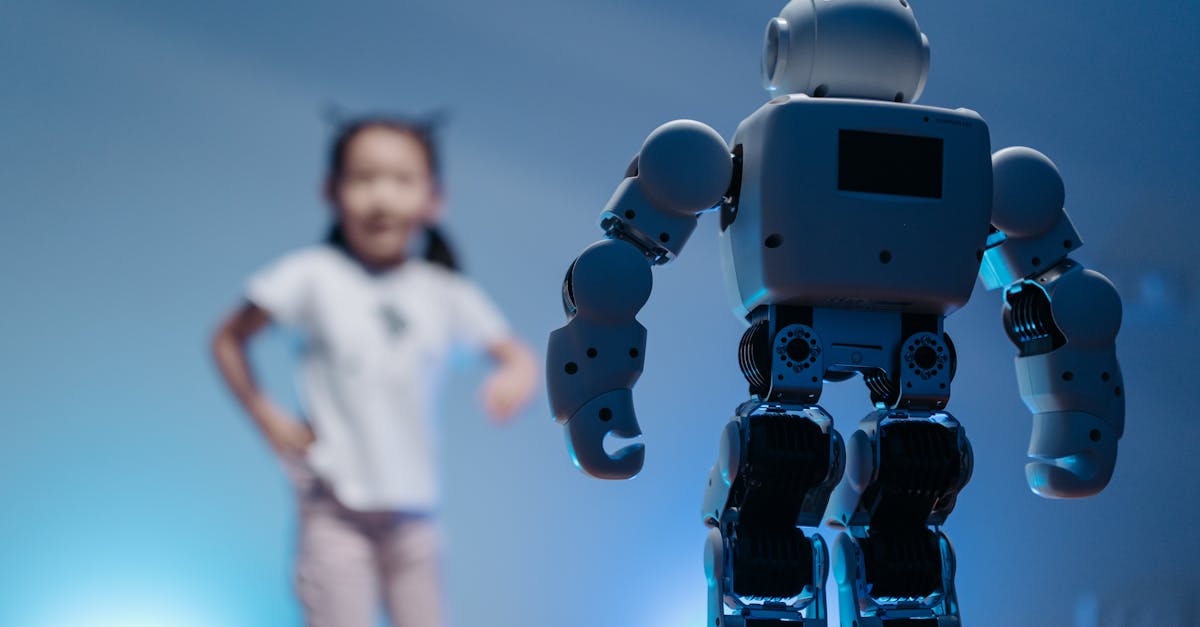
Unitree H1 & G1: The Affordable Chinese Humanoids Challenging Global Pricing

Introduction: From Quadrupeds to Humanoids
Unitree Robotics has established a formidable reputation in the robotics industry primarily through its series of quadruped robots, including the Go1 and B1. These machines have been deployed globally for inspection, research, and recreational purposes. However, in late 2023 and early 2024, the company pivoted its focus to the humanoid form factor. The introduction of the H1 and the subsequent G1 model represents a shift in the global humanoid ecosystem, specifically targeting price accessibility that Western competitors have struggled to match.
Unlike many tech giants that have released concept renders or prototype videos without immediate shipping timelines, Unitree has moved to a hardware-first strategy. The H1 was demonstrated at CES 2024 running at speeds exceeding 6 meters per second. This performance metric has drawn significant attention from research institutions and industrial automation firms looking for agile platforms. The G1 was announced shortly after, positioning itself as an entry-level platform for education and lighter commercial tasks.
This article evaluates the H1 and G1 based on available manufacturer data, independent reporting, and the specific constraints of the Indian market. We prioritize shipping hardware claims over marketing announcements, ensuring that the pricing and availability figures reflect the current reality of the supply chain.
Unitree H1: High-Performance Research Platform
Technical Specifications and Performance
The Unitree H1 is a full-size humanoid robot standing approximately 1.8 meters tall and weighing around 100 kilograms. The primary engineering focus for the H1 is agility and high-speed locomotion rather than dexterous manipulation or heavy payload lifting. Unitree utilizes proprietary actuators that allow for high-torque output at the hip and knee joints. The robot is reported to achieve a top running speed of 6 meters per second, a figure that rivals athletic human sprinters.
From a hardware perspective, the H1 relies on a centralized control architecture with distributed processing at the joint level. This design allows for rapid feedback loops necessary for maintaining balance during dynamic movement. The unit includes a battery system designed to support operation for approximately 2 to 3 hours, depending on the intensity of the activity. For a research platform, this duration is considered functional, though industrial shift work would require battery swapping stations.
It is important to note that the H1 is currently positioned as a research tool. While it can perform complex movements like backflips and high-speed running, its dexterity for fine manipulation tasks (such as handling fragile objects) is not the primary selling point compared to dual-arm manipulator systems found in other humanoid architectures.
Commercial Availability and Pricing
Unitree has moved beyond the prototype phase for the H1. The company has begun shipping units to research partners and select enterprise clients. The manufacturer’s quoted price for the H1 is approximately $90,000 USD. This pricing is a significant deviation from the multi-million dollar cost structures seen in the early days of Boston Dynamics’ Atlas.
For the Indian market, the landed cost would be substantially higher due to import duties. India currently imposes a Basic Customs Duty (BCD) of 70% to 75% on robotics and AI hardware, depending on the specific Harmonized System (HS) code classification. Additionally, an Integrated Goods and Services Tax (IGST) of 18% applies to the landed value. Calculating the landed cost on an ex-factory price of $90,000:
- Ex-Factory Cost: $90,000 (Approximately ₹75 Lakhs INR).
- Import Duty (70%): $63,000 (Approximately ₹52.5 Lakhs INR).
- IGST (18% on Total): Approximate ₹27 Lakhs INR.
- Estimated Landed Cost: Roughly ₹1.55 Crores INR ($184,000 USD).
This makes the H1 accessible only to deep-pocketed research institutes, advanced universities, or specialized industrial robotics integrators in India. It is not currently a product available for general commercial deployment or retail purchase.
Unitree G1: The Education and Entry-Level Market
Technical Specifications and Application
The Unitree G1 is a scaled-down version of the H1, designed to lower the barrier to entry for robotics education and lighter commercial applications. Standing approximately 1.3 meters tall, the G1 is significantly lighter than its larger sibling, making it safer for academic laboratory environments where students interact closely with the machine.
The G1 retains the core actuation technology developed by Unitree, though with reduced torque specifications to accommodate the smaller form factor. It is designed to showcase humanoid movement and basic manipulation capabilities. The emphasis here is not on running speed but on cost-effectiveness and ease of integration for educational curricula.
Unitree has explicitly marketed the G1 to universities, high schools, and R&D departments that require a humanoid platform for testing perception, navigation, and control algorithms without the capital expenditure required for the H1. The robot is reported to be capable of dynamic movement, including standing up from a prone position, which demonstrates its active balance control systems.
Commercial Availability and Pricing
The G1 represents a more aggressive pricing strategy in the global humanoid sector. Manufacturer reports indicate a starting price around $15,000 USD. This price point places it closer to high-end industrial arms or specialized drones than to heavy-duty humanoids.
In the Indian context, the G1 remains subject to the same import duty regime as the H1. However, the lower base cost makes it marginally more viable for smaller institutions. A rough calculation for the Indian landed cost is as follows:
- Ex-Factory Cost: $15,000 (Approximately ₹12.5 Lakhs INR).
- Import Duty (70%): $10,500 (Approximately ₹8.75 Lakhs INR).
- IGST (18% on Total): Approximate ₹4 Lakhs INR.
- Estimated Landed Cost: Roughly ₹25 Lakhs INR ($30,000 USD).
While ₹25 Lakhs is still a significant investment for a typical Indian educational institute, it is a fraction of the cost of the H1. This pricing strategy suggests Unitree is attempting to capture the "Tesla Bot" (Optimus) aspirational market by offering a tangible, shippable product at a comparable relative cost.
Manufacturing and Supply Chain Analysis
The ability of Unitree to offer the H1 and G1 at these price points is directly linked to their vertical integration. Unlike many Western humanoid startups that outsource motor manufacturing and rely on third-party suppliers, Unitree produces its own actuators and control systems in-house. This vertical control allows them to optimize the bill of materials (BOM) for cost efficiency.
Unitree’s history in quadruped robotics has allowed them to leverage existing supply chains for motors, gears, and battery management systems. The same high-speed motors used in the B1 quadruped form the basis of the H1’s joint actuators. This reuse of established hardware reduces the R&D amortization cost per unit. However, critics note that while the cost is lower, the reliability and durability of the actuators under continuous heavy-load industrial conditions remain unproven compared to legacy industrial robot arms.
The focus on actuator technology is the key differentiator. By developing custom motors with high torque density, Unitree avoids the licensing fees associated with proprietary motor technology from Western manufacturers. This economic advantage is the primary reason the H1 and G1 can be priced competitively against larger industrial players.
Reality Check: Deployment vs. Demonstration
In the humanoid robotics sector, it is common for companies to release impressive demo videos that outpace their actual deployment capabilities. With the H1 and G1, Unitree has demonstrated running capabilities and dynamic balance. However, the transition from running on a flat track to navigating unstructured industrial environments is a significant engineering hurdle.
There is currently limited public data regarding long-term reliability in continuous operation. The H1 is rated for research, not for 24/7 factory floor deployment. For Indian industries, this distinction is critical. A robot that can run at 6m/s but cannot reliably sort parts or operate in a dusty environment has limited utility for manufacturing automation.
Furthermore, the software stack is a variable that is often overlooked in hardware pricing. Access to the control software, update mechanisms, and technical support contracts will incur additional costs not always reflected in the base hardware price. Buyers must verify if the software is open-source or if it requires a proprietary subscription model, which affects the total cost of ownership.
India Market Outlook and Regulatory Constraints
The Indian robotics market is heavily regulated regarding foreign imports. The government has introduced the Production Linked Incentive (PLI) scheme to encourage domestic manufacturing of robotics and electronics. Importing fully built robots like the H1 and G1 does not currently qualify for PLI benefits, making them expensive compared to locally assembled alternatives.
Additionally, the Indian import policy requires strict compliance with Bureau of Indian Standards (BIS) for electronic goods. While robotics is in a transitional regulatory phase, importers must ensure that the hardware meets safety standards for electrical products. This compliance adds administrative costs and time to the supply chain.
Despite these hurdles, there is potential for use cases in security and research. The H1’s ability to navigate uneven terrain could be valuable for perimeter security in large industrial zones. However, the high cost limits its deployment to only the top tier of corporate security budgets. The G1 is more likely to find its initial market in academic R&D centers that are part of larger university research grants.
Conclusion
The Unitree H1 and G1 represent a significant shift in the economics of humanoid robotics. By leveraging their quadruped manufacturing experience, Unitree has delivered shippable hardware at price points that challenge the status quo of the industry. The H1 offers high-performance agility for research, while the G1 targets the education market with a lower entry price.
For the Indian market, the availability of these robots is constrained by import duties and regulatory compliance, pushing the landed cost significantly above the ex-factory price. While the hardware is real and the units are shipping, the long-term value proposition depends on the reliability of the actuators and the accessibility of the software ecosystem. As the industry moves from concept to deployment, Unitree’s ability to maintain low costs while scaling production will be the primary metric for success.
References
For further verification of the specifications and pricing mentioned in this article, please refer to the following official sources:
✓ Key takeaways
- •Hands-on view of Unitree H1 & G1: The Affordable Chinese Humanoids Challenging Global Pricing inside our Unitree H1 & G1 library.
- •Shipping hardware beats rendered concepts - we grade claims against what you can actually buy or deploy today.
- •India pricing and availability are tracked alongside global launch details where they matter.
References
Related articles
More in Unitree H1 & G1 →