Unitree H1 & G1: Shipping Hardware, Pricing Reality, and the Indian Import Path

Market Positioning: The Affordability Shift
Unitree Robotics has restructured the humanoid hardware market by decoupling performance from premium pricing. The company’s two primary platforms, the H1 and the G1, occupy distinct tiers. The H1 targets academic and industrial research with high-torque actuation and advanced balance control. The G1 targets cost-sensitive development, education, and light commercial automation. Both platforms are built on a common modular architecture, but their shipping status, deployment maturity, and pricing mechanics differ significantly. This assessment grades claims strictly by hardware shipped, pilot deployments, and manufacturer announcements, avoiding speculative marketing narratives.
Unitree H1: Engineering Reality vs. Research Claims
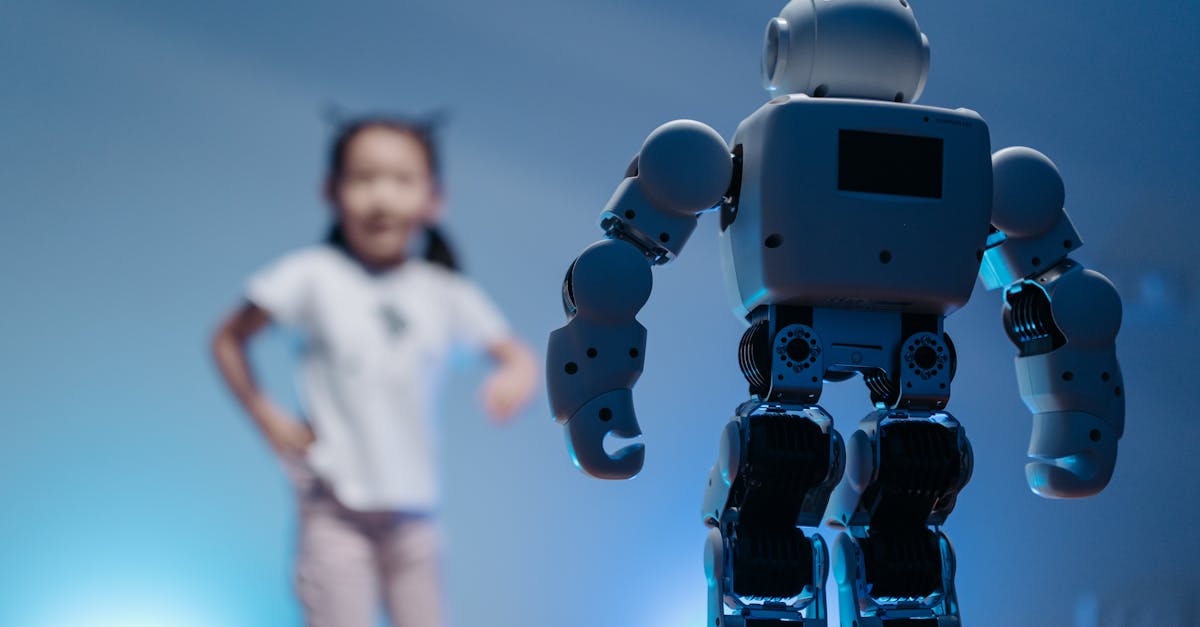
The H1 measures 180 centimeters in height and weighs approximately 47 kilograms. It utilizes a full-electric drivetrain with high-torque density joint motors, a 360-degree LiDAR suite, and a custom motion control stack. The platform was designed for dynamic mobility, including stair climbing, uneven terrain traversal, and recovery from external pushes. Manufacturing began in earnest in 2023, with units delivered to research laboratories, university robotics programs, and industrial testing facilities.
Actuation, Control, and Mobility
The H1’s joint actuators prioritize torque output and thermal management over lightweight materials. This design choice improves load capacity and durability but increases power consumption. The robot operates on a 63-volt battery system, with operational endurance ranging from 90 to 120 minutes under continuous motion. The control stack relies on real-time model predictive control (MPC) and torque-based impedance tuning, allowing stable bipedal locomotion at speeds up to 3.7 kilometers per hour. Factory videos and on-stage demos confirm consistent walking patterns, stair negotiation, and dynamic balance recovery. However, high-speed sprinting and prolonged continuous operation remain constrained by thermal limits and battery capacity.
Research Deployments and Limitations
Shipping hardware confirms that the H1 has reached research labs in North America, Europe, and Asia. Pilot deployments are primarily academic, focusing on gait analysis, reinforcement learning, and manipulation integration. Industrial pilots remain limited due to software maturity gaps, particularly in hand-eye coordination, tool interchangeability, and unstructured environment adaptation. Maintenance requirements are notable: joint servos, battery cells, and LiDAR components require regular calibration and replacement. The platform is not yet positioned for unattended commercial operation, but it serves as a reliable testbed for control algorithms and hardware-in-the-loop simulation.
Unitree G1: The Affordability Push
The G1 measures 127 centimeters and weighs 28 kilograms. It was announced with a base configuration priced at approximately $16,000 USD, positioning it as a cost-effective alternative for education, prototyping, and light automation. The platform uses simplified actuators, reduced sensor payloads, and a modular chassis design. Manufacturing scaled in mid-2024, with initial batches directed to developers, universities, and early adopters.
Hardware Specifications and Cost Structure
The G1 sacrifices some torque density and environmental sensing to achieve its price point. It operates on a 48-volt system, with typical runtime of 60 to 90 minutes under standard motion profiles. The joint design prioritizes serviceability and replaceability, allowing users to swap modules without specialized tools. The control stack supports basic locomotion, posture adjustment, and pre-programmed manipulation sequences. Advanced dynamic maneuvers, such as high-speed running or complex object manipulation, remain outside the baseline firmware. The cost structure relies on volume manufacturing, standardized components, and reduced sensor integration, which keeps the unit price competitive but limits heavy-duty performance.
Shipping Status and Pilot Deployments
Shipping hardware confirms that the G1 has entered limited commercial distribution. Initial units reached developer networks, robotics educators, and pilot testing facilities. Deployments are currently restricted to controlled environments, including university labs, training centers, and demonstration facilities. Industrial pilots are in early stages, focusing on material handling, visual inspection, and basic human-robot interaction. The platform’s software ecosystem is still maturing, with limited third-party manipulation libraries and no official ROS 2 distribution for full system control. Warranty and technical support depend on regional distributors, which vary by market.
India Availability and Landed Cost Estimates
Unitree has not announced an official distributor or authorized service center in India. Importation occurs through third-party robotics suppliers, direct manufacturer orders, or cross-border logistics channels. Indian customs classify humanoid platforms under industrial robot categories, attracting a base import duty of 10% to 15%, plus a 18% Goods and Services Tax (GST) on the total landed value. Additional costs include freight, insurance, customs clearance, and domestic logistics.
Approximate landed cost estimates in INR are provided for planning purposes only. These figures assume a direct import via standard commercial channels and do not include local distributor markups, service contracts, or extended warranties.
- Unitree H1: Base price ~$60,000 USD. Landed cost in India: approximately ₹53 lakh to ₹58 lakh INR. Estimates include 12% import duty, 18% GST, freight, and clearance. Actual pricing varies by supplier, exchange rates, and duty exemptions.
- Unitree G1 (Base): Base price ~$16,000 USD. Landed cost in India: approximately ₹14.2 lakh to ₹15.5 lakh INR. Estimates include 10% import duty, 18% GST, freight, and clearance.
- Unitree G1 (Advanced): Base price ~$25,000 USD. Landed cost in India: approximately ₹22 lakh to ₹24 lakh INR. Estimates include 12% import duty, 18% GST, freight, and clearance.
Warranty and technical support in India are not standardized. Buyers must verify supplier credentials, check for local calibration capabilities, and confirm battery replacement logistics. Import documentation, customs valuation, and compliance with Indian electrical safety standards should be reviewed before procurement.
Grading the Claims: Shipping, Pilots, Announcements
Evaluating Unitree’s platforms requires separating verified hardware status from marketing timelines. The grading framework follows a strict hierarchy: shipping hardware first, pilot deployments second, announcements last.
Shipping Hardware (Verified)
- H1: Confirmed shipped to research institutions and industrial test labs. Units operate as documented, with performance matching spec sheets for locomotion, balance, and basic manipulation.
- G1: Confirmed shipped to developers and education providers. Units deliver on base pricing and modular design, with firmware supporting standard motion profiles and posture control.
Pilot Deployments (Limited but Active)
- H1: Pilots focus on academic research, gait analysis, and control algorithm testing. Industrial pilots remain restricted to controlled facilities due to software maturity and maintenance requirements.
- G1: Pilots target education, prototyping, and light commercial automation. Deployments are functional but limited to structured environments. Advanced manipulation and unstructured navigation require third-party software integration.
Announcements (Future Roadmap)
- Software updates targeting improved dexterity, longer runtime, and expanded ROS 2 compatibility.
- Manufacturing scale-up to reduce per-unit costs and increase global distribution.
- Regional service center development, including potential partnerships in India for calibration, warranty, and battery logistics.
Announcements should be treated as development targets rather than immediate capabilities. Performance claims, deployment timelines, and pricing adjustments depend on hardware revisions, supply chain stability, and regulatory approvals.
Conclusion: Realistic Expectations for Buyers
Unitree’s H1 and G1 platforms have shifted the humanoid market by proving that functional bipedal hardware can be produced at accessible price points. The H1 delivers research-grade mobility and balance, while the G1 prioritizes cost efficiency and modularity. Both platforms have shipped hardware and active pilot deployments, but neither is yet positioned for unattended commercial operation. Buyers in India must account for import duties, GST, freight, and service gaps. Landed cost estimates provide a baseline, but actual pricing depends on supplier terms, exchange rates, and customs valuation. The platforms are viable for research, education, and controlled automation, but long-term deployment requires careful evaluation of maintenance, software support, and regional logistics.
References
- Unitree Robotics. Unitree H1 Official Specifications. https://www.unitree.com/h1
- Unitree Robotics. Unitree G1 Official Specifications and Pricing. https://www.unitree.com/g1
- Unitree Robotics. Press Release: Unitree Unveils G1 Affordable Humanoid Robot. https://www.unitree.com/press-release-unitree-g1
- IEEE Spectrum. Humanoid Robot Pricing and the Race for Mass Production. https://www.ieeespectrum.org/topic/robotics/
- Reuters. Chinese Robotics Firms Drive Down Humanoid Prices. https://www.reuters.com/technology/
✓ Key takeaways
- •Hands-on view of Unitree H1 & G1: Shipping Hardware, Pricing Reality, and the Indian Import Path inside our Unitree H1 & G1 library.
- •Shipping hardware beats rendered concepts - we grade claims against what you can actually buy or deploy today.
- •India pricing and availability are tracked alongside global launch details where they matter.
Related articles
More in Unitree H1 & G1 →