Unitree H1 and G1: A Critical Look at Shipping Humanoids and Indian Pricing
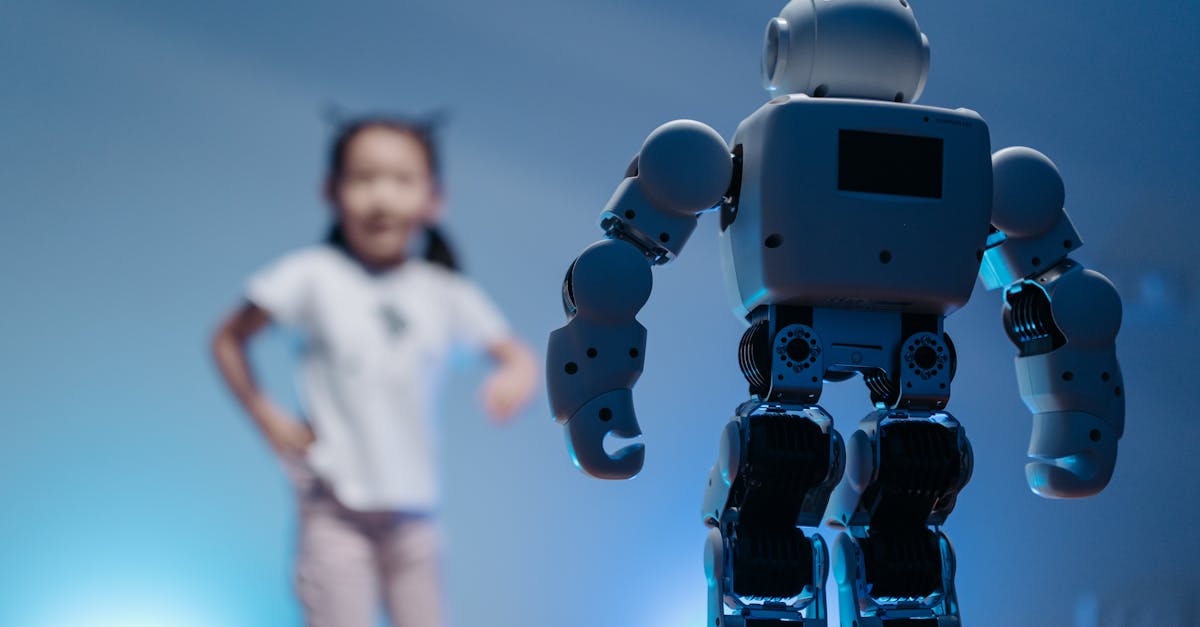
Unitree Robotics Enters the Humanoid Arena
Unitree Robotics, originally known for its quadruped robots like the Go1 and B1, has transitioned aggressively into the humanoid sector. While many competitors in the space remain in the prototype phase or rely on venture capital announcements without physical delivery, Unitree has shipped functional hardware to paying customers. This shift from quadrupeds to bipedal machines marks a significant milestone in the broader robotics economy, particularly concerning cost structures.
The company's entry into the humanoid field is defined by two distinct models: the H1, a high-performance benchmark for dynamic movement, and the G1, designed to lower the barrier to entry for research and commercial applications. Unlike the "rendered concept" phase that plagued early robotics claims, both units are currently shipping hardware with verified motion capabilities.
The Unitree H1: Performance Without Compromise
The Unitree H1 represents the upper tier of the company's humanoid offerings. Standing at approximately 1.8 meters tall with a weight of around 80 kilograms, the H1 is engineered for high dynamic performance rather than just static balance. The robot features 42 degrees of freedom (DOF) across its structure, though the core control focus remains on the 20+ actuated joints.
Key specifications for the H1 include a maximum speed of 3.3 meters per second and the ability to perform high-risk maneuvers such as backflips and dynamic running. The actuator system utilizes high-torque motors capable of delivering peak torque outputs exceeding 100 Newton-meters in critical joints. This level of performance places the H1 in direct competition with early prototypes from major Western entities, though Unitree achieves this at a significantly lower price point.
Shipping status is the critical metric here. Unitree began deliveries of the H1 to enterprise customers and research institutions in 2024. Pilot deployments have been confirmed in limited environments, focusing on logistics and factory demonstration rather than mass consumer applications. The hardware is built with a focus on modularity, allowing for rapid maintenance or component replacement, a necessity for industrial reliability.
While the marketing materials showcase impressive acrobatics, the operational reality involves rigorous calibration. The robot relies on a combination of model-based control and sensor fusion to maintain balance. This distinguishes it from purely vision-based systems that prioritize perception over physical stability. The H1 is sold primarily as a hardware platform for developers to integrate their own perception and decision-making stacks.
The Unitree G1: Lowering the Cost Barrier
Launched shortly after the H1, the Unitree G1 targets a different segment of the market. Weighing approximately 20 kilograms, the G1 is significantly lighter and more compact. This reduction in mass allows for a lower cost of manufacturing and, consequently, a lower retail price.
The G1 is priced at approximately $9,900 for the developer kit version. This pricing strategy is aggressive compared to the H1, which is estimated to be over $80,000. The G1 retains the core actuation technology of the H1 but simplifies the kinematic chain to reduce complexity. It features a similar control architecture, enabling it to run on the same software stack, which simplifies the development curve for end users.
Unlike the H1, which is designed for heavy-duty dynamic tasks, the G1 is positioned for education, laboratory research, and light commercial tasks. The lighter frame reduces wear on actuators during frequent operation, potentially increasing the lifespan in high-cycle environments. However, the payload capacity is limited compared to the H1, restricting its use to scenarios where heavy lifting is not required.
Unitree has emphasized that the G1 is available for immediate shipment to qualified developers and partners. This availability contrasts with many competitors who are still waiting for Series B funding or regulatory approval before releasing hardware. The G1 represents a shift toward commoditizing the humanoid form factor, making it accessible to smaller research labs and startups.
Technical Architecture and Supply Chain
Both the H1 and G1 rely on Unitree's in-house actuator technology. The company manufactures its own motors and reducers, which allows for tighter control over cost and performance. This vertical integration is a key factor in their ability to undercut competitors who outsource these components.
The control system utilizes a hierarchical architecture where low-level motor control is handled on-chip, while high-level planning occurs on an external computer. This separation ensures real-time stability while allowing flexibility in task execution. The robots are equipped with LiDAR and depth cameras for navigation, though the primary focus remains on locomotion rather than full autonomy.
Production is centralized in Shenzhen, China. While this location offers a robust supply chain for electronics and manufacturing, it introduces logistical challenges for international buyers. Shipping large-scale robotic hardware requires specialized freight, and the lead times can vary based on component availability. Unitree has managed to maintain a consistent delivery schedule, suggesting a mature supply chain relative to newer entrants.
India Availability and Landed Cost Estimates
For the Indian market, the availability of Unitree H1 and G1 is subject to import regulations and customs duties. While Unitree Global operates internationally, direct official distribution channels in India are still being established through partners.
Unitree G1 Pricing Estimate:
- Base Price: $9,900 (Developer Kit)
- Import Duty (Approx): 20% on machinery/electronics
- GST: 18% on the total value including duty
- Logistics & Handling: $1,500 - $2,500
- Estimated Landed Cost: ₹13.5 Lakhs to ₹15 Lakhs INR
Unitree H1 Pricing Estimate:
- Base Price: $80,000 - $100,000 (Commercial)
- Import Duty (Approx): 20% on machinery/electronics
- GST: 18% on the total value including duty
- Logistics & Handling: $5,000 - $8,000
- Estimated Landed Cost: ₹75 Lakhs to ₹90 Lakhs INR
These figures are estimates based on current customs tariffs for robotics equipment in India. The actual cost may vary depending on the specific classification of the hardware and the partner handling the import. BIS (Bureau of Indian Standards) certification may also be required for certain electronic components, which could add to compliance costs.
For Indian enterprises, the value proposition lies in the hardware capability relative to price. A humanoid robot costing under ₹15 Lakhs in the G1 segment is rare globally, where competitors often exceed ₹50 Lakhs. However, buyers must account for the lack of localized service infrastructure, meaning maintenance may require shipping components back to China or hiring specialized third-party technicians.
Market Impact and Competitive Landscape
The entry of Unitree into the humanoid market with shipping hardware forces a re-evaluation of the industry's financial models. Competitors relying on "concept" announcements must now justify their valuations against actual delivered units. The H1 and G1 demonstrate that high-performance robotics does not strictly require billions in R&D funding if the supply chain is optimized.
This price compression benefits the ecosystem. Lower hardware costs allow more organizations to run pilots, which generates data for algorithm training. However, it also raises the bar for reliability. A robot that is cheap but frequently breaks down offers poor value compared to a more expensive, durable unit.
Unitree's strategy of offering both a performance flagship and an accessible entry model mirrors the semiconductor market's approach. By segmenting the product line, they capture both high-margin performance buyers and volume-driven research buyers.
Critical Assessment: Limitations and Realities
Despite the aggressive pricing and shipping status, the technology is not without limitations. Battery life for the H1 and G1 is typically rated around 1 to 2 hours of active operation. This restricts deployment in long-shift environments without automated charging infrastructure.
Autonomy remains the secondary constraint. Both robots are designed to be controlled by external systems or require significant developer input for complex tasks. They are not standalone laborers capable of negotiating unstructured environments without intervention. The value proposition is currently rooted in locomotion and control hardware rather than full cognitive autonomy.
Furthermore, the software ecosystem is still maturing. Developers often need to write their own perception stacks to integrate with the robot's control system. This requires a high level of engineering expertise, which may limit adoption to large research institutions rather than small businesses.
Conclusion
The Unitree H1 and G1 represent a tangible shift in the humanoid robotics industry. By prioritizing shipping hardware over marketing concepts, they provide a baseline for performance and pricing that the market can no longer ignore. For India, the G1 offers a unique entry point into the field, provided the landed costs and maintenance infrastructure are factored into the budget.
While they do not solve the problem of full autonomy or mass deployment, they provide the hardware necessary to test it. As the industry moves toward 2025, the focus will likely shift from "can they build it?" to "can they maintain it?" Unitree's current delivery track record suggests they are building the former, but the latter remains the challenge for all players in the sector.
For Indian stakeholders, the recommendation is to treat these units as R&D platforms rather than immediate labor replacements. The hardware is ready, but the software and economic models for mass adoption are still evolving.
✓ Key takeaways
- •Hands-on view of Unitree H1 and G1: A Critical Look at Shipping Humanoids and Indian Pricing inside our Unitree H1 & G1 library.
- •Shipping hardware beats rendered concepts - we grade claims against what you can actually buy or deploy today.
- •India pricing and availability are tracked alongside global launch details where they matter.
References
Related articles
More in Unitree H1 & G1 →