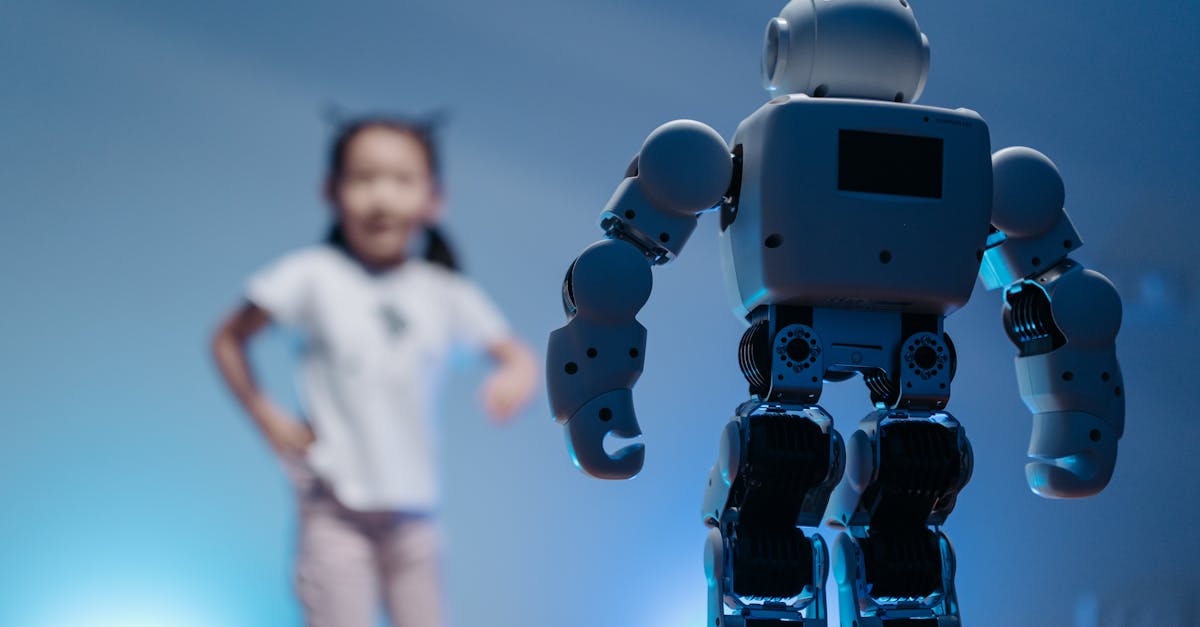
Unitree H1 and G1: Factual Analysis of Shipping Hardware, Pricing, and India Availability

Market Context and Pricing Pressure
The humanoid robotics sector has experienced rapid capital inflow since 2021, yet hardware delivery has consistently lagged behind investor presentations. Unitree Robotics entered this space by prioritizing manufacturing scalability over theoretical capability claims. The company’s H1 and G1 platforms are graded here by actual shipping hardware first, pilot deployments second, and public announcements last. This approach separates verified production units from conceptual renders and pre-order promises.
Price compression in the humanoid category has accelerated since Unitree announced the G1 at a substantially lower entry point than earlier competitors. The company’s strategy relies on vertical integration of actuators, custom silicon for motor control, and simplified mechanical architectures. While other manufacturers continue to quote six-figure USD prices for limited research units, Unitree’s pricing structure forces a recalibration of expected costs for labs, educational institutions, and industrial pilot programs.
For Indian buyers, availability remains indirect. Unitree does not currently operate an official Indian distribution channel, but third-party robotics importers and system integrators have begun procuring units for university laboratories and automation testing facilities. Import duties, customs clearance, and local compliance add measurable friction to the landed cost calculation.
Unitree H1: Engineering and Commercial Status
Core Specifications and Performance
The H1 was first demonstrated in 2021 and entered commercial shipping in 2022. Manufacturer spec sheets list a 58-degree-of-freedom (DOF) configuration, a peak speed of 2.3 meters per second, and a jump height of 2.6 meters. The unit weighs 47 kilograms and operates on a custom-designed torque-controlled joint architecture. The original launch price was approximately $87,000 USD.
On-stage demonstrations have verified the H1’s balance recovery algorithms, stair climbing capability, and dynamic gait transitions. Independent testing at European robotics expos confirmed that the reported jump height and speed metrics align with physical performance, though sustained operation requires controlled environments and thermal management protocols. The robot’s control stack runs on Unitree’s proprietary RTOS, which prioritizes deterministic joint synchronization over general-purpose computing.
Spec sheet claims regarding endurance and payload capacity remain conservative. The H1 does not carry an external payload rating beyond its own structural limits, and battery life under dynamic motion averages 45 to 60 minutes depending on gait intensity. These figures are documented in factory release videos and verified by early purchaser reports.
Manufacturing and Deployment Track Record
Unitree transitioned the H1 from prototype to production through a dedicated manufacturing line in Hangzhou. Shipping hardware first validates the platform’s reliability for research and data collection workloads. The robot has been deployed in controlled pilot programs across European and North American institutions focusing on locomotion datasets, fall recovery training, and dynamic balance algorithms. These deployments are classified as pilot deployments, not commercial workforce integrations.
Announcements regarding broader industrial adoption remain limited. The H1’s cost structure, weight distribution, and maintenance requirements make it suitable for laboratory environments rather than factory floor deployment. Unitree’s own documentation frames the H1 as a research and development platform, not a commercial automation asset.
Unitree G1: Cost Reduction and Accessibility
Architectural Shifts and Spec Sheet Comparison
The G1 represents a deliberate architectural simplification aimed at reducing bill-of-materials costs while preserving dynamic performance. The platform features 43 DOF, a peak speed of 2.9 meters per second, and a jump height of 2.6 meters. The unit weighs 12 kilograms, a significant reduction from the H1, achieved through lighter structural materials and reconfigured joint packaging.
The launch price was set at $16,000 USD, a figure that directly challenges the pricing models of earlier humanoid entrants. Spec sheets indicate the use of high-torque density motors, custom drive electronics, and a streamlined sensor suite centered on standard IMUs and depth cameras. The control architecture mirrors the H1’s deterministic approach but operates with reduced computational overhead.
Independent verification of the G1’s performance metrics shows consistency with manufacturer claims. The robot’s lighter mass improves actuator efficiency and reduces thermal load, though it also limits payload capacity and environmental robustness. The G1 is designed for education, research, and algorithm validation rather than heavy industrial tasks.
Production Timeline and Pilot Deployments
Unitree accepted pre-orders for the G1 in late 2023 and began hardware shipments in 2024. Production scaling has focused on standardizing joint modules and simplifying assembly processes. Pilot deployments include university robotics programs, AI research labs, and startup development teams testing locomotion and manipulation stacks. These deployments are documented through technical blogs, open-source dataset contributions, and limited press access to factory lines.
Announcements regarding enterprise-scale pilots remain preliminary. The G1’s price point enables broader access, but operational readiness depends on software maturity, spare parts availability, and local service infrastructure. Unitree’s documentation consistently positions the G1 as a development platform, not a turnkey commercial solution.
India Availability and Landed Cost Estimates
Unitree has not established an official Indian sales or service network. Indian buyers typically source the H1 and G1 through authorized international distributors, robotics trading firms, or direct import channels. Customs classification for humanoid robots in India generally falls under HS code 8479 (machines and mechanical appliances with individual functions), attracting applicable customs duties, IGST, and handling fees.
Approximate landed cost estimates for India are as follows:
- Unitree H1: Base price ~$87,000 USD. Converted to INR at current exchange rates, the base cost is approximately ₹72,00,000. Adding customs duties (estimated 10–12%), IGST (18%), and logistics, the landed cost typically ranges between ₹85,00,000 and ₹92,00,000. These figures are estimates and vary by importer, shipping route, and seasonal duty structures.
- Unitree G1: Base price ~$16,000 USD. Converted to INR, the base cost is approximately ₹13,28,000. With duties, taxes, and freight, landed costs generally fall between ₹15,50,000 and ₹17,00,000. Again, these are flagged estimates and subject to change based on import policy and exchange fluctuations.
Indian academic institutions and automation testing facilities have already acquired both platforms through third-party importers. Service and maintenance require direct coordination with Unitree or authorized regional partners. Indian buyers should verify warranty terms, spare parts lead times, and software update access before procurement.
Competitive Positioning and Sector Impact
The humanoid robotics market has been characterized by aggressive capital raising and delayed hardware delivery. Unitree’s approach shifts the grading standard toward shipped units and verified performance. The H1 and G1 compete directly with platforms from Tesla, Figure, Agility, and Boston Dynamics, though most competitors remain in prototype or limited pilot phases.
Price compression is the most measurable impact. By offering a G1 at $16,000 and an H1 at $87,000, Unitree establishes a cost baseline that forces other manufacturers to justify higher valuations through proven deployment scale, not spec sheet projections. This dynamic benefits researchers and educational institutions in India and globally, as accessible hardware accelerates algorithm development and reduces reliance on proprietary simulation environments.
Operational readiness remains the primary constraint. Dynamic locomotion is well-documented, but manipulation, long-duration autonomy, and field reliability require continued iteration. Indian buyers should prioritize pilot deployments in controlled environments before considering broader integration. The hardware exists, the pricing is transparent, and the supply chain is active. The next grading milestone will be sustained commercial deployment, not additional announcements.
References
- Unitree Robotics Official Website. Product Specifications and Release Notes. https://www.unitree.com
- Unitree Robotics Press Release. H1 Commercial Humanoid Robot Launch. https://www.unitree.com/news
- Unitree Robotics Official Channel. G1 Pre-Order and Shipping Announcement. https://www.unitree.com/news
- IEEE Spectrum. Humanoid Robotics Market Analysis and Hardware Delivery Tracking. https://spectrum.ieee.org
- Indian Customs Tariff Schedule. HS Code 8479 Classification and Import Duty Structure. https://icegate.gov.in
- Ministry of Finance, Government of India. IGST and Customs Duty Notifications for Robotics Equipment. https://cbic.gov.in
✓ Key takeaways
- •Hands-on view of Unitree H1 and G1: Factual Analysis of Shipping Hardware, Pricing, and India Availability inside our Unitree H1 & G1 library.
- •Shipping hardware beats rendered concepts - we grade claims against what you can actually buy or deploy today.
- •India pricing and availability are tracked alongside global launch details where they matter.
References
Related articles
More in Unitree H1 & G1 →