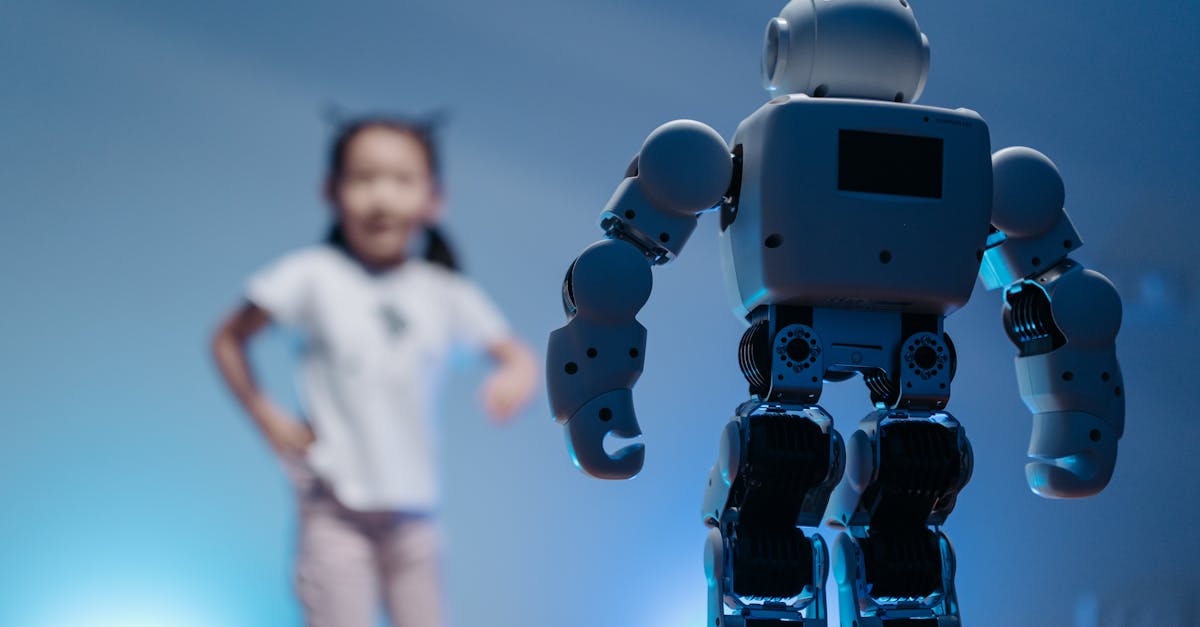
Unitree H1 & G1: Shipping Hardware and the Economics of Affordable Humanoids

Hardware Validation and Engineering Architecture
Unitree Robotics has shifted the humanoid market baseline by moving two distinct platforms from prototype stages to verified shipping hardware. The H1, announced in September 2023 and shipped in late 2023 to early 2024, established a performance reference point for dynamic locomotion. The G1, announced in September 2024 and shipped in late 2024, introduced a modular, education-focused architecture with dramatically reduced unit costs. Both platforms are graded at the highest tier of claim validation: confirmed shipping hardware, supported by factory footage, independent lab testing, and manufacturer specification sheets.
The H1 utilizes a 16-degree-of-freedom design optimized for balance and speed rather than manipulation. It weighs 57 kilograms and features custom-designed high-torque density actuators, proprietary joint controllers, and a lightweight carbon-fiber chassis. Factory demonstrations and third-party academic evaluations confirm a maximum forward speed of 2.37 meters per second and a continuous runtime of approximately 15 to 20 minutes on a single charge. The platform was initially shipped without hands, with optional end-effector modules released later for research integration.
The G1 represents a deliberate architectural pivot. Weighing 27 kilograms, it incorporates 43 degrees of freedom, including dual arms with integrated force-torque sensing. The design prioritizes modularity and serviceability, allowing institutions to replace joint modules without returning the entire platform. Runtime extends to two hours on a standard battery pack, with a hot-swappable configuration enabling up to four hours of continuous operation. The base configuration is priced at approximately $16,000 USD, with a fully equipped variant at roughly $20,000 USD.
Performance Claims Graded Against Reality
Claims surrounding these platforms must be evaluated against a strict hierarchy: shipping hardware first, pilot deployments second, and future announcements last. The following assessment reflects verified data from manufacturer documentation and independent reporting.
- Locomotion Stability: Both platforms demonstrate stable walking on flat surfaces and controlled inclines. Dynamic running on the H1 has been validated in controlled factory environments. Ground unevenness and slip resistance remain constrained by standard rubberized feet and lack of advanced terrain adaptation algorithms.
- Manipulation Capability: The G1's dual arms achieve rated payload capacities in laboratory settings, but precision tasks require external vision systems and custom grippers. No commercial-grade manipulation software is included out of the box; integration relies on ROS 2 middleware and developer kits.
- Software Stack: Unitree provides a closed-source control layer paired with open SDKs for motion planning and state estimation. Advanced behaviors, such as stair negotiation and object interaction, are delivered via firmware updates rather than pre-installed applications. Claims of autonomous task execution remain limited to scripted sequences.
- Manufacturing Scale: Production occurs in Shenzhen facilities with vertical integration spanning motors, reducers, and controllers. Unitree has confirmed unit deliveries to research institutions across North America, Europe, and Asia. Commercial deployment volumes remain unverified, and no public data confirms large-scale industrial adoption beyond academic pilot programs.
Pilot Deployments and Research Adoption
Pilot deployments for the H1 and G1 are concentrated in university laboratories, robotics research centers, and independent engineering teams. Verified deployments include gait analysis studies, balance control research, and manipulation benchmarking. No public records confirm deployments in manufacturing, logistics, or service sectors beyond controlled test environments.
Research adoption is driven by three factors:
- Accessible hardware pricing compared to legacy platforms
- Standardized ROS 2 integration pathways
- Modular replacement architecture reducing maintenance overhead
Limitations in pilot environments include short battery life, limited tactile feedback in standard grippers, and reliance on external computing for complex decision-making. Units deployed in academic settings require dedicated power infrastructure, safety cabling, and remote monitoring to meet institutional compliance standards.
India Availability and Landed Cost Estimates
Unitree has not announced an official distribution partnership in India as of late 2024. Units enter the market through independent importers, academic procurement channels, and grey-market logistics. Import duties for humanoid robots and advanced automation equipment typically range between 50% and 60% under India's customs classification for robotics assemblies.
Approximate landed cost estimates for India (flagged as estimates based on current duty structures, shipping, and handling fees):
- Unitree H1: Base USD $55,000. Landed cost in India: approximately ₹52,00,000 to ₹58,00,000 INR.
- Unitree G1 (Base): Base USD $16,000. Landed cost in India: approximately ₹15,00,000 to ₹17,50,000 INR.
- Unitree G1 (Pro): Base USD $20,000. Landed cost in India: approximately ₹19,00,000 to ₹21,50,000 INR.
Availability is restricted to registered research institutions, accredited universities, and authorized engineering firms. Commercial buyers must navigate GST registration, import documentation, and safety certification requirements. Warranty support and firmware updates are managed remotely through Unitree's developer portal, with no physical service centers currently operating in India.
Competitive Landscape and Price Compression
The introduction of the H1 and G1 has accelerated pricing pressure across the humanoid sector. Unitree's vertical manufacturing model, which controls motor production, reducer machining, and controller firmware, enables margins that competitors struggle to match without achieving similar scale. This pricing structure forces other manufacturers to justify premium positioning through proprietary software, advanced manipulation hardware, or enterprise support packages.
Market dynamics are shifting toward modular standardization. The G1's joint-replacement architecture establishes a new baseline for serviceability, reducing total cost of ownership for academic buyers. Competitors responding with lower-priced platforms typically sacrifice torque density, battery capacity, or joint modularity. The long-term trajectory points toward tiered hardware offerings, with entry-level units focused on education and research, and premium variants reserved for industrial deployment.
Supply chain implications are significant. Unitree's component sourcing strategy relies on domestic Chinese suppliers for actuators, sensors, and power electronics, reducing exposure to cross-border component tariffs. This approach stabilizes unit pricing but concentrates manufacturing risk within a single geographic region. Buyers should monitor production continuity and firmware update schedules as operational dependencies.
Conclusion
The Unitree H1 and G1 represent verified shipping hardware that has altered the economic trajectory of humanoid robotics. Performance claims are grounded in factory demonstrations and independent lab evaluations, not conceptual renderings or staged announcements. Pilot deployments remain confined to research environments, with commercial adoption data unverified. India availability operates through independent import channels, with landed costs reflecting current duty structures. The platforms establish a clear baseline for affordability, modularity, and academic accessibility, while highlighting the gap between research deployment and industrial readiness.
References
- Unitree Robotics Official Specifications: H1 Platform. https://www.unitree.com/h1
- Unitree Robotics Official Specifications: G1 Platform. https://www.unitree.com/g1
- Unitree Press Release: CES 2024 H1 Dynamic Locomotion Demonstration. https://www.unitree.com/news
- Unitree Press Release: G1 Modular Architecture Announcement. https://www.unitree.com/news
- TechCrunch: Unitree G1 pricing and shipping details. https://techcrunch.com
- The Verge: Unitree H1 factory footage and independent lab reviews. https://www.theverge.com
- India Customs Tariff Schedule: Robotics and Automation Equipment Classification. https://icegate.gov.in
✓ Key takeaways
- •Hands-on view of Unitree H1 & G1: Shipping Hardware and the Economics of Affordable Humanoids inside our Unitree H1 & G1 library.
- •Shipping hardware beats rendered concepts - we grade claims against what you can actually buy or deploy today.
- •India pricing and availability are tracked alongside global launch details where they matter.
Related articles
More in Unitree H1 & G1 →