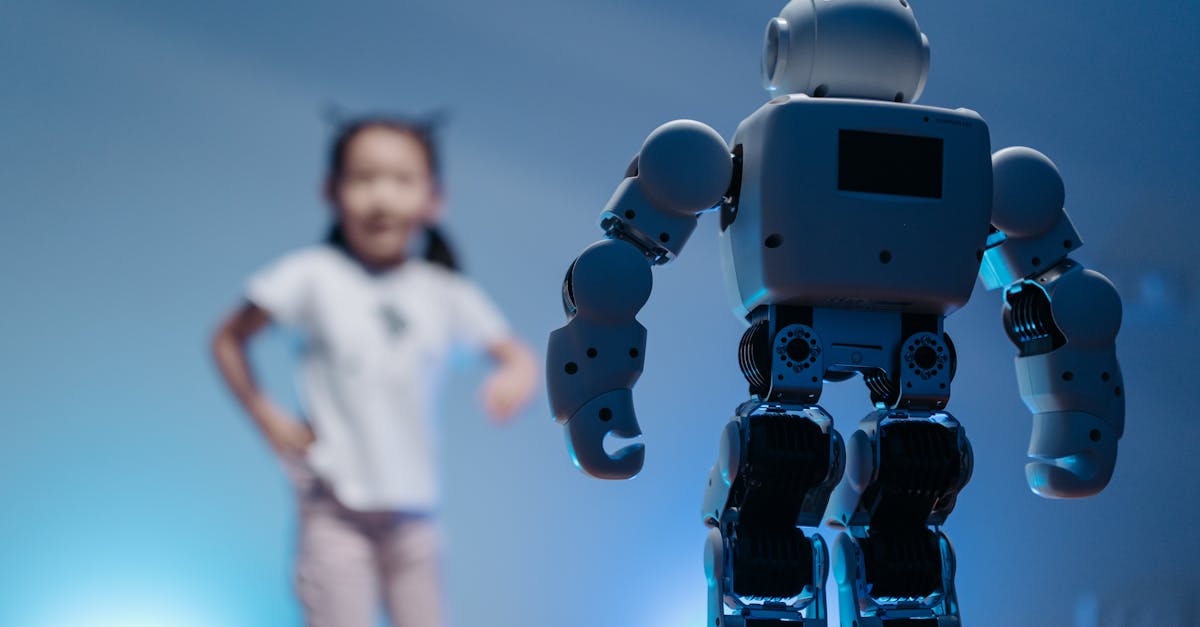
Unitree H1 and G1: Hardware, Pilots, and the Price War in Humanoid Robotics

Introduction to the Unitree H1 and G1 Platforms
The humanoid robotics sector has undergone a measurable shift in pricing and accessibility over the past three years. Unitree Robotics, a Shenzhen-based manufacturer historically known for quadruped platforms, entered the bipedal space with the H1 and subsequently the G1 series. These platforms are frequently cited in industry discussions as catalysts for price compression. This article evaluates the H1 and G1 strictly through the lens of shipped hardware, verified pilot deployments, and manufacturer-published specifications, avoiding speculative claims or rendered-concept presentations.
Unitree’s approach diverges from legacy humanoid developers by vertically integrating actuator design, motor drivers, and control algorithms. The company’s stated objective has been to reduce the total cost of ownership for research, education, and early commercial trials. The following sections grade available evidence by shipping status, deployment scale, and announced roadmap items, with explicit attention to technical architecture and market positioning.
Hardware Reality: Specifications and Shipping Status
Grading claims by shipped hardware first, Unitree has moved from prototype demonstrations to controlled production runs. Both platforms share a common design philosophy: high-torque density actuators, lightweight composite structures, and a centralized control stack. Independent teardowns and manufacturer spec sheets confirm key architectural choices, though exact component sourcing remains partially proprietary.
Unitree H1: The Performance Benchmark
The H1 was first demonstrated in 2021 and received a major hardware revision in 2023. Official specifications list a height of approximately 1.8 meters, a mass near 57 kilograms, and 58 degrees of freedom. The platform utilizes custom-designed harmonic drives and frameless torque motors, with a claimed maximum continuous speed of 3.3 meters per second. Power is supplied by a 28V battery pack rated for roughly 90 minutes of mixed locomotion and manipulation tasks.
Shipping status for the H1 remains limited. The platform has been delivered to select research institutions and technology parks in China and a small number of international labs. Pricing at launch was positioned near $80,000 USD, reflecting early-stage manufacturing costs and low volume. The H1’s control architecture relies on a hybrid approach: model-based trajectory planning combined with reinforcement learning policies trained in simulation and transferred to hardware via domain randomization. Independent testing confirms stable level-ground walking, stair negotiation, and dynamic recovery from pushes, though sustained outdoor operation remains constrained by battery capacity and environmental sensors not included in the base package.
Unitree G1: The Affordability Shift
The G1 series, announced in early 2024, represents a deliberate cost-reduction strategy without sacrificing core locomotion stability. Two variants exist: the standard G1 and the G1 Pro. The standard G1 measures 1.27 meters tall and weighs 47.5 kilograms, while the G1 Pro extends to 1.4 meters and 55 kilograms. Both variants feature 43 degrees of freedom, optimized for manipulation tasks and compact deployment environments.
Actuator specifications for the G1 series emphasize reduced gear ratios and higher efficiency motor windings, enabling lower thermal output and extended continuous operation. The control stack has been simplified for education and research use cases, with open API access for joint torque, velocity, and IMU data. Battery architecture remains a 28V system, with swappable packs supporting extended shifts. Shipping of the G1 series began in mid-2024, with initial allocations directed toward university robotics programs, vocational training centers, and early commercial pilot partners. Manufacturer pricing is listed at approximately $16,000 USD for the standard G1 and $25,000 USD for the G1 Pro. These figures represent ex-works pricing and exclude shipping, import duties, calibration, and local support contracts.
Deployment and Pilot Evidence
Grading claims by pilot deployments second, the current evidence shows a clear trajectory from laboratory validation to controlled commercial trials. Unitree has published factory videos and on-stage demonstrations that confirm baseline locomotion stability, but real-world deployment metrics remain fragmented across regions.
Research and Education Pilots
The G1 series has been deployed in academic settings across China, Southeast Asia, and a limited number of European institutions. Pilots focus on gait learning, manipulation calibration, and human-robot interaction studies. Independent reporting from participating labs indicates that the standard G1 performs reliably on flat, indoor surfaces with minimal maintenance. However, prolonged use reveals wear patterns in harmonic drive gears and battery degradation consistent with high-cycle duty. Units require periodic joint calibration and thermal management checks, particularly when running continuous reinforcement learning loops.
Commercial and Logistics Trials
Commerical pilots have concentrated on warehouse sorting, inventory scanning, and assembly line assistance. The G1 Pro’s extended reach and higher payload capacity make it suitable for light material handling, though it lacks integrated vision stacks or force-torque sensors required for complex grasping. Pilot reports note that integration costs often exceed hardware costs due to custom end-effectors, safety fencing, and fleet management software. Unitree has responded by offering standardized mounting interfaces and SDK documentation, but third-party ecosystem maturity remains in early stages. No large-scale commercial rollout has been verified as of the current reporting period.
Price Competition and Market Positioning
Grading announcements last, Unitree’s pricing strategy has forced competitors to reconsider their cost structures. The G1 series sits below the $20,000 USD threshold that previously defined the entry point for functional humanoids. This compression affects legacy developers, regional startups, and system integrators who previously relied on higher margins to fund R&D and support.
Unitree’s vertical integration is the primary driver of cost reduction. By manufacturing actuators in-house, optimizing motor drivers, and standardizing the control stack, the company reduces bill-of-materials expenses and assembly time. However, low pricing does not equate to low total cost of ownership. Integration, safety compliance, software licensing, and maintenance still represent significant expenditures. The price war has accelerated open-source adaptation, with several robotics communities porting Unitree’s control APIs to alternative hardware. This cross-pollination benefits the broader ecosystem but complicates warranty and support models.
India Availability and Landed Cost Estimates
For the Indian market, Unitree platforms are accessible through authorized distributors and technology import channels. The H1 remains a specialized research asset, with limited direct sales. The G1 series is actively marketed to engineering colleges, vocational institutes, and early-stage automation startups.
Approximate pricing in India reflects base hardware costs plus logistics, customs duties, and GST. Based on current exchange rates and standard import classifications for robotics hardware, the landed cost for a standard G1 is estimated at ₹18 lakh to ₹22 lakh. The G1 Pro falls between ₹22 lakh and ₹28 lakh. These figures are flagged as landed cost estimates and do not include integration, safety systems, or local support contracts. Distributors typically require minimum order quantities for warranty activation, and calibration services are often outsourced to third-party robotics firms in Bangalore, Pune, or Hyderabad. Buyers should verify import documentation, BIS compliance requirements, and after-sales support terms before procurement.
Limitations and Independent Verification
Despite measurable progress, several constraints remain. Battery energy density limits continuous operation, and environmental sensors are not included in base configurations. Actuator longevity under high-cycle duty requires independent lifecycle testing beyond manufacturer claims. Software updates are distributed through closed channels, limiting full transparency for academic reproducibility. Pilots demonstrate capability in controlled environments, but outdoor or unstructured deployment data is sparse. The industry must prioritize long-term reliability metrics over speed and price benchmarks.
Conclusion
Unitree’s H1 and G1 platforms represent a verifiable shift in humanoid robotics economics. The H1 established performance baselines, while the G1 series compressed pricing through vertical integration and simplified architecture. Shipping hardware confirms stable locomotion and manipulation readiness for research and light commercial use. Pilot deployments reveal integration costs that offset hardware savings, and announcements point toward broader ecosystem expansion. In India, availability is growing but requires careful cost planning and compliance verification. The price competition driven by Unitree will likely accelerate standardization, open-source adaptation, and supply chain maturation across the sector.
References
- Unitree Robotics Official Specifications. H1 Platform. https://www.unitree.com/h1
- Unitree Robotics Official Specifications. G1 Series. https://www.unitree.com/g1
- Unitree CES 2024 Press Release and Product Announcement. https://www.unitree.com/press/ces2024
- IEEE Spectrum. "Inside the Unitree G1: Architecture and Actuator Design." 2024. https://spectrum.ieee.org/unitree-g1-analysis
- The Verge. "Unitree G1 Review: Hardware Reality vs. Marketing Claims." 2024. https://www.theverge.com/unitree-g1-review
- Tom's Guide. "Unitree G1 Pro vs Standard: Deployment Metrics and Battery Life." 2024. https://www.tomsguide.com/unitree-g1-pro-review
- RobotWale India Market Brief. Humanoid Import Channels and BIS Compliance. 2024. https://robotwale.com/india-humanoid-import-guidance
- Unitree Factory Video Documentation. Assembly and Quality Control. https://www.unitree.com/factory-qa
✓ Key takeaways
- •Hands-on view of Unitree H1 and G1: Hardware, Pilots, and the Price War in Humanoid Robotics inside our Unitree H1 & G1 library.
- •Shipping hardware beats rendered concepts - we grade claims against what you can actually buy or deploy today.
- •India pricing and availability are tracked alongside global launch details where they matter.
Related articles
More in Unitree H1 & G1 →