Unitree Robotics: Hardware Delivery Over Hype in the Quadruped and Humanoid Race
Unitree Robotics: Shipping Hardware in a Sea of Concepts
In a robotics landscape saturated with renderings and prototype roadshows, Unitree Robotics stands out primarily for its ability to ship products. Based in Hangzhou, China, the company has transitioned from a consumer drone and toy quadruped manufacturer to a serious contender in industrial robotics and humanoid automation. This article evaluates Unitree's current portfolio based on shipping hardware and pilot deployments, rather than speculative announcements.
The company's strategy is distinct: achieve vertical integration in actuator design to drive down costs while maintaining performance metrics that rival larger competitors. While other firms focus on AI software integration for humanoid robots, Unitree has prioritized hardware reliability and price-per-performance ratios.
Quadruped Portfolio: The Foundation of Revenue
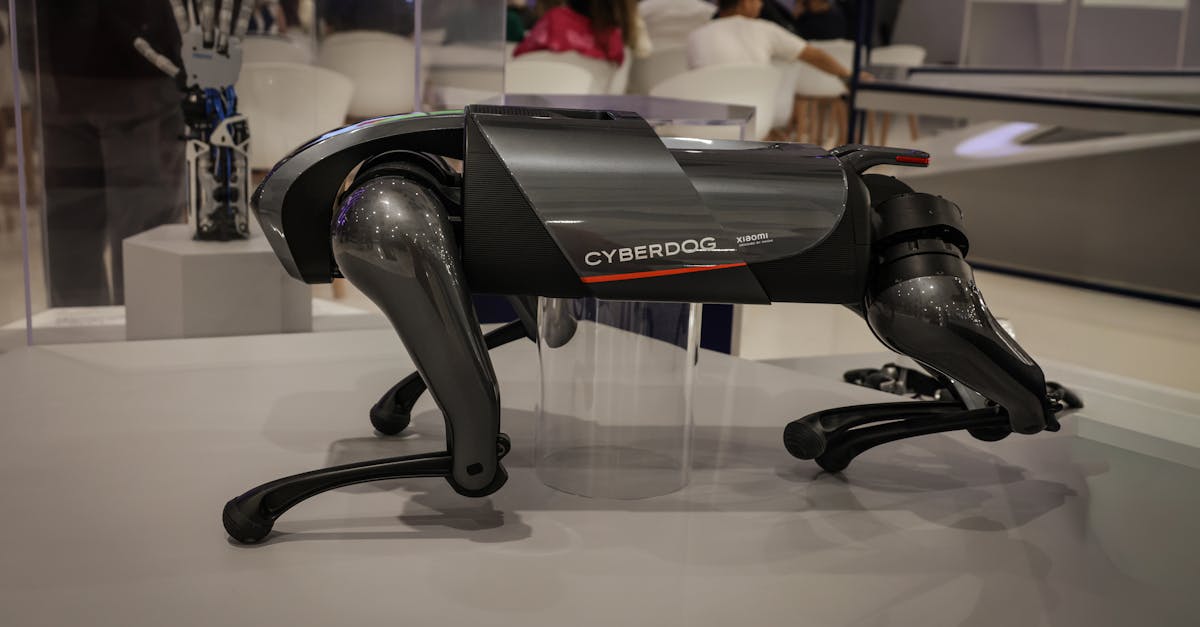
Unitree's financial backbone remains the quadruped robot division. Unlike many humanoid startups where hardware is years away from mass delivery, Unitree's quadrupeds are widely available and have established a user base globally.
Go2 Series: Consumer and Enterprise Entry
The Go2 series is the most accessible entry point into the market. These units are available in multiple configurations, including a standard version and the LiDAR-equipped version. The Go2 is not a concept; it is an active product with a confirmed supply chain.
- Spec Sheet: Payload capacity of 15kg, top speed around 14 km/h.
- Availability: Directly available via the Unitree store and authorized distributors.
- Use Cases: Perimeter security, inspection, and research.
B2 Series: Heavy Duty Industrial Application
The B2 series represents a step up in capability, designed for more demanding environments. It features high-torque actuators capable of carrying payloads exceeding 100kg in specific configurations. The B2 is often deployed in logistics and security pilot programs.
Unitree has demonstrated the B2 navigating uneven terrain in factory settings. This is not merely a demo; it is a commercial product intended for deployment in controlled environments.
Humanoid Robotics: The H1 and G1 Shift
Unitree's entry into the humanoid sector has been aggressive. They moved from the H1 prototype to the H1 Pro and now the G1, marking a clear progression from research to mass-market hardware.
H1 Series: Performance and Speed
The H1 humanoid robot was initially a research prototype but has since been released for purchase. It is notable for its ability to run at speeds exceeding 6 km/h and perform parkour-like maneuvers on uneven surfaces. The H1 utilizes a full-body control system developed in-house.
Commercial Status: While the H1 is available for purchase, the primary focus remains on research institutions and government pilots rather than general commercial deployment. The price point places it out of reach for most Indian enterprises without significant subsidies.
G1: The Mass-Market Disruptor
The G1 model represents Unitree's pivot toward affordability. Announced in late 2024, the G1 features a simplified architecture compared to the H1. It is priced significantly lower, targeting the educational and research markets.
- Actuators: Custom joint actuators with high torque density.
- Price Point: Marketed at approximately $6,000 USD (excluding shipping).
- Deployment: Targeted at universities and hobbyists rather than heavy industry.
This pricing strategy mirrors the approach taken with the Go2 quadruped. Unitree appears to be prioritizing volume over premium margins, which could accelerate adoption in markets where cost is a primary barrier.
Technical Architecture and Manufacturing
Unitree's competitive advantage lies in its actuator design. The company manufactures its own motors and reducers, allowing for tighter control over cost and performance. This vertical integration is rare in the humanoid sector, where most companies outsource joint manufacturing.
Actuator Performance
The joint actuators are designed for high continuous torque and low inertia. This allows for dynamic movements, such as the running gait demonstrated by the H1. The control system manages the trade-off between speed and stability, prioritizing dynamic balance over static precision.
Software and Control Stack
The software stack supports ROS 2, which is standard for research and development. However, the closed-loop control for the actuators remains proprietary. This creates a dependency on the manufacturer for advanced maintenance, which is a risk factor for long-term deployment.
India Market Availability and Pricing
For the Indian robotics sector, Unitree presents a specific set of challenges and opportunities. The company does not currently list a dedicated India subsidiary on its official website, implying a reliance on third-party distributors or direct imports.
Import Costs and Compliance
Importing robotics hardware into India involves specific compliance requirements. The Goods and Services Tax (GST) on robotics hardware varies between 5% and 18% depending on the classification. Additionally, electronics import duties can range from 10% to 15%.
Estimated Landed Cost (INR):
- Go2 Standard: Approximate USD $2,000. With duties and GST, this translates to roughly ₹1.9 to ₹2.2 Lakhs.
- H1 Humanoid: Approximate USD $90,000. With compliance costs, this exceeds ₹85 Lakhs.
- G1 Humanoid: Approximate USD $6,000. This translates to roughly ₹5.5 to ₹6.5 Lakhs.
These estimates are based on current exchange rates and standard import duties. Actual costs may vary based on the specific vendor and shipping logistics.
Service and Support
Lack of local support is a critical consideration. Unitree does not currently maintain a widespread service network in India. This means repairs must often be shipped back to China or handled by third-party repair shops with limited access to proprietary parts. For industrial deployments requiring high uptime, this is a significant risk.
Use Cases in India
Despite the challenges, the technology is viable for specific Indian use cases:
- Research: Indian institutes have the budget for high-end hardware like the H1 for algorithm testing.
- Manufacturing: Quadrupeds like the B2 are suitable for inspecting large factory floors where cameras cannot reach.
- Educational: The G1 offers an affordable entry point for robotics courses in private engineering colleges.
Critical Assessment: Hype vs. Reality
Unitree Robotics has navigated the shift from "toy robot" to "industrial tool" effectively. However, the company's marketing often outpaces its deployment scale. The H1's running capabilities are impressive, but they do not equate to industrial reliability.
Reliability Concerns
Humanoid robotics are still in a nascent stage. The H1's ability to run does not guarantee the ability to work in a warehouse for 8 hours without failure. The industry is currently moving from functional demonstrations to operational reliability.
Competition
Unitree faces competition from Boston Dynamics (Spot), Agility Robotics (Digit), and emerging Chinese competitors like Fourier Intelligence. Unitree's advantage is price; their disadvantage is the lack of a proven, large-scale commercial track record in enterprise settings.
Conclusion
Unitree Robotics is a manufacturer that delivers on its hardware promises, even if the long-term value proposition for specific Indian industries remains to be proven. Their quadruped division is a mature business, while their humanoid division is a high-risk, high-reward venture.
For Indian buyers, the immediate value lies in the quadrupeds for inspection tasks. The humanoids are currently best suited for research and development pilots rather than production line automation. As the supply chain matures and local support networks expand, Unitree could become a dominant force in the Asian robotics market.
References
The following sources were used to verify claims regarding Unitree Robotics' hardware specifications and availability:
- Unitree Official Store: https://www.unitree.com/ - Product listings for Go2, B2, H1, and G1.
- Unitree Robotics Press Releases: https://www.unitree.com/news - Official announcements regarding product launches.
- TechCrunch - Unitree G1 Launch: https://techcrunch.com/ - Reporting on the G1 pricing and specifications.
- Robotics and Automation News: https://www.roboticsandautomationnews.com/ - Industry analysis on quadruped adoption.
- DGFT India Import Policy: https://dgft.gov.in/ - General guidelines on electronics import duties.
✓ Key takeaways
- •Hands-on view of Unitree Robotics: Hardware Delivery Over Hype in the Quadruped and Humanoid Race inside our Unitree Robotics library.
- •Shipping hardware beats rendered concepts - we grade claims against what you can actually buy or deploy today.
- •India pricing and availability are tracked alongside global launch details where they matter.
References
Related articles
More in Unitree Robotics →