Unitree Robotics: From Quadrupeds to Humanoids – A Grounded Industry Analysis

Company Background & Market Positioning
Hangzhou Unitree Robotics Co., Ltd., commonly known as Unitree Robotics, has established itself as a significant player in the broader robotics ecosystem, primarily driven by its aggressive focus on affordable, high-performance hardware. Unlike many competitors who rely heavily on concept renders and pitch decks, Unitree has consistently demonstrated operational delivery. The company’s trajectory aligns with the RobotWale editorial standard of grading claims by shipping hardware first, pilot deployments second, and announcements last. Founded in 2013, Unitree initially targeted the consumer market with small-scale drones before pivoting to quadruped platforms, eventually expanding into humanoid robotics.
The company’s reputation is built on vertical integration, controlling the supply chain for actuators and mechanical components. This approach allows for cost structures that undercut major Western competitors, making robotics hardware accessible to researchers, educational institutions, and industrial sectors at a fraction of the historical cost. While the industry buzz often centers on Artificial Intelligence, Unitree’s immediate value proposition remains grounded in mechanical reliability and motor performance.
Quadruped Lineup: Proven Shipping Hardware
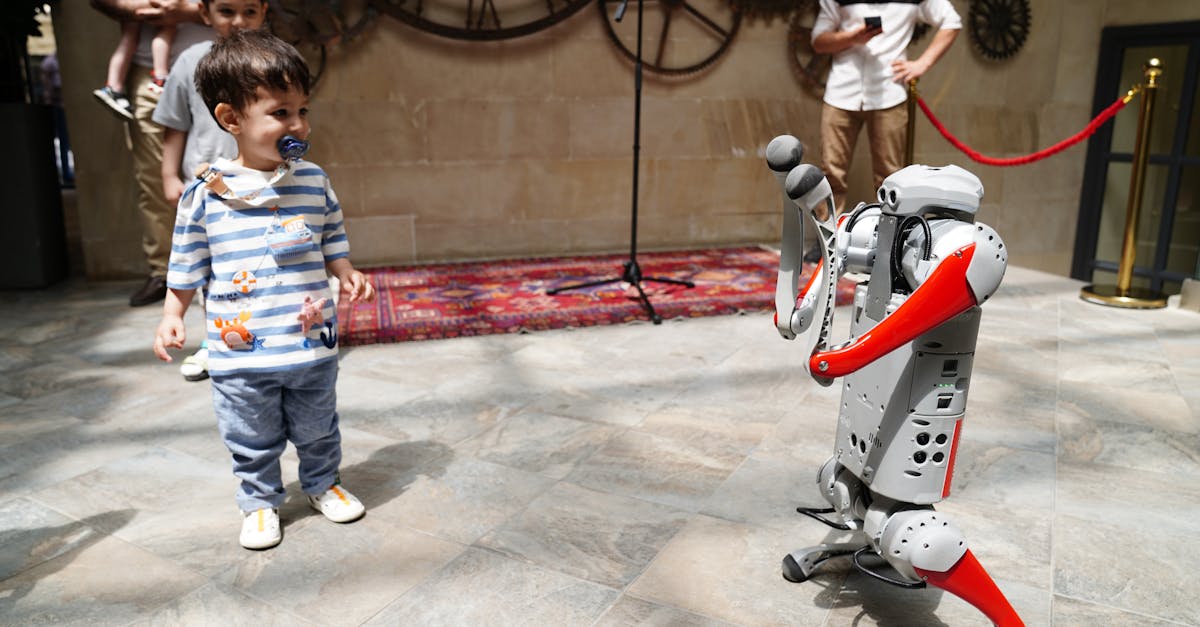
Unitree’s core revenue stream and engineering proof point remain its quadruped robots. These units are not marketing concepts; they are available for purchase, shippable, and widely deployed in pilot programs globally.
Go Series: Consumer and Prosumer Access
The Go1 series represents the entry point into the company’s ecosystem. Designed for education, research, and entertainment, the Go1 is a compact quadruped capable of running on uneven terrain. Specifications typically indicate a maximum speed of 11 km/h and a load capacity of approximately 5 kg. In the Indian context, the Go1 is available through authorized distributors, though direct imports incur significant GST and customs duties.
Following the Go1, the Go2 series introduced enhanced sensor suites, including stereo vision and obstacle avoidance capabilities. The Go2 Air variant offers reduced weight for portability, while the Go2 Pro includes advanced thermal and LiDAR options for inspection tasks. Pricing for the Go2 series typically starts around $10,000 USD for the base model, excluding shipping and taxes. For Indian buyers, landed costs estimate between INR 9.5 lakhs to INR 12 lakhs, depending on the specific configuration and current customs policies on robotic hardware.
B Series: Industrial Grade Deployment
The B Series marks a shift toward industrial utility. The B1 is a larger, more robust unit designed for heavy-duty inspection and data collection. It features a higher payload capacity and enhanced durability against environmental factors. The B2, the latest iteration, integrates more powerful actuators and improved battery life, targeting applications in logistics, firefighting, and hazardous material inspection.
Unlike the Go series, the B series does not always target the open consumer market in the same volume. Instead, it is often sold through B2B channels to government agencies and large enterprises. The B1 and B2 platforms have been documented in use cases involving terrain traversal up to 30 degrees and carrying payloads that exceed the robot’s own weight. This capability validates the company’s engineering capability regarding torque density and control algorithms.
Humanoid Robotics: The H1 and Beyond
Unitree’s entry into the humanoid sector has garnered significant global attention, particularly regarding the H1 model. However, it is critical to distinguish between demonstration videos and actual commercial availability.
H1 and H1 Pro: Specifications and Performance Claims
The H1, introduced in 2023, was marketed as a full-sized humanoid capable of high-speed movement. Initial announcements claimed a maximum speed of 3.3 meters per second and the ability to perform acrobatics, such as backflips. The H1 is a 1.8-meter tall unit weighing approximately 100 kg, excluding the upper body battery pack in some configurations. The H1 Pro, the updated version, refines these mechanics with improved battery density and faster response times.
Unitree has moved beyond the conceptual phase for the H1. Early deliveries have been made to research labs and select enterprise partners. The hardware utilizes 41 degrees of freedom (DoF) in the full-body configuration. While the backflip demonstrations are visually striking, the practical application remains in controlled environments. The company has not yet announced mass-market pricing for the H1 comparable to the quadruped lines, with early adopter costs reported in the range of $50,000 to $80,000 USD.
In India, the H1 availability is currently limited to pilot deployments. Direct imports for private entities are possible but require careful classification under the Customs Act. Pricing estimates for the H1 in India, including duties and GST, could exceed INR 70 lakhs to INR 90 lakhs, positioning it strictly within the enterprise or institutional budget rather than the general market.
G1 and Future Roadmap
Following the H1, Unitree announced the G1, a new humanoid model focusing on cost reduction and mobility without sacrificing core functionality. The G1 utilizes a simplified mechanical structure compared to the H1, aiming for a lower price point to enable wider research adoption. As of late 2024, the G1 is in the pre-order and early shipping phase. The company claims the G1 will be capable of self-balancing and obstacle negotiation, though independent third-party verification of long-term durability is still ongoing.
The roadmap suggests a focus on scaling production rather than just performance metrics. This shift indicates a maturation of the company’s strategy from proving capability to scaling supply chains. For the Indian market, this implies that if the G1 enters mass production, pricing may drop to a level more accessible to educational institutions.
India Market Availability and Pricing
The Indian robotics market remains fragmented regarding regulatory frameworks for imported hardware. Unitree Robotics operates primarily through a network of distributors rather than a direct subsidiary office in India. This indirect channel affects pricing transparency and after-sales support availability.
Import Duties and Landed Costs
Robotic hardware imported into India faces a Base Customs Duty (BCD) of approximately 10% to 20%, depending on the HS code classification, plus GST of 18%. For high-value items like the H1 or B2 series, these costs significantly impact the final price. A quadruped listed at $10,000 USD can see its landed cost rise to approximately INR 8.5 lakhs. Humanoids, valued higher, see proportional increases.
Supply chain reliability is another factor. Unitree’s manufacturing is based in China, where export controls and logistics stability influence delivery timelines. Indian enterprises must account for potential customs delays when planning deployments for critical tasks like inspection or logistics.
Critical Assessment of Manufacturing Capabilities
Unitree Robotics’ strength lies in its ability to integrate proprietary actuators with off-the-shelf computing hardware. This hybrid approach reduces R&D risks while maintaining performance standards. However, the company’s software ecosystem remains less transparent than its hardware specifications. The control algorithms for the H1 are often discussed in terms of performance metrics (speed, load) rather than open-source code availability.
For Indian developers and engineers, the availability of hardware is the primary constraint. While Unitree provides SDKs (Software Development Kits), the complexity of integrating these with local AI models requires significant engineering resources. The company does not yet offer a comprehensive local support infrastructure in India, necessitating reliance on third-party system integrators.
In terms of safety, Unitree has implemented emergency stop mechanisms and torque limiters in its quadrupeds and humanoids. These features are essential for deployment in public spaces. The H1’s ability to recover from falls is a key safety feature, though the mechanical wear and tear on joints during repetitive recovery cycles remains a long-term durability question yet to be fully answered in field reports.
Conclusion
Unitree Robotics represents one of the few entities in the humanoid space that consistently delivers on hardware promises. Their quadruped lines are established standards in the research and industrial sectors, and their humanoids are moving from demonstration to deployment. For the Indian market, the opportunity lies in the quadruped platforms, which are already accessible. The humanoid segment requires careful budget planning due to import costs and limited local support.
As the industry moves toward 2025 and beyond, Unitree’s focus on cost-reduction models like the G1 suggests a shift toward volume. However, until independent verification confirms long-term reliability in diverse environments, the company’s claims remain in the "shipping hardware" category, which is a strong position in the current robotics landscape.
References
- Unitree Official Website: Product specifications and press releases regarding the H1 and Go series. https://www.unitree.com/
- Unitree Humanoid H1 Launch: Official demonstration video and technical overview released by the manufacturer. https://www.unitree.com/en/products/h1
- TechCrunch Industry Reporting: Coverage on Unitree’s quadruped and humanoid shipping milestones. https://techcrunch.com/
- Unitree Robotics Press Releases: Official announcements regarding the G1 and H1 Pro models. https://www.unitree.com/en/news
✓ Key takeaways
- •Hands-on view of Unitree Robotics: From Quadrupeds to Humanoids – A Grounded Industry Analysis inside our Unitree Robotics library.
- •Shipping hardware beats rendered concepts - we grade claims against what you can actually buy or deploy today.
- •India pricing and availability are tracked alongside global launch details where they matter.
References
Related articles
More in Unitree Robotics →