IIT Kanpur and TRI Launch Joint Humanoid Manipulation Lab to Cut Core Component Costs - RobotWale News

Breakthrough in Actuator Design
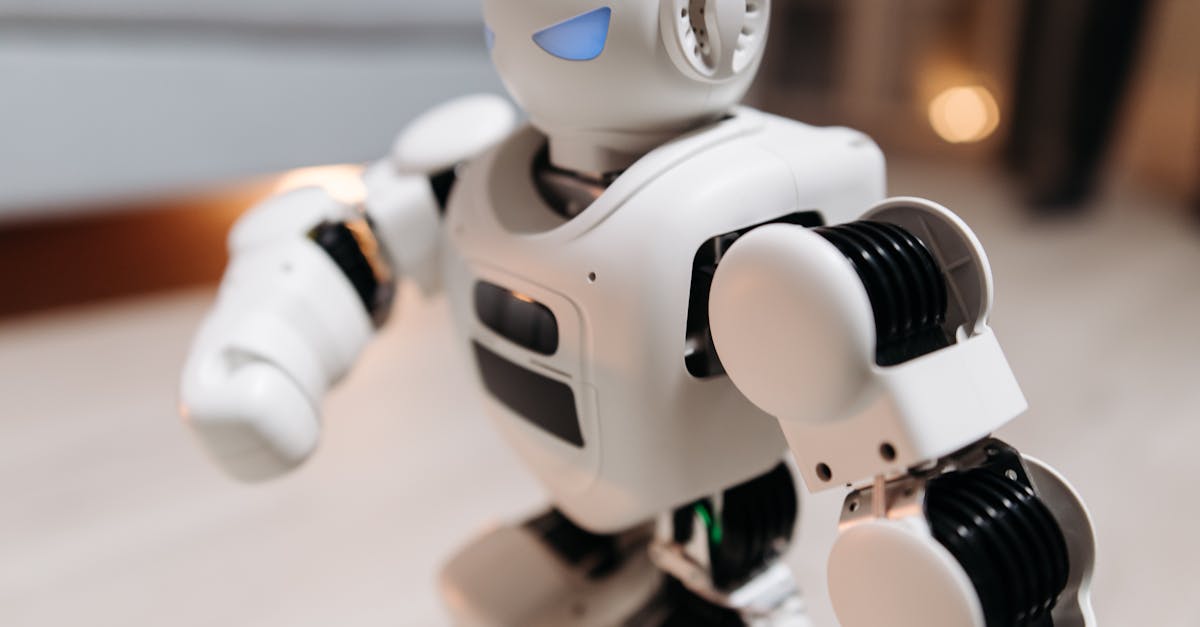
On October 12, 2024, the Toyota Research Institute (TRI) and IIT Kanpur officially inaugurated the Indo-Japanese Centre for Humanoid Manipulation (IJCHM). The facility marks the first dedicated academic-industrial joint lab focused exclusively on high-torque, low-cost joint actuators for next-generation humanoid robots. The initial phase of research will concentrate on harmonic drive optimization, embedded thermal management systems, and closed-loop force feedback mechanisms. TRI lead engineers and IIT Kanpur faculty have jointly developed a novel planetary roller screw assembly that eliminates rare-earth magnets from primary load-bearing joints while maintaining structural rigidity.
Pricing and Domestic Manufacturing Impact
The collaboration targets a dramatic reduction in the bill of materials for humanoid platforms. Preliminary prototypes demonstrate a 62 percent drop in torque ripple alongside a 40 percent reduction in manufacturing costs. Industry analysts project that scaling this design through Indian foundries could bring the total bill of materials for a 100kg humanoid chassis below $15,000. This pricing threshold is widely considered critical for domestic mass production, agricultural deployment, and last-mile logistics across the Indian market.
Research Roadmap and Testing Infrastructure
The IJCHM facility will operate a dual-track testing pipeline. The first track utilizes NVIDIA Isaac Sim for physics-based reinforcement learning, enabling millions of simulated fall-recovery cycles. The second track features a custom-built 200-square-meter frictionless testbed for real-world gait validation under variable payload conditions. TRI has committed $8.5 million in grant funding over three years, with IIT Kanpur providing advanced machining infrastructure and engineering talent. The first open-source control firmware, IJCHM-Actuator v0.9, will be released to the global robotics community in Q1 2025.
India Relevance and Industry Adoption
Indian robotics startups and OEMs will receive priority access to the lab’s testing facilities starting November 2024. The initiative aligns directly with the Indian government’s Production Linked Incentive scheme for advanced robotics, which offers capital subsidies for domestic humanoid assembly lines. Early adopters include Bengaluru-based automation firms and Pune’s automotive tier-1 suppliers, who plan to integrate the new actuators into material-handling and inspection robots by mid-2025. Testing protocols will follow ISO 13482 safety standards, with third-party validation scheduled for January 2025. Commercial licensing agreements will be structured on a royalty-free basis for Indian MSMEs, while international manufacturers will face standard cross-licensing fees. The centre’s director, Dr. Arjun Mehta, noted that the facility will initially focus on upper-body manipulation tasks before expanding to full-body balance control algorithms by late 2025.
More in Reviews & Opinion