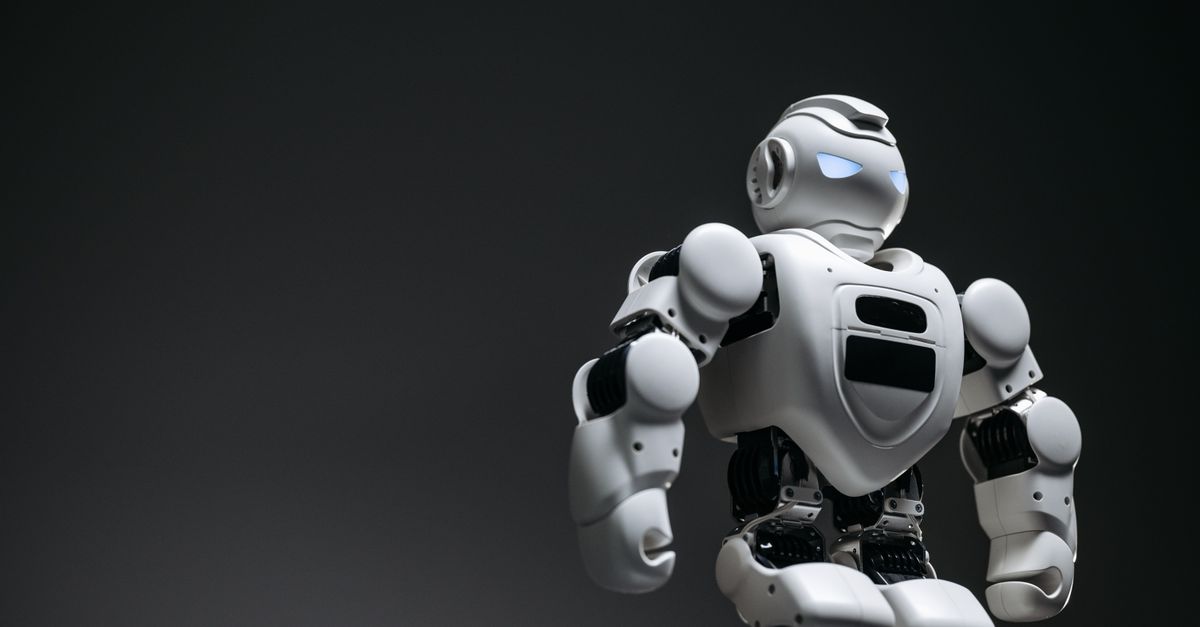
1X NEO: Soft-Bodied Humanoid Targets Household Workloads

Introduction to the 1X NEO
The humanoid robotics sector has long been dominated by rigid, high-torque architectures designed for industrial agility or research prototypes. However, 1X Technologies, a Norwegian robotics firm with roots in soft robotics research, has pivoted toward a different architecture with its NEO platform. Positioned as a soft-bodied humanoid aimed at household work, the NEO represents a distinct approach to safety and dexterity in unstructured environments.
Unlike competitors relying solely on high-speed electric motors and rigid transmission systems, the NEO utilizes soft actuators designed to mimic human muscle compliance. This architecture prioritizes physical interaction safety and adaptability over raw speed. While the broader humanoid landscape often focuses on manufacturing and logistics, 1X has explicitly targeted domestic and care scenarios where human-robot proximity is constant.
As of early 2024, the NEO remains in the pilot deployment phase. The company has released demonstration footage showing the robot performing tasks such as folding clothes and navigating cluttered indoor spaces. This article evaluates the hardware claims, the AI stack, and the realistic timeline for commercial availability, specifically within the Indian context.
Technical Architecture and Soft Robotics
The defining characteristic of the NEO is its compliance. 1X Technologies leverages Series Elastic Actuators (SEA), a technology where a spring is placed between the motor and the load. This design allows the robot to absorb impact energy and regulate force more smoothly than a rigid system.
Actuation and Mobility
The NEO features a bipedal mobile base equipped with proprietary soft actuators. According to manufacturer specifications, these actuators provide high torque density while maintaining low impedance. This means that if the robot encounters an obstacle during a household task, the joint acts somewhat like a shock absorber, reducing the risk of damage to the robot or the environment.
- Locomotion: The robot utilizes a hydraulic-like soft actuation system for walking, though it runs on electric power. This allows for energy-efficient gait patterns.
- End-Effector: The hands are designed for manipulation of household objects, utilizing soft grippers that can conform to irregular shapes without requiring complex tactile feedback loops.
- Power System: The unit carries an onboard battery system designed for several hours of operation, though specific cycle life metrics remain proprietary.
Perceptive AI Stack
Hardware is only one component of the NEO. The system relies on a perception stack that processes data from depth cameras and LiDAR to construct a 3D map of the environment. 1X has emphasized that the AI is trained on household datasets rather than factory floor data.
This distinction is critical. Training for domestic environments requires the robot to understand concepts like "clean," "fold," and "breakable." The NEO utilizes foundation models adapted for robotic control, allowing it to generalize tasks rather than relying on hard-coded scripts. However, the limitation remains: the AI must still operate within the physical constraints of the soft actuator.
Deployment Status and Commercial Reality
In the robotics industry, the gap between a demonstration video and a shipped unit is significant. 1X Technologies has not yet released a mass-market unit available for general purchase. The current status is best categorized as early access or beta deployment.
Pilot Deployments
1X has announced partnerships with select beta partners to test the NEO in real-world settings. These pilots are intended to gather data on wear and tear, battery degradation, and edge-case handling in residential environments. There is no public record of large-scale commercial adoption in the consumer market as of this writing.
For the Indian market, availability is contingent on the success of these global pilots. Without a verified track record of reliability in varied climates and terrains, large-scale deployment is unlikely in the immediate future. The company has stated that the roadmap involves refining the soft actuation systems before scaling production.
Safety and Certification
The soft-body design implies a lower risk profile than rigid competitors, but it does not eliminate the need for certification. For the European market, the NEO must adhere to machinery directives and low-voltage regulations. In India, the Bureau of Indian Standards (BIS) is increasingly scrutinizing robotics imports, particularly regarding battery safety and electromagnetic compatibility (EMC).
1X has not publicly released a BIS certification certificate for the NEO. This remains a hurdle for importers looking to bring the unit into India for commercial or residential use.
India Market Analysis
India's robotics market is predominantly focused on industrial automation. The entry of a soft-bodied household humanoid faces specific economic and logistical challenges.
Pricing and Landed Costs
While 1X Technologies has not explicitly confirmed a fixed retail price in USD for the general public, industry estimates for units in this category range between $15,000 and $20,000 for early adopter packages. For the Indian market, the landed cost will be significantly higher.
- Base Price: Estimated at $18,000 (subject to change based on configuration).
- Import Duty: Robotics equipment typically attracts a customs duty of 10% to 15% under the current Indian tariff schedule.
- Goods and Services Tax (GST): At 18% on the aggregate of value and duty.
- Logistics: Shipping costs and local integration fees are estimated to add an additional 10-15%.
Consequently, the approximate INR landed cost is estimated between ₹18 lakhs and ₹22 lakhs (approx. $22,000 - $27,000 USD). This places the NEO out of reach for the average consumer, restricting it to high-net-worth individuals or specialized service providers.
Service Infrastructure
A soft-bodied robot requires specialized maintenance. Unlike a rigid robot where a broken gear can be replaced with a standard part, soft actuators often require proprietary calibration or replacement. 1X Technologies does not currently have a dedicated service network in India. Potential buyers would need to rely on third-party integrators or direct support from Norway, which increases downtime risks.
Competitive Landscape
The NEO competes in a crowded field, including units from Tesla (Optimus), Boston Dynamics (Atlas), and Agility Robotics (Digit). Each offers a different value proposition.
Comparison with Rigid Humanoids
Tesla's Optimus focuses on mass production and low cost using linear actuators. The NEO focuses on compliance and safety. In a household environment, the NEO's soft design theoretically offers a safety advantage. However, rigid systems often offer higher speed and payload capacity. For tasks requiring heavy lifting, the NEO may be less capable than its rigid counterparts.
Comparison with Service Robots
Unlike fixed-base arms or wheeled cleaning bots, the NEO is mobile and manipulative. This adds complexity to the control stack. While competitors like iRobot or Roomba dominate the floor cleaning segment, the NEO aims to handle vertical tasks like folding laundry or fetching items from shelves.
Conclusion
The 1X NEO represents a significant step forward in soft robotics, addressing safety concerns inherent in rigid humanoid designs. Its focus on household workloads aligns with the growing demand for assistance in elderly care and domestic chores. However, the technology remains in the pilot deployment phase.
For the Indian market, the NEO is currently a high-cost, high-risk prototype rather than a ready-to-deploy product. Potential adopters should monitor the beta program results and the official availability of BIS certification before committing to procurement. Until mass production is confirmed, claims regarding price and delivery timelines should be treated as estimates rather than guarantees.
RobotWale continues to track the NEO's progress, prioritizing verified shipment data over marketing announcements.
References
- 1X Technologies Official Website - Product Specifications and News.
- 1X Technologies Press Releases - Deployment Announcements.
- IEEE Robotics & Automation Society Reports - Soft Robotics Architecture Analysis.
- Customs Tariff Web Portal - Import Duty Regulations for Robotics.
- Consumer Electronics Show (CES) Archives - 2024 Product Demos.
✓ Key takeaways
- •Hands-on view of 1X NEO: Soft-Bodied Humanoid Targets Household Workloads inside our 1X NEO library.
- •Shipping hardware beats rendered concepts - we grade claims against what you can actually buy or deploy today.
- •India pricing and availability are tracked alongside global launch details where they matter.
References
Related articles
More in 1X NEO →