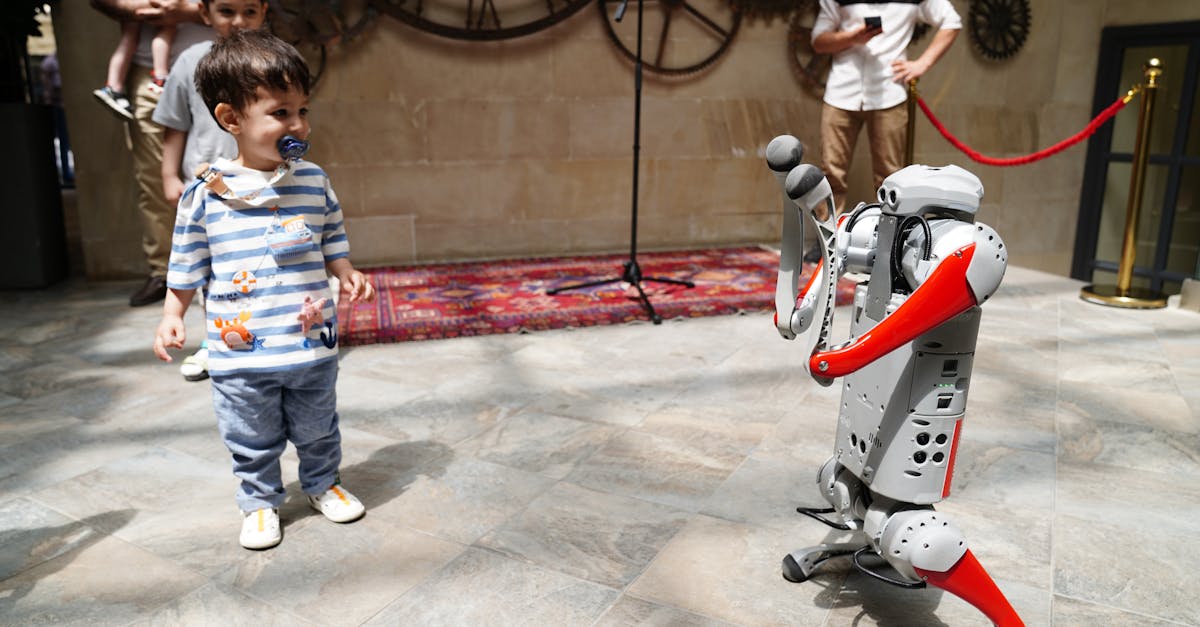
Agility Robotics Digit: Shipping Hardware vs. Logistics Hype in Humanoid Automation

Agility Robotics and the Digit Biped: Grounded Reality Check
Agility Robotics, a Portland-based engineering firm founded in 2018, has positioned itself as one of the few companies to deliver a functioning bipedal robot rather than a rendered concept. The flagship product, Digit, is a 1.6-meter tall autonomous humanoid robot designed for industrial logistics. Unlike many competitors in the humanoid space who rely on software-only demonstrations or static renders, Agility Robotics has consistently emphasized hardware delivery. According to the company’s official documentation, Digit is not a prototype; it is a deployable unit capable of interacting with existing warehouse infrastructure without significant modification.
The core value proposition of Digit rests on its ability to navigate uneven terrain, handle large payloads, and operate alongside humans in shared spaces. This is critical for the logistics sector, where facilities often have legacy infrastructure not designed for wheeled robots. Digit’s bipedal design allows it to utilize stairs and narrow aisles, addressing a specific pain point in last-mile and intra-warehouse transport. However, the editorial stance of RobotWale.com remains grounded in the distinction between hardware availability and operational scale. While the hardware exists, the software maturity required for fully unassisted operation remains the primary variable for fleet deployment.
Hardware Deliverability Over Conceptual Promises
In the context of the humanoid robotics race, Agility Robotics stands out because it has shipped units to real customers. The company’s approach avoids the “rendered-concept worship” common in the industry. Instead of relying solely on videos of robots walking on pristine floors, Digit has been tested in environments resembling actual warehouses. The robot utilizes a combination of sensors, including stereo vision and depth cameras, to map its surroundings. The mechanical design features an electric actuation system that prioritizes durability over speed, allowing for sustained operation during shift cycles.
This hardware-first approach is evident in the robot’s specifications. The Digit system is capable of carrying payloads of up to 11 kilograms (25 pounds) for extended periods. While this load capacity is lower than some wheeled autonomous mobile robots (AMRs), it is sufficient for box handling in specific warehouse zones. The trade-off is mobility over load. For Indian logistics facilities, where infrastructure can be uneven and storage layouts vary, this mobility is a significant advantage. However, the cost of replacing wheeled AMRs with bipedal units depends heavily on the total cost of ownership (TCO) rather than just the upfront sticker price.
The Amazon Logistics Partnership: Deployment vs. Announcement
The most significant development for Agility Robotics occurred in early 2023 when Amazon announced a partnership to deploy Digit robots in its fulfillment centers. This announcement was not merely a press release; it was backed by on-site testing in select facilities. Amazon’s interest in humanoid robotics has been well-documented, with CEO Andy Jassy noting the long-term potential for moving high-volume goods. The partnership with Agility Robotics represents one of the few instances where a major logistics operator has committed to integrating a specific humanoid vendor into its supply chain.
However, the language used by Amazon regarding this deployment must be graded carefully. Press releases often use terms like “explore” or “deploy” which can be interpreted broadly. In this case, the deployment is targeted at specific tasks within the warehouse, such as moving boxes from one shelf to another. This is not a full replacement of human labor but rather an augmentation of the workforce. The robot is designed to handle repetitive, non-ergonomic tasks that strain human workers. Amazon’s involvement serves as a validation of the hardware, given the company’s rigorous standards for safety and throughput in fulfillment centers.
What the Deal Actually Entails
The Amazon-Agility Robotics agreement focuses on the digitization of physical movement within warehouses. The robots are intended to move between zones that are difficult for wheeled robots to access. This includes navigating stairs or ramps, which are often present in multi-level facilities. The integration requires significant engineering on both sides. The warehouse infrastructure must be compatible with the robot’s physical dimensions and sensor requirements. For example, lighting conditions must be sufficient for the stereo vision systems to function accurately.
It is crucial to note that as of late 2023 and early 2024, the deployment remains in the pilot phase. There is no public data confirming a mass rollout of thousands of Digit units across all Amazon facilities. The partnership is best understood as a proof-of-concept for scalability. For Agility Robotics, this pilot is a critical milestone. Success in Amazon’s environment would serve as a strong reference for other enterprise customers. Failure to meet throughput targets would likely halt further investment. The current narrative suggests the pilot is ongoing, with no definitive timeline for full commercialization.
Technical Specifications and Real-World Performance
Understanding the technical limitations of Digit is essential for any potential user in India. The robot’s autonomy level is a key differentiator. While Digit can navigate autonomously, it often operates within a constrained environment where human oversight is available. The system does not currently possess the general intelligence required to handle unexpected obstacles without intervention. This is a common limitation in the current generation of industrial robots.
Key Technical Metrics
- Height: Approximately 1.6 meters (5.2 feet)
- Payload Capacity: Up to 11 kg (25 lbs)
- Battery Life: Estimated 4 hours per charge cycle
- Locomotion: Bipedal, capable of stairs and ramps
- Connectivity: Wi-Fi and 5G for fleet management
The battery life is a significant constraint for warehouse operations. A standard shift in logistics is 8 to 10 hours. This means Digit requires mid-shift recharging or a battery-swapping infrastructure. For facilities in India, where power reliability can vary, this necessitates a backup power strategy. The robot’s reliance on electric actuation also means it cannot operate in extreme heat without thermal management systems, which are standard in US facilities but may require upgrades for Indian climates.
The autonomy stack relies heavily on external infrastructure. In many deployments, the robots operate within a GPS-denied environment where visual SLAM (Simultaneous Localization and Mapping) is used. This requires the warehouse to have high-contrast features for the cameras to track. In low-light or dusty environments, common in some Indian logistics hubs, performance may degrade. This is a critical factor for importers considering Digit for Indian warehouses.
India Availability and Cost Analysis
For the Indian market, the availability of Agility Robotics’ Digit is currently limited. There is no official local subsidiary or direct sales channel listed on the company’s website for the Indian region. This means procurement would likely occur through distributors or system integrators who specialize in importing high-value robotics hardware. The regulatory framework for industrial robots in India is evolving, with the Department of Commerce and Ministry of Electronics and Information Technology (MeitY) providing guidelines for automation.
Estimated Pricing and Landed Costs
Agility Robotics does not publish a standard catalog price for Digit due to the custom nature of enterprise deployments. However, based on industry benchmarks for similar bipedal hardware and competitor pricing, the unit cost is estimated to be in the range of $100,000 to $150,000 USD per unit. For Indian buyers, this translates to a landed cost significantly higher due to import duties and logistics.
Assuming an exchange rate of approximately ₹83 to $1 USD, the base unit cost would be roughly ₹83 lakhs to ₹1.25 crores ($100k-$150k). This figure excludes installation, software licensing, and maintenance contracts. When adding import duties (which can range from 10% to 15% for robotics hardware depending on classification) and GST (18%), the total landed cost could approach ₹1.5 crores per unit. This high entry barrier limits Digit to large enterprise clients with deep pockets, such as major e-commerce players or third-party logistics (3PL) providers.
For smaller Indian manufacturers, the total cost of ownership makes Digit less viable compared to wheeled AMRs, which are often priced under $30,000. The ROI calculation would depend on the specific use case. If Digit can replace high-wage labor in hazardous zones, the economics might improve. However, with a high initial capex, the payback period is likely to exceed 3 to 5 years. This makes Digit a strategic investment rather than an operational necessity for most Indian firms.
Market Position and Competitive Landscape
Agility Robotics is not operating in a vacuum. The humanoid logistics sector includes competitors like Tesla’s Optimus, Figure AI, and Boston Dynamics’ Atlas (though Atlas is less focused on logistics). Each competitor brings different strengths. Tesla has the advantage of manufacturing scale and a potential vertical integration of AI chips. Figure AI focuses on general-purpose manipulation. Agility Robotics differentiates itself through its focus on bipedal mobility and warehouse infrastructure compatibility.
However, the race is far from over. Many of these systems are still in the pilot phase. The ability to ship hardware does not guarantee commercial viability. For Agility Robotics, the Amazon partnership is a vital reference. If Amazon deploys Digit successfully at scale, it validates the technology for other enterprise customers. If the deployment faces technical hurdles, the partnership may be scaled back. The market is currently in a “pilot purgatory” phase where hardware exists but economic models are unproven.
Regulatory and Safety Considerations
In India, the deployment of autonomous robots involves safety compliance. The Bureau of Indian Standards (BIS) has yet to finalize specific standards for humanoid robots, though general machinery safety standards apply. This creates a compliance gap where importers must ensure their robots meet local safety norms regarding electromagnetic compatibility and safety of machinery. The lack of specific humanoid regulations means Agility Robotics must rely on general industrial safety certifications.
Furthermore, data privacy is a concern. Robots mapping warehouse environments collect data that may be subject to Indian data localization laws. Companies must ensure that any cloud processing of this data complies with the Digital Personal Data Protection Act. This adds another layer of complexity to the deployment process, requiring legal review before hardware installation.
Conclusion: Realistic Outlook for Humanoid Logistics
Agility Robotics stands out in the humanoid robotics sector for delivering a functional bipedal robot that has been tested in real warehouses. The partnership with Amazon is a significant milestone, validating the concept of using bipedal robots for intra-logistics tasks. However, the technology is not yet ready for mass deployment. The current focus remains on pilots and specific task optimization rather than general workforce replacement.
For the Indian market, the availability of Digit is likely limited to major players willing to absorb the high cost of import and integration. The pricing structure suggests a long-term investment strategy rather than immediate operational adoption. As the technology matures and the supply chain stabilizes, costs may decrease. Until then, Digit remains a high-end solution for logistics leaders who can afford the risk and the capital expenditure.
RobotWale.com continues to monitor the deployment status of Digit and the Amazon partnership. We prioritize evidence over announcements and hardware delivery over rendered concepts. The future of humanoid logistics depends on the successful integration of these machines into existing infrastructure, not just their ability to walk. Until then, the focus remains on pilot deployments and measurable ROI.
References
- Agility Robotics Official Website: agilityrobotics.com
- Amazon Press Release on Robot Deployment: About Amazon News
- Robotics Industry Association Reports: robotics.org
- Indian Ministry of Electronics and Information Technology (MeitY): meity.gov.in
✓ Key takeaways
- •Hands-on view of Agility Robotics Digit: Shipping Hardware vs. Logistics Hype in Humanoid Automation inside our Agility Robotics library.
- •Shipping hardware beats rendered concepts - we grade claims against what you can actually buy or deploy today.
- •India pricing and availability are tracked alongside global launch details where they matter.
References
Related articles
More in Agility Robotics →