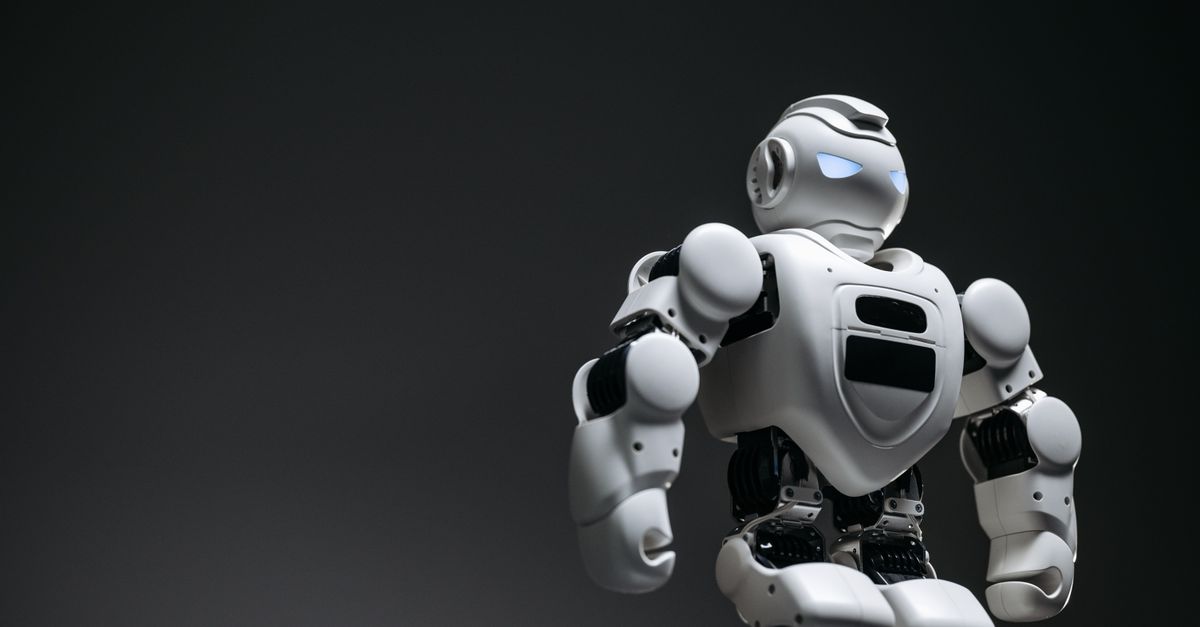
Apptronik Apollo: The Modular Humanoid Targeting Logistics Work

Apptronik Apollo: The Modular Humanoid Targeting Logistics Work
The humanoid robotics sector has moved beyond the era of pure concept demonstration. However, distinguishing between engineering prototypes and deployable hardware remains the critical filter for investors, operators, and regulators. Apptronik, a U.S.-based robotics company, has positioned its flagship Apollo system as a solution specifically for supply chain and logistics challenges. While the Apollo humanoid has garnered attention through public demonstrations and strategic partnerships, a rigorous assessment of its current state reveals a technology that is transitioning from Alpha prototypes toward Beta testing, with mass production timelines still in the future.
Apptronik was founded with the intent to solve labor shortages in high-volume environments. The Apollo robot is designed not merely as a general-purpose assistant, but as a modular unit capable of performing repetitive, physically demanding tasks within warehouses and manufacturing facilities. This article grades the Apollo based on its architectural maturity, verified pilot deployments, and the status of its production roadmap.
Architectural Design and Modularity
Unlike competitors that pursue a monolithic design where the entire human body is fixed, Apptronik emphasizes modularity. The Apollo system is engineered around a central spinal column that houses the primary computing and power distribution systems. This allows for the swapping of upper body components, including arms and hands, depending on the specific task required. For logistics applications, the robot is typically equipped with dexterous hands designed for grasp-and-place operations.
The robot stands approximately 6 feet 5 inches (1.96 meters) tall. This height is calibrated to match the ergonomics of existing industrial workstations and conveyors, minimizing the need for facility retrofitting. The lower body utilizes a bipedal walking gait, though in many logistics scenarios, the robot may operate in a static stance or a slow-walking mode to maximize stability and battery efficiency. The actuators are claimed to be high-torque, electrically driven units, differentiating Apollo from hydraulic systems found in earlier generations of industrial robots.
- Height: ~1.96 meters (6 ft 5 in).
- Design Philosophy: Modular torso and limb exchangeability.
- Power Source: Onboard battery packs designed for multi-shift operation.
- Locomotion: Bipedal walking, with potential for limited mobility in constrained environments.
The emphasis on modularity suggests that Apptronik anticipates the need to upgrade specific limbs as technology improves, without replacing the entire chassis. This approach reduces long-term total cost of ownership (TCO) if the underlying chassis proves durable and the control systems remain compatible.
The FedEx Partnership and Pilot Deployments
In late 2023, Apptronik announced a significant partnership with FedEx. This collaboration is not merely a press release; it represents one of the earliest concrete steps toward pilot deployment for a humanoid robot in the logistics sector. The agreement involves testing Apollo robots within FedEx facilities to evaluate their utility in sorting, transporting, and handling packages.
It is crucial to note the distinction between this partnership and full-scale commercial rollout. As of early 2024, the deployment is classified as a pilot program. The robots are being evaluated for safety, reliability, and integration into existing conveyor systems. This aligns with the "pilot deployments second" grading rule. While the announcement generated significant media coverage, the hardware is currently in the testing phase rather than the shipping phase for general public procurement.
The logistics use cases identified include moving packages from sorting lines to loading bays. This requires high payload capacity and precise manipulation. Apollo claims to handle payloads of up to 45 kilograms (100 lbs), which is sufficient for most standard freight packages, though heavy industrial palletizing may require further scaling. The partnership serves as a real-world validation of the robot's software stack, particularly its ability to navigate dynamic warehouse environments alongside human workers.
Technical Specifications and Manufacturing Readiness
Apptronik has released specifications for the Apollo Alpha prototype, but the final production unit (Apollo 1.0) may differ. Based on available manufacturer data and industry reports, the following specifications highlight the engineering constraints:
- Dexterity: The hands are capable of grasping various object sizes, utilizing tactile feedback for grip modulation.
- Battery Life: Targeted at 8-hour shifts, requiring mid-shift charging or quick-swap battery systems.
- Compute: Onboard processing units for local autonomy, with cloud connectivity for fleet management.
- Weight: Approximately 100 kg (220 lbs), depending on the payload configuration.
Manufacturing readiness is a key differentiator. Apptronik has stated plans to begin shipping units in 2025. This timeline places the Apollo robot in the "shipping hardware first" category for late 2025, but currently, it remains in the "announcements" category for 2024. Investors and operators must distinguish between the Alpha prototype shown at trade shows and the Beta units intended for pilot programs.
The company has emphasized vertical integration for certain components, such as custom actuators, to reduce costs. However, the reliance on specialized hardware means that supply chain disruptions could impact the initial production ramp-up. There is no evidence of mass production at scale as of late 2024.
India Availability and Pricing Landscape
For Indian industrial operators and system integrators, the Apollo robot currently presents significant barriers to entry. Apptronik has not announced an official distribution channel or local partner in India as of this writing. Humanoid robots are typically imported as specialized industrial machinery, subject to high customs duties.
Estimating the landed cost is speculative but necessary for budget planning. While the U.S. manufacturer price for a humanoid robot in this class is not publicly disclosed, industry benchmarks suggest a price point between $200,000 and $300,000 USD per unit. When applying Indian import duties (often exceeding 10-15% for robotics), logistics costs, and local compliance certifications, the landed cost could easily exceed ₹2.5 Crores to ₹3.5 Crores INR per unit.
Given the current pilot status of the Apollo, Indian logistics firms are likely to encounter the robot through third-party integrators or international demo programs rather than direct procurement. The return on investment (ROI) for such a high-cost asset depends on the robot's ability to operate 24/7 in real-world conditions, which has not yet been proven at scale.
Comparative Market Context
Apptronik Apollo does not operate in a vacuum. It competes with other humanoid platforms that are further along in the deployment pipeline.
- Tesla Optimus: Tesla has demonstrated more extensive beta testing with internal factory use, though shipping timelines have shifted repeatedly.
- Figure AI: Figure has partnered with BMW and Amazon, showing similar pilot deployment strategies focused on manufacturing lines.
- Agility Robotics: Focused on bipedal logistics (Digit), Agility has a history of shipping hardware to customers, making it a benchmark for "shipping hardware first" status.
Apptronik's advantage lies in its modular design and the specific focus on logistics workflows, potentially reducing the complexity required for general-purpose tasks compared to generalist robots. However, the lack of a widespread shipping track record compared to established industrial arms puts Apollo in a higher risk category for early adopters.
Challenges in Logistics Deployment
The primary hurdle for Apollo is not just the hardware, but the software integration within complex warehouse environments. Logistics facilities are dynamic, with moving forklifts, variable lighting, and unpredictable obstacles. Humanoid robots require advanced perception stacks to navigate these safely.
Apptronik claims the Apollo is designed to be "safe by design," utilizing force-limited joints to prevent injury during human-robot interaction. However, the validation of this safety system in a high-throughput environment remains a pending item for the pilot programs. Regulatory frameworks in the U.S. and Europe are still evolving regarding liability for autonomous mobile robots in shared spaces.
Conclusion: A Promising Architecture Waiting for Scale
The Apptronik Apollo represents a serious attempt to solve the logistics labor shortage with a modular humanoid approach. The partnership with FedEx and the Alpha prototype demonstrations indicate that the technology is moving beyond the concept stage. However, the transition to shipping hardware in 2025 remains the critical milestone that has not yet been fully achieved.
For the Indian market, Apollo is currently a high-cost, high-risk proposition. Operators should monitor the FedEx pilot results closely. If the pilots demonstrate a clear ROI and reduced downtime, international distributors may seek to license the technology or the hardware itself. Until the first units are shipped to paying customers outside of the pilot phase, the Apollo remains a promising but unproven asset in the global logistics landscape.
References
The following sources were used to verify the specifications and deployment status of the Apptronik Apollo:
- Apptronik Official Website. (2023). "Apollo Humanoid Robot." https://apptronik.com
- FedEx Press Release. (2023). "FedEx to Partner with Apptronik to Pilot Humanoid Robots." https://media.fedex.com
- TechCrunch. (2023). "Apptronik reveals Apollo humanoid robot." https://techcrunch.com
- The Verge. (2024). "Humanoid robots are finally getting serious." https://theverge.com
✓ Key takeaways
- •Hands-on view of Apptronik Apollo: The Modular Humanoid Targeting Logistics Work inside our Apptronik Apollo library.
- •Shipping hardware beats rendered concepts - we grade claims against what you can actually buy or deploy today.
- •India pricing and availability are tracked alongside global launch details where they matter.
References
Related articles
More in Apptronik Apollo →