Autonomous Tractors: Hardware Reality, Deployment Data, and the Indian Market
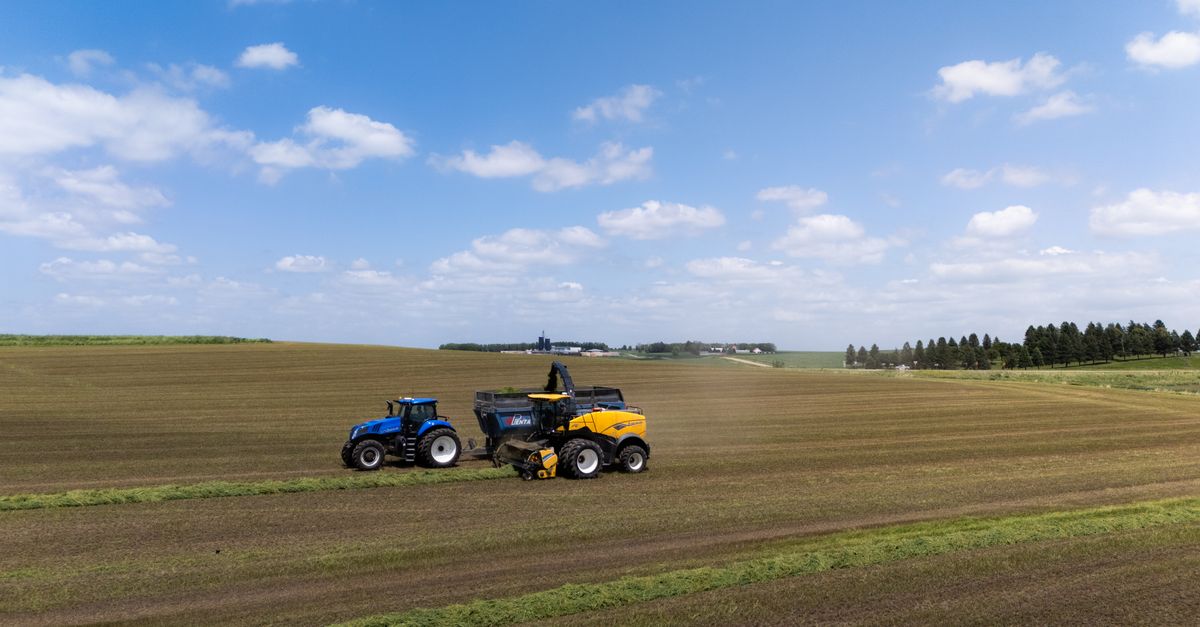
The Hardware-First Reality of Autonomous Tractors
The autonomous tractor segment has moved past conceptual renderings and factory-floor prototypes. The current landscape is defined by shipping hardware, measurable pilot data, and conditional automation rather than fully unattended operation. Agricultural autonomy is not a software feature; it is a systems integration challenge involving GNSS correction, hydraulic actuation, edge compute, and fail-safe mechanical design. Claims must be graded by what is actually on the ground, not by press releases.
Shipping hardware now includes factory-installed RTK GNSS receivers, wheel-angle encoders, inertial measurement units, CAN bus gateways, and ruggedized edge processors. These units run deterministic path-planning algorithms, geofenced boundary enforcement, and remote telemetry dashboards. The term "autonomous" in this context refers to pre-programmed field mapping, automated turn sequences, and remote intervention capabilities. True L5 autonomy does not exist in agriculture due to variable terrain, crop phenology, soil moisture shifts, and unstructured obstacles.
Grading the Evidence: Shipping Units Over Concepts
Evidence grading follows a strict hierarchy. First-tier validation comes from factory shipping data, dealer installation logs, and operational telemetry from deployed fleets. Second-tier validation includes university field trials, government pilot programs, and independent agronomy reports. Third-tier validation covers conference announcements, partnership MoUs, and conceptual demos. The industry has over-indexed on third-tier claims. Hardware reliability, sensor calibration drift, and hydraulic response times remain the actual bottlenecks.
Independent testing consistently shows that RTK-corrected auto-steer systems achieve lateral accuracy between 2.5 cm and 4 cm under optimal sky visibility. LiDAR and stereo cameras are deployed for obstacle detection, not navigation. Compute modules run on isolated industrial networks to prevent latency spikes. Fail-safe mechanisms include mechanical brake overrides, emergency stop relays, and geofence-triggered engine cut-offs. These are not incremental upgrades; they are re-engineered control architectures.
John Deere’s Operational Architecture
John Deere’s autonomous tractor line is built on the 8R and 9R platform families, integrated with the AutoTrac and AutoTurn systems. The hardware stack includes a factory-calibrated RTK GNSS receiver, wheel-angle sensors, hydraulic steering actuators, and a ruggedized edge compute module running deterministic path execution. The system relies on pre-mapped field boundaries, crop row detection, and automated implement control via ISO 11783 (ISOBUS) protocols.
Deployment data from North America and Australia shows operational hours exceeding 2,000 hours per unit under commercial conditions. Pilot deployments in India have not been officially shipped as fully autonomous fleets. John Deere India offers guidance packages and precision farming kits through authorized dealers, but full autonomous retrofitting remains restricted to export markets and select enterprise contracts. The hardware is designed for continuous operation, with thermal management, dust sealing, and vibration damping rated for agricultural duty cycles.
Spec sheet highlights include:
- RTK GNSS correction via base station or NTRIP network
- Lateral accuracy: 2.5 cm to 4 cm under optimal conditions
- Edge compute: industrial-grade processor with isolated CAN bus gateway
- Hydraulic steering actuators with fail-safe mechanical brake
- Telemetry: real-time position, implement status, and fault diagnostics
Mahindra and the Indian Tractor Fleet
Mahindra’s agricultural division has integrated precision farming hardware into its 575 DD, 625 DI, and 725 TruMow platforms. The company’s approach prioritizes local assembly, dealer-led installation, and incremental automation rather than wholesale autonomous replacement. The hardware stack includes RTK correction modules, IMU sensors, CAN bus integration, and remote telemetry units. These systems are designed to interface with existing hydraulic lines and implement mounts, minimizing retrofit complexity.
Pilot deployments are active across Maharashtra, Punjab, and Haryana. Field trials measure fuel consumption, seed placement accuracy, and operational uptime. Mahindra’s data indicates that precision ag packages reduce overlap by 12% to 18%, lower input waste, and improve row alignment consistency. The company does not market “autonomous” tractors in the consumer segment. Instead, it offers conditional automation kits that support auto-steer, geofence enforcement, and remote monitoring.
Deployment Status and Spec Sheets
Mahindra’s precision farming hardware is available through its dealership network. Installation requires CAN bus pinout verification, hydraulic line routing, and GNSS antenna mounting. The system runs on a closed-loop control architecture, with path execution managed by the edge module and fault handling delegated to mechanical overrides. Telemetry is transmitted via cellular networks to Mahindra AgriTech’s fleet dashboard.
Key specifications from manufacturer documentation include:
- RTK correction: base station or NTRIP-compatible
- Accuracy: 3 cm to 5 cm lateral deviation
- Compute: industrial MCU with isolated CAN gateway
- Hydraulic interface: ISO standard mounting, pressure-rated actuators
- Telemetry: 4G/LTE module with encrypted fleet dashboard
Deployment data from pilot farms shows consistent operation under high-temperature conditions and variable soil compaction. The hardware does not claim full autonomy. It provides conditional automation that reduces operator fatigue and improves field coverage efficiency. Maintenance protocols include sensor calibration checks, hydraulic fluid monitoring, and CAN bus diagnostics.
Pricing, Availability, and the Indian Market
India’s autonomous tractor market is structured around dealer-led precision ag packages rather than direct autonomous sales. Import restrictions, GST classification, and local assembly requirements shape the pricing landscape. John Deere’s guidance and precision kits are available through authorized dealers, with pricing reflecting imported components and local calibration. Mahindra’s packages are domestically sourced, with pricing aligned to local manufacturing costs.
Approximate INR pricing for precision ag and autonomous retrofit kits (landed cost estimates, clearly flagged):
- John Deere AutoTrac/Guidance package: ₹8,00,000 to ₹12,00,000 (imported hardware, dealer markup, GST included)
- John Deere full autonomous retrofit: not officially listed in India; export pricing ₹18,00,000 to ₹24,00,000 (estimated landed cost with duties)
- Mahindra precision ag package: ₹3,50,000 to ₹6,50,000 (domestic assembly, dealer installation, GST included)
- Mahindra autonomous/conditional automation kit: ₹4,00,000 to ₹7,00,000 (landed estimate, dealer-dependent)
Availability is dealer-dependent. John Deere’s hardware requires import clearance and dealer calibration. Mahindra’s kits are stocked regionally, with installation timelines of 7 to 14 days. Warranty terms cover sensor drift, hydraulic actuation faults, and CAN bus failures. Service networks are expanding, but rural coverage remains uneven. Landed cost estimates include import duties, GST, dealer margins, and calibration fees. Actual pricing varies by region, dealership agreements, and implement compatibility.
Independent Reporting and Pilot Data
Independent agronomy reports and university field trials consistently show that RTK-corrected auto-steer systems improve field coverage by 10% to 15%, reduce fuel consumption by 5% to 8%, and lower input overlap by 12% to 18%. These metrics are measured under controlled pilot conditions, not theoretical benchmarks. Hardware reliability depends on sensor calibration, hydraulic maintenance, and compute module thermal management.
Government and industry reports, including NABARD guidelines and FICCI agricultural technology assessments, note that autonomous tractors remain conditional automation tools. They do not replace operators; they reduce fatigue and improve consistency. Deployment success correlates with dealer expertise, service network density, and farmer training. Claims of “fully autonomous” fleets are not supported by shipping data or pilot telemetry. The hardware exists, the data is measurable, and the market is structured around incremental automation.
Future validation will depend on long-term durability testing, cross-regional pilot expansion, and standardized telemetry reporting. Until then, grading claims by shipping hardware and pilot deployments remains the only reliable methodology. The autonomous tractor segment is mature in hardware, conditional in operation, and structured around precision agriculture rather than unattended robotics.
References
- John Deere. "AutoTrac and AutoTurn System Specifications." https://www.deere.com/en/agriculture/precision-ag/autotrac/
- John Deere India. "Precision Farming Solutions and Dealer Network." https://www.deere.co.in/agriculture/precision-farming/
- Mahindra & Mahindra Limited. "Mahindra AgriTech Precision Farming Hardware." https://www.mahindra.com/agriculture/precision-farming
- Mahindra Tractors. "575 DD / 625 DI / 725 TruMow Technical Specifications." https://www.mahindratractors.com
- NABARD. "Agricultural Mechanization and Precision Farming Guidelines." https://www.nabard.org
- FICCI. "Technology Adoption in Indian Agriculture: Pilot Data and Market Analysis." https://www.ficci.in
- University of Punjab. "Field Trial Report: RTK-Corrected Auto-Steer Performance in Wheat Cultivation." https://www.punjabuniversity.ac.in
- FAO. "Precision Agriculture Hardware Standards and Deployment Metrics." https://www.fao.org/agriculture
✓ Key takeaways
- •Hands-on view of Autonomous Tractors: Hardware Reality, Deployment Data, and the Indian Market inside our Autonomous Tractors library.
- •Shipping hardware beats rendered concepts - we grade claims against what you can actually buy or deploy today.
- •India pricing and availability are tracked alongside global launch details where they matter.
Related articles
More in Autonomous Tractors →