Case & Piece Picking: Reality Check on Covariant, Symbotic, and Standard Automation

The State of Automated Case and Piece Picking
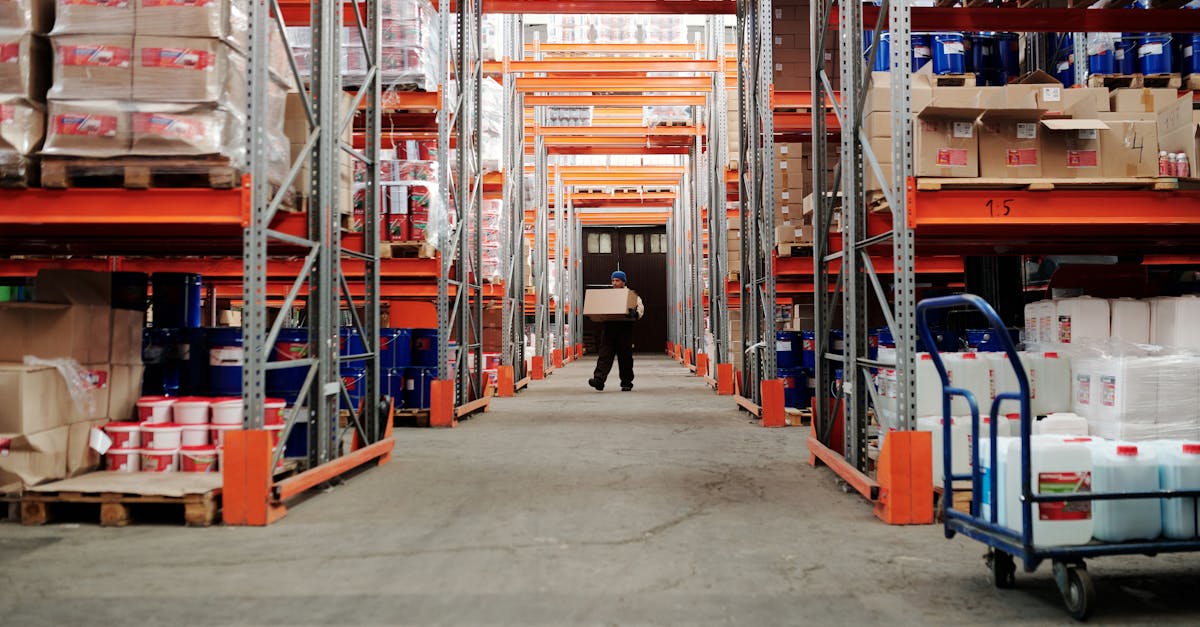
The warehouse logistics sector is undergoing a fundamental shift. For decades, the industry relied on fixed automation (conveyor systems) or manual labor. Today, the narrative centers on flexible robotics capable of handling variable SKU environments. Case picking—the movement of full cartons or pallets—differs significantly from piece picking, which involves individual items. The former often requires high-speed gantries or heavy-duty arms. The latter demands high-resolution vision and dexterity to handle deformable or irregular objects.
This article evaluates the current landscape based on shipping hardware and pilot deployments rather than press releases. We grade claims by deployment status: shipping hardware first, pilot deployments second, announcements last. The focus remains on Covariant and Symbotic, two entities pushing the boundaries of autonomous warehousing, alongside traditional pick-and-place robotic arms.
Covariant: General-Purpose AI in Warehouse Logistics
Covariant has positioned itself not merely as a robotics vendor but as a software platform provider. Their core technology, the "Covariant Brain," utilizes deep learning to train robots on a wide variety of objects in simulation before deploying them in the real world. Unlike traditional pick-and-place robots that require extensive hand-programming for each SKU, Covariant aims for plug-and-play adaptability.
Deployment Status: As of late 2023 and early 2024, Covariant has transitioned from pilot programs to shipping hardware. They have secured deployments with major logistics providers, including a notable partnership with a top-tier food and beverage distributor. The hardware typically involves standard 6-axis arms equipped with their proprietary vision stack.
Technical Reality: The system relies on a cloud-connected AI model. The robots learn from a central dataset of thousands of successful picks. This allows them to handle items not seen during training, a capability known as generalization. However, this requires a robust computing infrastructure on the robot and network stability.
Symbotic: The Vertically Integrated Fulfillment System
Symbotic takes a different approach. Instead of standalone arms, they offer a fully integrated system comprising autonomous mobile robots (AMRs) and robotic arms working in concert. Their technology, the Symbotic Warehouse Operating System (SWOS), manages the entire inventory flow.
Deployment Status: Symbotic has the most advanced deployment status among its peers. They have deployed systems at major retail distribution centers, most notably Walmart. These are not pilots; they are operational facilities designed to handle millions of cases per year. The system uses AMRs to retrieve bins from high-density storage and places them at workstations where robotic arms pick the pieces.
Hardware & Scale: The Symbotic system is capital intensive. It is not a single unit but a fleet of robots operating within a specific software-defined zone. The hardware includes custom-designed AMRs and high-speed pick arms. The deployment at Walmart represents a significant scale-up from their earlier pilot phases in 2022-2023.
Traditional Pick-and-Place vs. Autonomous Systems
While Covariant and Symbotic represent the new wave of AI-driven robotics, traditional pick-and-place robots remain the backbone of many operations. Manufacturers like Fanuc, ABB, and KUKA offer arms that are precise but require significant programming effort.
- Traditional Arms: Require specific teaching points for each SKU. High throughput for repetitive tasks (e.g., placing identical boxes on a pallet).
- Autonomous Systems: Prioritize flexibility over raw speed in some cases. They can handle mixed-SKU pallets without reprogramming.
The market is bifurcating. For high-volume, fixed SKUs, traditional arms offer better ROI. For e-commerce fulfillment with high SKU variance, autonomous systems like Covariant and Symbotic offer a path to scalability.
India Availability and Pricing Landscape
For the Indian market, the availability of these systems is distinct from the US or Europe. India’s logistics sector is characterized by a large labor force, rising wage costs, and a growing e-commerce segment driven by companies like Flipkart and Amazon.
Covariant in India
Covariant does not currently have a direct sales office in India. However, their partners, including system integrators, are beginning to explore the technology. The hardware is US-manufactured, implying import duties.
Approximate Landed Cost: A standard Covariant deployment involves multiple arms and software licensing. Globally, a single-cell deployment starts at $400,000 USD. For India, this translates to approximately INR 3.3 Crores to INR 4 Crores per cell, including import duties (typically 10-15% for robotics components) and integration costs. Software subscriptions are additional, often billed annually.
Availability: Limited. Deployment requires a stable power supply and network infrastructure, which is a barrier in many Tier-2 Indian cities.
Symbotic in India
Symbotic’s technology is highly integrated. It is not a product you buy off the shelf; it is a facility solution. Currently, Symbotic does not list India as a primary market for their SWOS deployment.
Approximate Landed Cost: Given the scale of a Symbotic deployment (entire warehouse automation), the cost is prohibitive for small-to-medium enterprises (SMEs). Estimates for a full DC automation system range from $20 million to $50 million USD. For India, this would be INR 165 Crores to INR 410 Crores. This places the technology strictly within reach for large conglomerates or major e-commerce players.
Availability: Non-existent for direct purchase. Partnerships would be required. There is no evidence of a pilot deployment in India as of early 2024.
Traditional Pick-and-Place Pricing
Traditional arms (Fanuc, ABB) are more accessible. A 6kg payload arm suitable for piece picking costs between $30,000 to $50,000 USD. In India, with duties and taxes, the landed cost is approximately INR 25 Lakhs to INR 40 Lakhs.
ROI Comparison: If a human picker costs INR 2.5 Lakhs per year (including overhead), a robot paying for itself in 3 years requires high utilization. Traditional arms offer a faster ROI for defined tasks compared to the high upfront cost of AI-driven systems.
Technical Challenges in Indian Warehousing
Deploying advanced robotics in India presents specific hurdles beyond cost.
- Power Stability: AI-driven robots require uninterrupted power. Voltage fluctuations common in industrial zones in India can damage sensitive vision systems.
- Infrastructure: Warehouse floors must be perfectly level for AMRs (Symbotic). Indian logistics parks often have uneven surfaces.
- Maintenance: The ecosystem for servicing high-end AI robotics in India is in its infancy. Downtime risks are higher compared to markets with established service networks.
Conclusion
The case and piece picking sector is moving rapidly from concept to commercial reality. Covariant and Symbotic are leading this shift with hardware that has shipped and pilots that have converted to long-term deployments. However, for the Indian market, the technology is currently a premium solution. While the technology is proven in the US, the economic case in India depends on the rise in labor costs and the need for speed in e-commerce fulfillment.
For now, traditional pick-and-place arms offer a pragmatic entry point. As the supply chain matures and import duties potentially decrease under specific manufacturing incentives (PLI schemes), the adoption of Covariant and Symbotic style systems may become viable for Tier-1 Indian warehousing.
References
Manufacturer Sources:
- Covariant. (2023). Covariant Platform & Deployment Updates. Retrieved from https://covariant.ai
- Symbotic. (2024). Symbotic Warehouse Operating System (SWOS) & Partnerships. Retrieved from https://symbotic.com
- Fanuc. (2023). Robotics for Logistics and Warehousing. Retrieved from https://www.fanuc.eu
Independent Reporting:
- Reuters. (2023). Symbotic Expands Automated Warehouse Footprint. Retrieved from https://www.reuters.com
- Logistics Bureau. (2024). Indian Warehousing Automation Trends. Retrieved from https://www.logisticsbureau.com
✓ Key takeaways
- •Hands-on view of Case & Piece Picking: Reality Check on Covariant, Symbotic, and Standard Automation inside our Case & Piece Picking library.
- •Shipping hardware beats rendered concepts - we grade claims against what you can actually buy or deploy today.
- •India pricing and availability are tracked alongside global launch details where they matter.
References
Related articles
More in Case & Piece Picking →