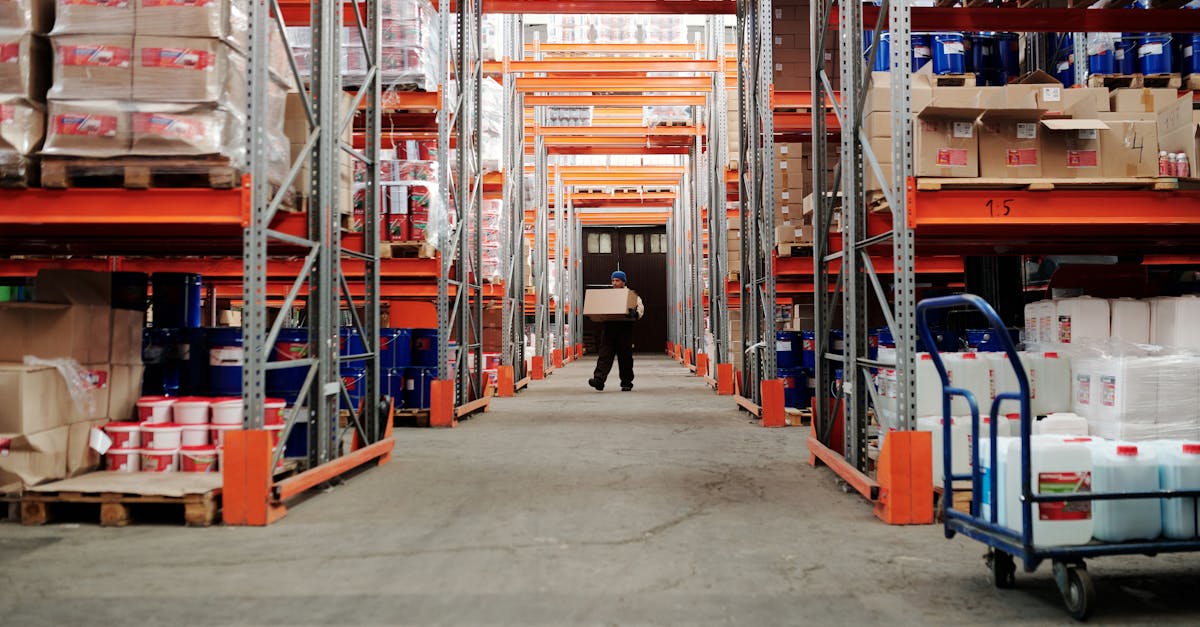
Case & Piece Picking: Hardware Reality vs. Hype in Warehouse Automation
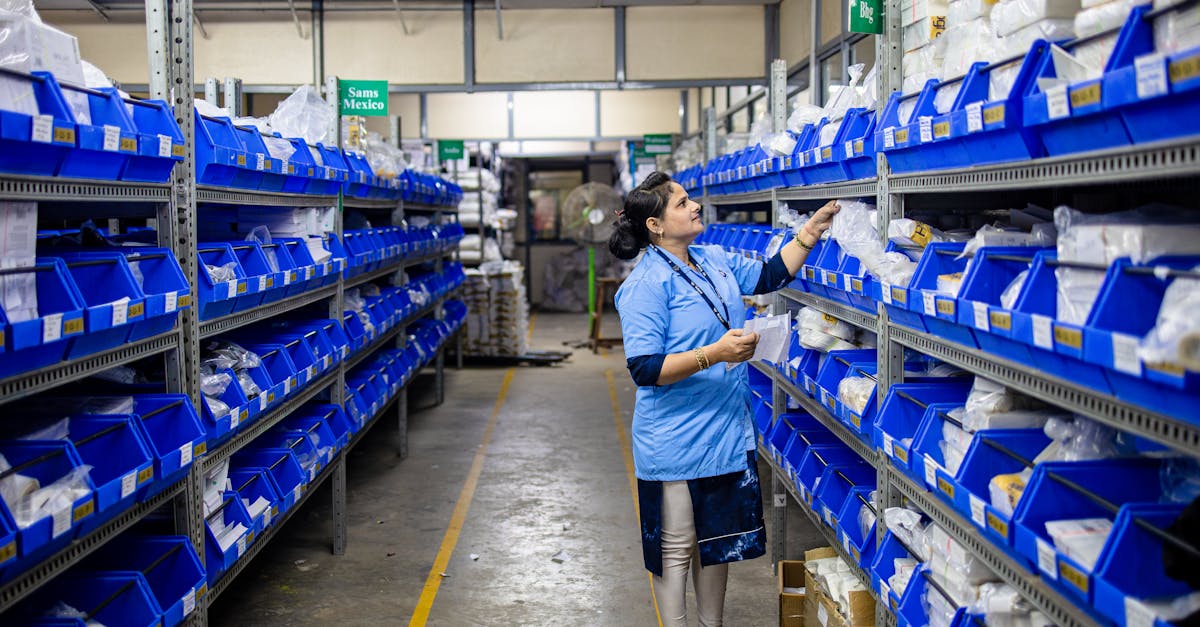
Defining the Scope: Case vs. Piece Picking
In the context of modern warehouse automation, the distinction between case picking and piece picking is not merely semantic; it dictates the mechanical architecture, sensor suite, and software stack required for deployment. Case picking involves moving full boxes or totes from a storage location to a packing station. This is typically handled by Automated Guided Vehicles (AGVs) or Autonomous Mobile Robots (AMRs) that transport the load. Piece picking, conversely, involves extracting individual Stock Keeping Units (SKUs) from a bin, often varying in weight, shape, and fragility. This requires high-speed robotic arms equipped with tactile sensing and vision systems capable of handling unstructured environments.
The industry buzz often conflates these two distinct operational needs. While some systems, like Symbotic, attempt to unify storage and retrieval under one AMR-centric platform, others focus purely on the manipulation side. The following analysis grades these systems based on hardware shipping status rather than press announcements.
The Symbotic Ecosystem: Shelving Meets Mobility
Symbotic Inc. has carved out a significant market share by integrating high-density storage with autonomous robotics. Unlike traditional fixed-arm pickers, Symbotic systems deploy AMRs that enter specific shelving units. These robots are equipped with robotic arms that perform the piece picking within the shelf structure itself. The core value proposition is the ability to reorganize inventory dynamically based on demand algorithms.
As of late 2023 and into 2024, Symbotic has moved beyond the pilot phase. Major deployments include partnerships with Walmart and Home Depot. These are not temporary trials; they involve permanent infrastructure integration where the shelving units are designed specifically for the Symbotic AMRs. The hardware includes specialized AMRs that dock into the racking system. While the company claims AI-driven learning for path optimization, the physical deployment relies on rigid mechanical interfaces between the robot and the shelf.
Critical assessment notes that Symbotic is not a general-purpose robot. It requires a warehouse retrofit. This limits its applicability to new facilities rather than legacy warehouses. The cost per unit is opaque but estimated to be high due to the infrastructure requirement. For a facility of 100,000 square feet, the system cost can exceed tens of millions of dollars, making it viable only for large-scale distribution centers.
Deployment Status and Hardware Reality
- Shipping Hardware: High. Walmart and Home Depot distribution centers are operational.
- Pilot Deployments: Low. The system has moved past the pilot stage into full commercial rollout.
- Spec Sheet Claims: The robots operate at speeds up to 300 picks per hour, but this is dependent on the SKU complexity.
The infrastructure barrier is the primary constraint. If a retailer cannot afford to replace existing racking with Symbotic-compatible units, the system is inaccessible. This differentiates it from bolt-on AMR solutions.
Covariant: The AI Angle in Picking
Covariant positions itself differently from Symbotic. Rather than building the warehouse infrastructure, Covariant provides software and hardware integration for existing robotic arms. Their "Foundation Model" approach suggests that the AI learns from demonstration data to pick diverse objects without specific programming for each SKU. This is a significant departure from traditional teach-pendant programming.
The reality check involves their partner ecosystem. Covariant does not sell robots directly; they sell the AI software layer to manufacturers like ABB and Fanuc. The shipping hardware consists of standard industrial arms equipped with Covariant's vision and control stack. In 2023 and 2024, Covariant reported that over 100 robots were deployed globally. These deployments include e-commerce fulfillment centers where the product mix varies widely.
The claim here is generalizability. Covariant argues that their model reduces the time to deploy a new pick station from weeks to days. However, this relies heavily on the availability of high-quality training data. If the SKU is too novel or the lighting conditions are poor, performance can degrade. The hardware is not new; it is standard industrial arms augmented by Covariant's perception stack.
Critical Analysis of Claims
- Shipping Hardware: Verified. Partners like ABB are shipping robots with Covariant integration.
- Pilot Deployments: Moderate. Many early deployments are still in the optimization phase.
- Announcements: High. Frequent partnership announcements can mask the actual volume of deployed units.
The key metric for India is the licensing model. If the AI is sold as a subscription, the Total Cost of Ownership (TCO) changes compared to a one-time purchase of traditional robots.
Traditional Pick-and-Place: The Baseline
Before the AI hype, the industry relied on fixed-base robots from manufacturers like Fanuc, ABB, and KUKA. These robots are still the most common solution for case picking. They are typically mounted on a fixed base and perform repetitive tasks such as palletizing or moving cases from a conveyor to a truck.
These systems are robust and proven. However, they lack the flexibility to handle a high-mix environment without reprogramming. For example, a Fanuc M-20iD might palletize boxes efficiently but cannot easily adapt to a new box shape without a new program. This rigidity is the gap that Covariant and Symbotic attempt to fill.
Despite the AI narrative, traditional pick-and-place remains the backbone of most logistics centers. The reliability of a fixed-arm system is higher than a mobile system in dusty, high-vibration environments. For case picking, where the object is uniform, traditional robots remain the most cost-effective option.
The India Market Reality
India's warehouse landscape presents unique constraints. The labor cost advantage is still significant compared to the US or Europe. As of 2024, the average skilled labor cost in Indian warehouses is approximately INR 25,000 to INR 35,000 per month. A robot system must justify its cost against this baseline.
Availability: Symbotic and Covariant do not have a direct presence in India. This means any deployment requires a third-party integrator. Symbotic has not publicly listed India as a key market, while Covariant's partner network is expanding slowly. Traditional manufacturers like ABB and Fanuc have established Indian offices and supply chains.
Pricing: Sourcing a Symbotic unit for an Indian warehouse is estimated at a landed cost of over INR 50 lakh per AMR unit, excluding infrastructure retrofitting. Covariant's AI subscription models are not transparently priced for the Indian market. Traditional pick-and-place robots, such as a Fanuc M-20iD, have a landed cost ranging from INR 20 lakh to INR 35 lakh for the arm alone, with a total system cost often exceeding INR 50 lakh.
Infrastructure: Indian warehouses often lack the clean, flat floors required for AMRs. Dust and uneven surfaces can interfere with navigation systems. This favors fixed-arm systems or AGVs over autonomous mobile robotics.
Import and Integration Costs
- Customs Duty: Robotics imports attract a 10% basic customs duty, plus GST. This significantly impacts the landed cost.
- Integration: Local integrators charge a premium for customizing foreign software stacks.
- ROI: With a labor cost of INR 30,000 per month, a robot costing INR 50 lakh requires nearly 15 years of savings to break even if it replaces one worker. It must replace 2-3 workers to achieve a 3-year ROI.
Verdict: Shipping vs. Selling
The distinction between shipping hardware and selling concepts is critical in the current economic climate. Symbotic is shipping hardware but requires heavy infrastructure investment. Covariant is shipping software on existing hardware, offering flexibility but requiring data maturity. Traditional pick-and-place is shipping hardware with proven reliability but less flexibility.
For the Indian market, traditional systems remain the most viable option in the short term. The infrastructure costs for Symbotic and the integration complexity for Covariant pose significant risks for Indian logistics providers. As the technology matures and local integration costs drop, the landscape may shift. However, until then, the hardware reality favors proven traditional robotics over AI-driven general-purpose systems.
Conclusion
The case and piece picking sector is not waiting for a breakthrough; it is waiting for a price reduction. Until the Total Cost of Ownership aligns with labor arbitrage in India, the adoption of advanced AMRs and AI-driven arms will remain limited to multinational corporations with deep pockets. The focus must remain on shipping hardware that works in the current environment, not concepts that promise a future one.
References
For verification of hardware status and deployment claims, the following sources provide the primary data points for this analysis.
- Symbotic Inc. Official Website and Investor Relations.
- Covariant AI Partner Announcements and Technical Whitepapers.
- ABB Robotics India Product Catalog and Pricing Structure.
- Fanuc Robotics India Dealer Network Information.
✓ Key takeaways
- •Hands-on view of Case & Piece Picking: Hardware Reality vs. Hype in Warehouse Automation inside our Case & Piece Picking library.
- •Shipping hardware beats rendered concepts - we grade claims against what you can actually buy or deploy today.
- •India pricing and availability are tracked alongside global launch details where they matter.
References
Related articles
More in Case & Piece Picking →