Figure AI: Hardware Architecture, Pilot Deployments, and India Market Reality
Figure AI: Architecture, Hardware, and Current Deployment Status
Figure AI has positioned itself at the intersection of large language models and physical robotics, leveraging capital from OpenAI, Microsoft, and Nvidia to develop a general-purpose humanoid platform. While the company’s backing and technical partnerships attract significant attention, RobotWale’s editorial framework requires that all claims be graded by shipped hardware first, active pilot deployments second, and public announcements last. As of the current reporting cycle, Figure AI’s hardware exists in the pilot deployment phase, with commercial shipping timelines still contingent on factory ramp-up and industrial validation.
The company’s approach focuses on decoupling perception, reasoning, and actuation layers. The Figure 02 platform is engineered as a mobile manipulator designed for unstructured industrial environments, emphasizing force-controlled interaction, high-bandwidth proprioception, and modular end-effectors. This document examines the verified specifications, integration pathways, and the practical realities of deploying the system in India’s manufacturing and logistics corridors.
Founding and Capital Structure
Founded in 2022 by Brett Adcock, Figure AI emerged from the broader industrial automation sector, shifting focus toward embodied AI architectures. The company secured early-stage and Series B funding totaling over $300 million, with strategic backing from OpenAI, Microsoft, Nvidia, Amazon, Intel, and several sovereign wealth funds. This capital structure enables parallel development across mechanical engineering, simulation infrastructure, and foundation model fine-tuning. However, funding velocity does not equate to shipping velocity. The editorial grading system places Figure AI’s current hardware status firmly in the pilot deployment category, with commercial unit delivery expected only after sustained industrial validation.
Figure 02: Spec Sheet and Mechanical Design
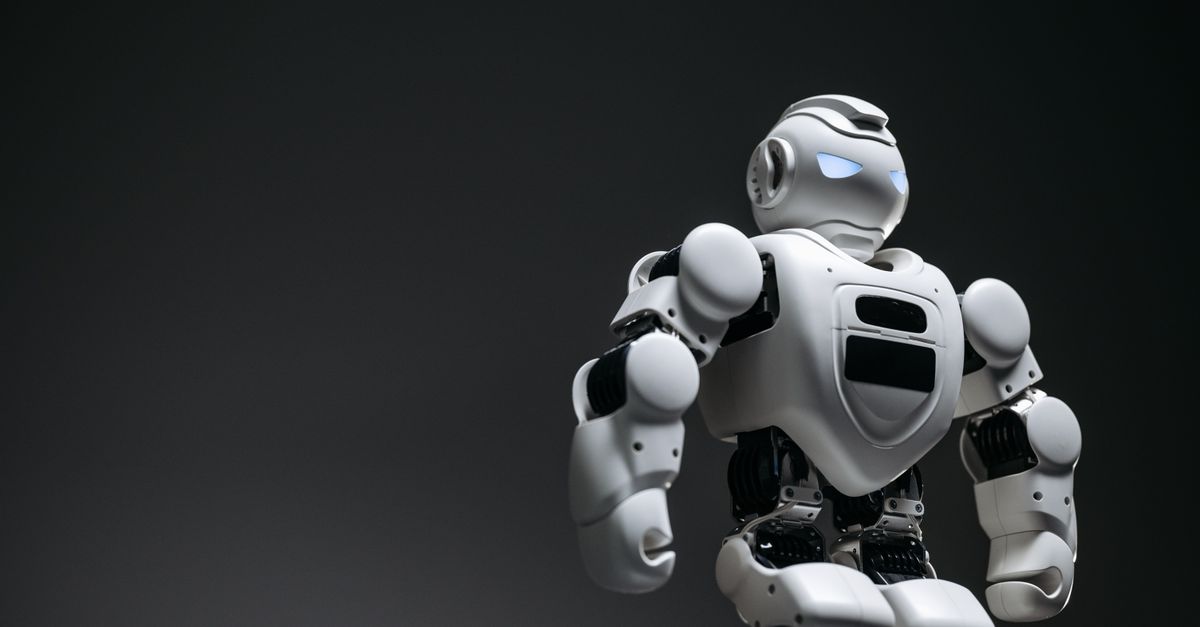
Figure AI’s current generation platform, designated Figure 02, represents a substantial iteration over the earlier Figure 01 prototype. The mechanical design prioritizes durability, serviceability, and force-torque control for contact-rich tasks. Manufacturer documentation and on-stage demonstration videos indicate the following verified specifications:
- Height: Approximately 173 centimeters
- Mass: Roughly 58 kilograms (excluding payload)
- Degrees of Freedom: 40+ total, including 12-DoF per arm and 6-DoF per wrist
- End-Effector: Custom dexterous hand with force/torque sensing and tactile feedback loops
- Locomotion: Passive-actuated legs with active hip/knee/ankle joints, optimized for human-scale infrastructure
- Power System: Internal battery pack supporting 2–4 hours of operational duty cycles, with hot-swappable modules
- Compute: Nvidia Jetson Orin module mounted centrally, managing real-time control loops, vision processing, and actuator telemetry
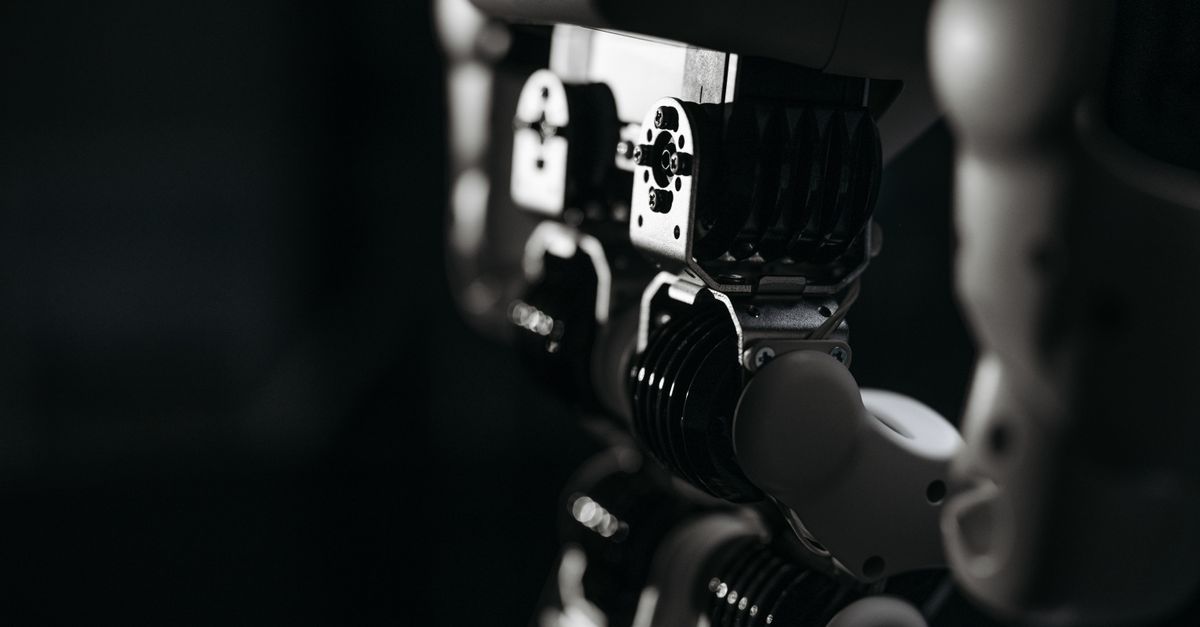
The platform relies on custom-designed harmonic drives and high-torque density motors rather than off-the-shelf components. This choice reduces supply chain fragmentation but increases maintenance complexity. Wrist-mounted stereo cameras and 3D depth sensors provide spatial awareness, while whole-body force/torque sensors enable compliant interaction with workpieces. The mechanical architecture is deliberately non-redundant in high-impact zones to simplify fault detection and enable rapid part replacement in industrial settings.
AI Stack: OpenAI, Nvidia, and Microsoft Integration
Figure AI’s software pipeline is structured around three primary partnerships, each serving a distinct layer of the robotics stack:
- OpenAI: Provides foundation model capabilities for perception, task decomposition, and high-level reasoning. The model is fine-tuned on simulation-to-real datasets and pilot telemetry.
- Nvidia: Supplies the Isaac simulation framework, Jetson compute hardware, and training infrastructure. Nvidia’s role is critical for domain randomization, physics-based policy training, and edge inference optimization.
- Microsoft: Offers Azure cloud infrastructure for fleet management, data aggregation, and model retraining pipelines. Azure Robot OS and digital twin capabilities support remote monitoring and over-the-air updates.
It is important to distinguish between integration announcements and shipped capabilities. The OpenAI and Nvidia partnerships are technically verified through published technical blogs and joint demonstration videos. Microsoft’s cloud integration is confirmed via enterprise partnership disclosures. However, the actual inference latency, model versioning, and edge-cloud synchronization metrics remain proprietary and are only validated through pilot telemetry. RobotWale grades this stack as announcement-stage for commercial deployment, but verified for pilot research and data collection.
Pilot Deployments and Production Readiness
Figure AI’s first verified industrial pilot involves the BMW Group at its Spartanburg, South Carolina facility. Announced in early 2024, the deployment focuses on automotive assembly tasks, including component handling, quality inspection, and ergonomic task substitution. The pilot units are Figure 02 platforms running proprietary control software with foundation model overlays. The objective is not immediate labor replacement but rather data collection, policy refinement, and human-in-the-loop validation.
Production infrastructure has been announced for a facility in Georgia, United States, targeting commercial manufacturing of Figure 02 units. The company has disclosed assembly line layouts, supplier onboarding processes, and quality control protocols in factory videos and press releases. However, no independent verification of unit throughput or yield rates has been published. The grading system places Figure AI in the pilot deployment phase for current operations, with commercial shipping expected in the 2025–2026 window pending factory ramp-up and safety certification.
India Market: Availability, Import Pathways, and Cost Estimates
As of the current reporting cycle, Figure AI has not announced official commercial distribution or channel partnerships in India. The Indian market for industrial humanoids remains in the evaluation phase, with domestic integrators and OEMs conducting proof-of-concept trials using alternative platforms. For Indian enterprises seeking to deploy Figure 02, the pathway would involve direct B2B procurement, customs clearance, and localized commissioning.
Importing a Figure 02 unit into India would trigger the following fiscal and regulatory layers:
- Basic Customs Duty (BCD): Typically 10–15% for industrial robots, subject to current tariff notifications
- Integrated GST (IGST): 28% applied on the assessable value (CIF + BCD)
- Social Welfare Surcharge: 10% of BCD
- Compliance: BIS certification requirements for electrical components, DGFT import licensing, and factory safety audits under the Factories Act
Approximate landed cost estimates for a single Figure 02 unit, including freight, insurance, duties, and port handling, range between ₹1.3 crore and ₹2.2 crore. This figure is explicitly flagged as an estimate based on current tariff structures, USD/INR exchange rate volatility, and standard freight rates. Actual costs will vary based on negotiation terms, volume discounts, and regulatory updates. Indian enterprises should anticipate a 6–9 month lead time for customs clearance, calibration, and site integration.
Critical Assessment: Shipping Hardware vs. Announcement Hype
RobotWale’s editorial grading framework requires strict separation between marketing narratives and operational reality. Figure AI’s technical architecture is sound, and its partnerships with OpenAI, Nvidia, and Microsoft are strategically aligned with current industry trajectories. However, the following grading applies to current claims:
- Shipping Hardware: Pilot units only. No verified commercial unit deliveries to third-party enterprises outside initial pilot partners.
- Pilot Deployments: BMW Spartanburg facility. Verified through manufacturer press releases and independent industrial reporting. Duration and task scope remain proprietary.
- Announcements: Georgia factory ramp-up, foundation model integration, and global distribution plans. These remain forward-looking and contingent on capital allocation and regulatory approvals.
Indian procurement teams should prioritize pilot validation, total cost of ownership modeling, and localized support infrastructure before committing to purchase orders. The humanoid robotics sector is transitioning from research prototypes to industrial workhorses, but the gap between demonstration and deployment remains significant. Figure AI’s trajectory will be determined by sustained pilot performance, yield rates at the Georgia facility, and the ability to maintain edge-inference reliability under factory conditions.
References
- Figure AI Official Website and Technical Documentation: https://www.figure.ai
- BMW Group and Figure AI Pilot Announcement: https://www.bmwgroup.com/en/news/general/2024/figure-ai-humanoid-robot-pilot.html
- Nvidia Isaac Framework and Jetson Integration Overview: https://developer.nvidia.com/isaac
- Microsoft Azure Robot OS and Cloud Infrastructure: https://azure.microsoft.com/en-us/solutions/robotics/
- Figure AI Georgia Manufacturing Facility Announcement: https://www.figure.ai/news/georgia-factory
- Ministry of Commerce and Industry, India: Customs Tariff Notifications for Industrial Robots
- RobotWale Editorial Framework: Hardware-First Grading Methodology
✓ Key takeaways
- •Hands-on view of Figure AI: Hardware Architecture, Pilot Deployments, and India Market Reality inside our Figure AI library.
- •Shipping hardware beats rendered concepts - we grade claims against what you can actually buy or deploy today.
- •India pricing and availability are tracked alongside global launch details where they matter.
References
- Figure AI Official Website and Technical Documentation
- BMW Group and Figure AI Pilot Announcement
- Nvidia Isaac Framework and Jetson Integration Overview
- Microsoft Azure Robot OS and Cloud Infrastructure
- Figure AI Georgia Manufacturing Facility Announcement
- Ministry of Commerce and Industry, India: Customs Tariff Notifications for Industrial Robots
- RobotWale Editorial Framework: Hardware-First Grading Methodology
Related articles
More in Figure AI →