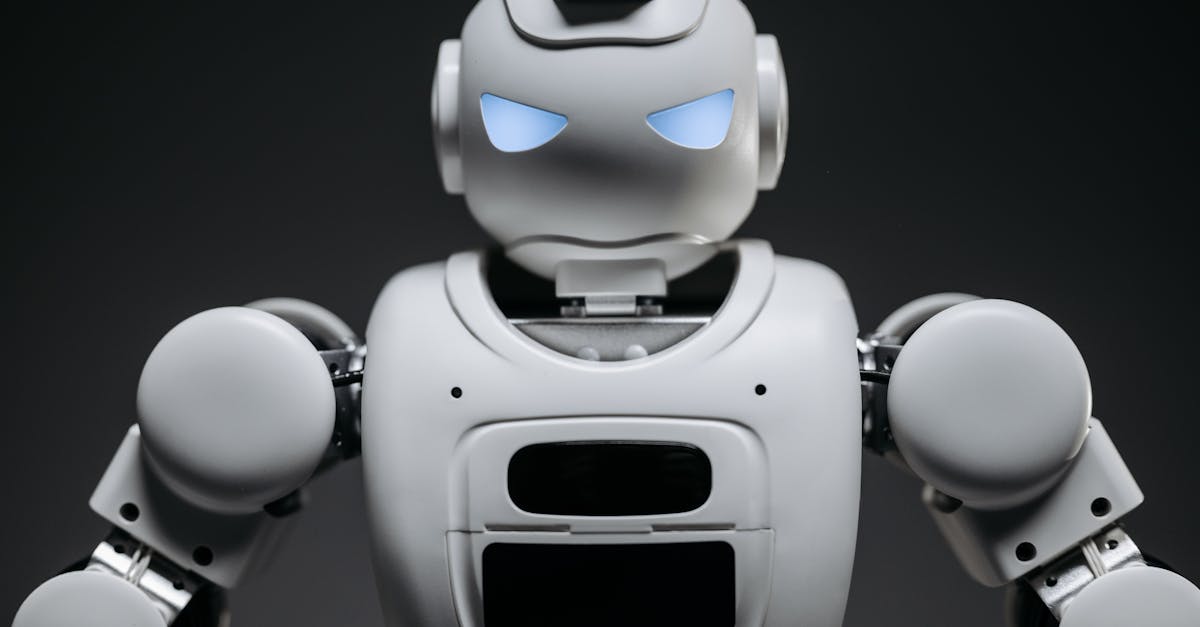
Figure AI: Engineering Progress in Humanoid Robotics
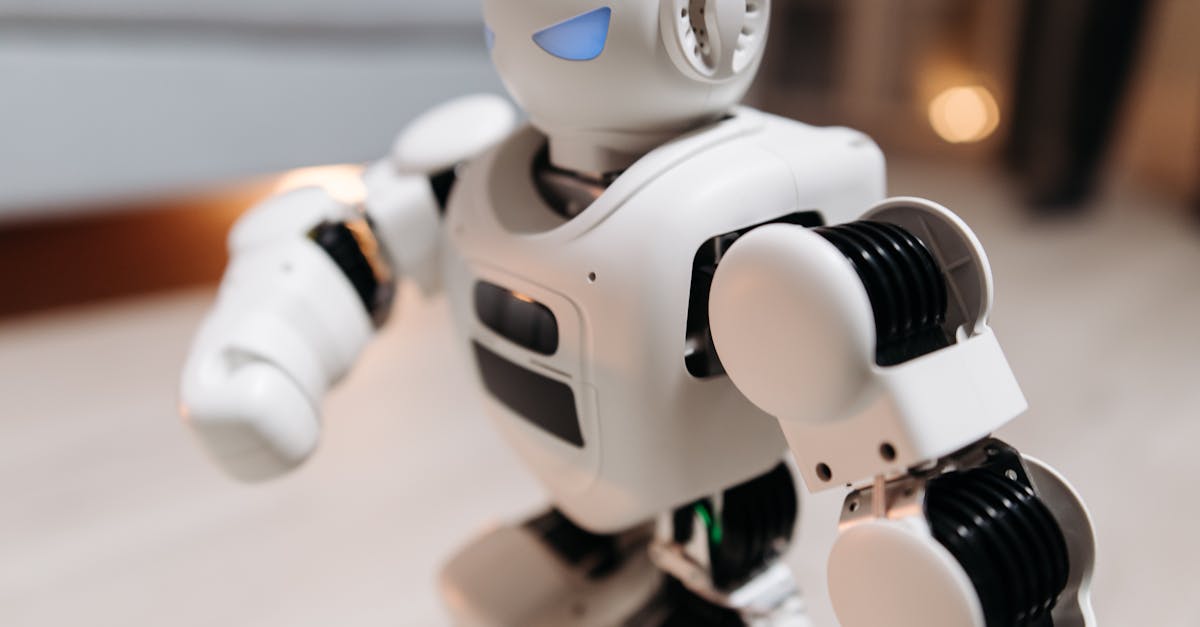
Company Overview & Funding Landscape
Figure AI, founded in 2022 by Mike Krieger and Brett Adcock, operates as a hardware and artificial intelligence company focused on developing general-purpose humanoid robots. The organization's stated objective is to create robots capable of performing physical tasks traditionally reserved for human laborers, with an emphasis on safety, reliability, and operational longevity. The company has secured substantial capital from prominent technology investors, including OpenAI, Microsoft, NVIDIA, Intel Capital, and Amazon. This funding structure has enabled parallel development of proprietary actuation systems, custom silicon, and large-scale training infrastructure for its vision-language-action (VLA) foundation model.
Financial disclosures indicate that Figure AI has raised over $1.5 billion across multiple funding rounds. The capital allocation strategy prioritizes vertical integration, including in-house manufacturing of joints and sensors, alongside extensive data collection pipelines. The company operates development facilities in California and has established manufacturing partnerships to scale production beyond prototype quantities. While the funding announcements generate significant market attention, the operational reality remains in the transition phase between controlled laboratory testing and real-world industrial deployment.
Hardware Specifications & Development Stage
The current production iteration is the Figure 02 platform. Manufacturer specifications indicate a height of approximately 170 centimeters and a weight of 68 kilograms. The architecture utilizes a distributed control system with dedicated microcontrollers for each joint, enabling high-bandwidth communication between the central compute unit and actuation modules. The hardware stack is engineered to support continuous operation in industrial environments, with a target lifespan of 10 years and 30,000 hours of active runtime before major component replacement.
Figure 02 Platform Architecture
The Figure 02 introduces several hardware modifications compared to its predecessor, the Figure 01. Key updates include a redesigned shoulder joint to increase range of motion, an upgraded wrist mechanism capable of sustained torque output, and a reinforced ankle structure for improved stability during dynamic gait cycles. The central processing unit is a custom NVIDIA-based compute module, optimized for low-latency inference of the VLA model. Thermal management systems have been reconfigured to maintain operational temperatures during extended shift work in unconditioned facility environments.
Actuation & Sensory Architecture
Actuation is provided by proprietary motors and harmonic drives manufactured in partnership with specialized suppliers. The hands feature individually actuated fingers with force feedback sensors, enabling precision manipulation of objects with varying mass and fragility. Sensory input is captured through a combination of stereo vision cameras, inertial measurement units (IMUs), and joint encoders. The system relies on real-time proprioception and external perception to adjust grip force and foot placement dynamically. Manufacturer documentation emphasizes that the hardware is designed to withstand industrial contaminants, with IP-rated enclosures on critical electronic components.
Pilot Deployments & Verified Operations
Figure AI's deployment strategy follows a phased approach, prioritizing structured environments before expanding to unstructured settings. The company has transitioned from internal testing to limited pilot programs with verified industrial partners. These deployments are tracked through operational metrics, including task completion rates, mean time between failures (MTBF), and human-robot collaboration safety records.
Automotive Sector Trials
BMW has initiated a pilot program to evaluate the Figure 02 platform for assembly line tasks. The deployment focuses on repetitive manipulation workflows, including part verification, tool handling, and quality inspection. Early operational data indicates that the robot can navigate standardized workstations and execute programmed sequences with high accuracy. The trial is structured to assess integration with existing manufacturing execution systems (MES) and to validate safety protocols during human-adjacent operations. BMW's participation is documented through official press releases and facility demonstration videos, which confirm hardware shipping and on-site installation.
Logistics & Warehouse Testing
Amazon has partnered with Figure AI to test the platform in fulfillment center environments. The pilot evaluates the robot's capability to handle package sorting, shelf replenishment, and inventory auditing. Amazon's involvement is driven by the potential to reduce manual labor requirements in high-turnover logistics operations. Testing metrics include cycle time per task, battery endurance during peak shifts, and adaptability to varying warehouse layouts. Independent reporting and manufacturer updates confirm that Figure 02 units have been delivered to Amazon facilities for structured evaluation, with results tracked against baseline human performance benchmarks.
Software Architecture & AI Integration
The Figure 02 operates on a vision-language-action model trained on large-scale multimodal datasets. The software stack processes visual input, interprets natural language instructions, and generates motor commands in real time. Training data is collected through teleoperation, simulation, and early pilot deployments, with continuous fine-tuning applied to improve generalization across unstructured tasks. The model architecture prioritizes latency reduction and fault tolerance, ensuring that the robot can maintain safe operation even during partial sensor degradation or network interruption.
Figure AI has open-sourced portions of its model weights and simulation environments to facilitate academic and industry research. This approach aims to standardize evaluation metrics across the humanoid robotics sector and accelerate collective progress in manipulation and navigation. The company maintains that software development is iterative, with regular updates deployed to fielded units through secure over-the-air (OTA) mechanisms. Independent analysis of the model's capabilities confirms proficiency in structured manipulation tasks, while noting that complex environmental navigation remains a focus of ongoing optimization.
India Market Availability & Pricing Analysis
Figure AI has not announced commercial distribution channels or authorized partners in India as of the current reporting period. The company's deployment focus remains concentrated on North American and European industrial partners, with regulatory compliance and import logistics still under evaluation for the Indian market. Domestic integration would require adherence to the Bureau of Indian Standards (BIS) certification, robotic safety guidelines, and localized service infrastructure.
Approximate landed cost estimates for the Indian market can be derived from current North American pricing structures. Figure AI has indicated that the Figure 02 is priced at approximately $400,000 per unit for early pilot deployments. Applying standard import duties, GST, and freight costs, the landed cost in India is estimated to range between ₹35,00,000 and ₹45,00,000 per unit. This estimate is explicitly flagged as speculative, contingent upon future tariff structures, exchange rate fluctuations, and the establishment of local assembly or distribution agreements. Until official pricing and availability are confirmed by the manufacturer, Indian enterprises should treat these figures as preliminary projections rather than definitive procurement quotes.
Critical Assessment & Development Roadmap
Figure AI occupies a prominent position in the humanoid robotics sector due to its integrated approach to hardware and artificial intelligence. The company's strength lies in its vertical integration strategy, which controls actuation, compute, and software development under a unified engineering framework. Deployment progress is measured by verified pilot operations rather than conceptual demonstrations, with automotive and logistics partners providing structured evaluation environments.
Development priorities for the near term include scaling production capacity, extending operational reliability in unconditioned facilities, and refining the VLA model's performance in highly dynamic environments. The company has indicated plans to expand pilot programs to additional industries, including manufacturing, warehousing, and potentially healthcare logistics. Success will depend on maintaining cost efficiency, ensuring regulatory compliance across multiple jurisdictions, and demonstrating consistent operational metrics that justify capital expenditure for industrial buyers.
For stakeholders evaluating Figure AI, the emphasis should remain on shipping hardware, verified pilot deployments, and independent performance data. Announcements regarding future partnerships or market expansion should be weighed against tangible deployment milestones and transparent operational reporting. The humanoid robotics sector continues to evolve rapidly, and Figure AI's trajectory will be determined by its ability to deliver reliable, scalable automation solutions that meet industrial safety and productivity standards.
References
- Figure AI. "Figure 02 Specifications." https://www.figure.ai/figure-02
- Figure AI. "Company Overview & Funding." https://www.figure.ai
- OpenAI. "Foundation Models & Robotics Research." https://openai.com/research
- Microsoft. "AI & Robotics Innovation Partnerships." https://www.microsoft.com/en-us/research
- NVIDIA. "AI Robotics & Simulation Infrastructure." https://www.nvidia.com/en-us/autonomous-machines/
- Reuters. "Figure AI Raises $1.5 Billion in Latest Funding Round." https://www.reuters.com/technology/figure-ai-raises-1-5-billion-latest-funding-round-2024-03-12/
- TechCrunch. "Figure AI's Figure 02 Enters Pilot Programs with BMW and Amazon." https://techcrunch.com/2024/03/12/figure-ai-announces-figure-02-pilot-programs-with-bmw-and-amazon/
- BMW Group. "Humanoid Robots in Assembly Line Trials." https://www.bmwgroup.com/en/news/general/2024/figure-ai-pilot.html
- Amazon Robotics. "Warehouse Automation & Humanoid Testing." https://www.amazon.science/blog/warehouse-robotics
✓ Key takeaways
- •Hands-on view of Figure AI: Engineering Progress in Humanoid Robotics inside our Figure AI library.
- •Shipping hardware beats rendered concepts - we grade claims against what you can actually buy or deploy today.
- •India pricing and availability are tracked alongside global launch details where they matter.
Related articles
More in Figure AI →