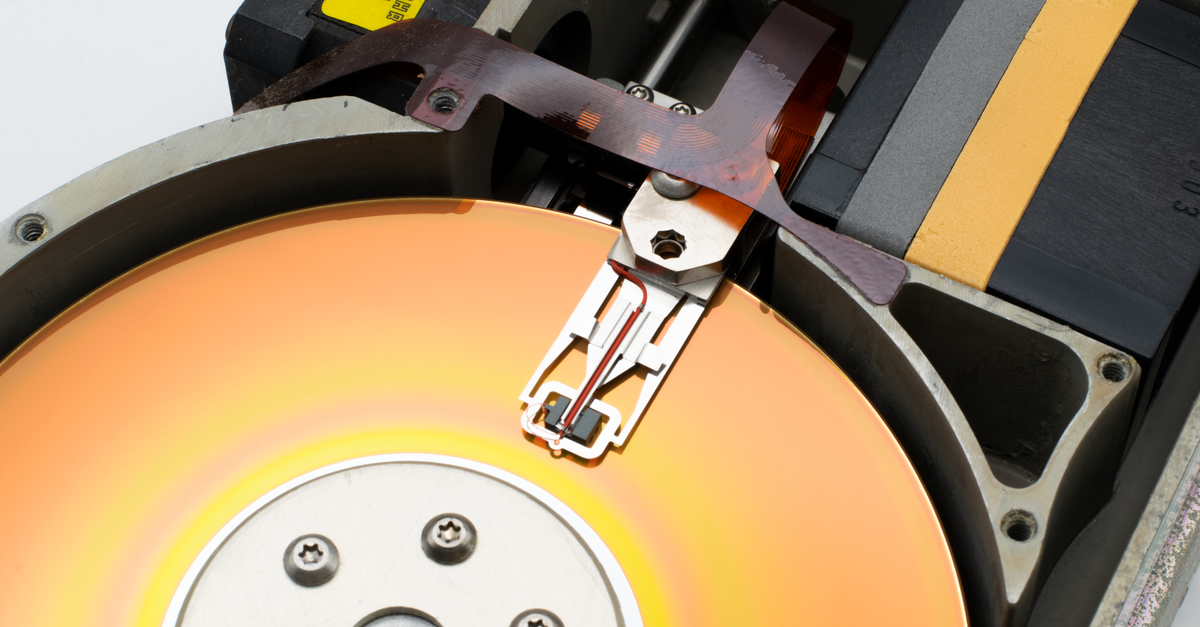
Harmonic Drives & Gearboxes: The Precision Heart of Modern Robotics

Introduction
Harmonic drives, formally known as strain wave gearboxes, represent the critical interface between motor torque and precise end-effector motion in advanced robotics. While marketing materials often suggest these units are ubiquitous in every robotic arm, the reality is more nuanced. They are the standard for high-precision, high-torque-density joints, particularly in humanoid robots and delicate assembly arms, yet they coexist with planetary and cycloidal systems depending on the payload and speed requirements.
This analysis strips away the hype surrounding rendered concepts and focuses on the hardware that ships today. We examine the mechanical principles that make them essential, the manufacturers dominating the supply chain, and the practical realities of sourcing this technology in India.
The Mechanics of Precision
At the core of a harmonic drive is a compact, high-ratio reduction system. Unlike traditional gearboxes that rely on meshing external teeth, a harmonic drive utilizes elastic deformation. The mechanism consists of three primary components: the Wave Generator, the Flexspline, and the Circular Spline.
The Strain Wave Principle
The Wave Generator is an elliptical bearing that rotates inside the Flexspline, a thin-walled cup with external teeth. As the Wave Generator rotates, it deforms the Flexspline into an elliptical shape, engaging the teeth with the rigid Circular Spline at the ends of the major axis. Because the Circular Spline has two more teeth than the Flexspline, each rotation of the Wave Generator results in a one-tooth displacement of the Flexspline relative to the Circular Spline.
This results in massive reduction ratios in a single stage, typically ranging from 50:1 to 160:1. The result is a compact unit capable of delivering high torque with minimal backlash. For a robot arm, this means the motor can be smaller and lighter, which is crucial for the center of gravity in humanoid designs.
Key Performance Metrics
Manufacturers grade these units by specific metrics that determine their suitability for industrial use.
- Torque Density: Harmonic drives offer some of the highest torque per unit volume in the market, critical for battery-operated mobile robots.
- Backlash: Typically near-zero, enabling precise positioning for pick-and-place tasks requiring sub-millimeter accuracy.
- Efficiency: While high, efficiency can drop under heavy loads due to the friction involved in the constant flexing of the metal cup.
- Life Cycle: The Flexspline is subject to fatigue. High-cycle applications (like a 24/7 assembly line) require specific heat treatments or material grades to prevent metal fatigue failure.
While the technology is mature, claims of infinite life are incorrect. The Flexspline is a consumable component in high-use environments.
The Market Landscape
The supply chain for harmonic drives is concentrated. A handful of manufacturers hold the intellectual property and manufacturing capabilities required to produce the precision tooling necessary for the Flexspline.
Harmonic Drive Systems (HDS)
Based in Japan, Harmonic Drive Systems (HDS) is the industry benchmark. Their patents define the standard strain wave gear architecture. Most "harmonic drives" in the market are licensed from or derived from HDS technology. They offer the widest range of sizes, from the miniature HDU series to the heavy-duty HA and HB series.
HDS provides verified data on torque ratings and life expectancy. For robotics engineers, HDS data sheets are the baseline against which third-party claims are measured. Their dominance ensures that replacement parts are available globally, though lead times can extend during chip shortages or geopolitical trade friction.
Emerging Alternatives
In recent years, manufacturers in China and Europe have entered the space to reduce costs. Companies like NABE and True Motion have released units that mimic HDS specifications at lower price points. However, independent testing often reveals deviations in torsional stiffness and backlash consistency compared to the Japanese standard.
For pilot deployments, these alternatives offer a cost-effective entry point. For mass production where reliability is paramount, the premium attached to HDS units often justifies the higher initial cost. Claims of "domestic manufacturing" in regions outside Japan or China often lack the precision tooling verification required for high-cycle industrial use.
Relevance to Humanoid Robotics
The surge in humanoid robot development has reignited interest in harmonic drives. Robots like the Tesla Optimus, Figure 01, and units from Boston Dynamics utilize harmonic drives in their joints. The reason is not simply torque density, but the ability to integrate the actuator directly into the joint housing.
In a humanoid leg or arm, space is at a premium. A harmonic drive allows the motor to be mounted coaxially with the output shaft, often inside the limb itself. This reduces the overall mass of the limb, lowering the energy required to move it. This is a significant advantage over planetary gearboxes, which often require offset mounting or larger external housings.
However, the reliance on harmonic drives carries risk. If a Flexspline fails in a humanoid robot, the repair requires specialized replacement parts that are not always standardized. Unlike a standard gearbox, there is little aftermarket support for third-party manufacturers in many industrial regions.
The Indian Market Context
For Indian robotics integrators and startups, the availability of harmonic drives presents specific logistical and financial challenges. The technology is not manufactured domestically at scale.
Availability and Supply Chain
Indian robotics firms primarily source harmonic drives through authorized distributors in Mumbai, Delhi, and Bengaluru. The supply chain is heavily dependent on imports from Japan, China, and Germany. Lead times are sensitive to global shipping constraints and customs clearance processes.
Local availability is improving for entry-level models (e.g., HDU series), but high-torque models often require special ordering. This impacts the prototyping cycle. A delay in receiving a single gearbox can stall a full robotic arm assembly. Distributors often hold limited inventory, forcing engineers to order in bulk to secure availability.
Pricing in INR
Pricing for harmonic drives in India reflects the import duties and the premium for precision engineering. While USD pricing varies by manufacturer, the landed cost in India typically includes Customs Duty (currently 10% to 15% for machinery parts) and GST.
- Entry-Level (HDU Series): Approximate landed cost ranges from INR 35,000 to INR 60,000 per unit.
- High-Torque (HB/HA Series): Costs escalate rapidly, often ranging from INR 150,000 to INR 400,000+ per unit depending on torque rating.
These figures are estimates for landed cost. OEMs purchasing in bulk for production lines negotiate significantly lower rates. For startups relying on pilot deployments, the cost per joint is a critical factor in the overall Bill of Materials (BOM). A humanoid robot with 14 to 20 joints can easily incur INR 500,000 to INR 1,000,000 just in gearbox costs.
This high cost drives the search for alternatives. Some Indian startups are exploring direct-drive motors (servo actuators without gearboxes) to reduce cost, though this shifts the challenge to the motor control and torque requirements.
Technical Limitations and Future Outlook
Despite their prevalence, harmonic drives are not a universal solution. Engineers must account for their limitations during the design phase.
Torsional Compliance: While the reduction is rigid, the Flexspline itself is elastic. Under high shock loads, there can be slight elastic deformation that affects positioning accuracy. This requires robust control loops in the software to compensate.
Heat Generation: In high-speed applications, the friction between the wave generator and the flexspline can generate heat. Thermal expansion can alter the fit of the components, leading to increased backlash or binding.
Alternatives: Cycloidal drives are gaining traction for heavy-duty industrial arms where torsional stiffness is more critical than compactness. Planetary drives remain the standard for high-speed, lower-torque applications. The trend in humanoids is moving toward "actuators" that combine the motor, driver, and gearbox into a single unit, often sourced from specialized vendors rather than assembled in-house.
Conclusion
Harmonic drives remain the gold standard for precision actuation in robotics, particularly where weight and torque density are paramount. For the Indian market, they represent a high-value import that dictates significant budget allocation for both prototyping and production.
Claims of domestic production should be verified against manufacturer spec sheets. Until a cost-effective, high-torque alternative emerges that matches the lifecycle durability of HDS units, the reliance on imported harmonic drives will persist. Engineers must prioritize verified shipping hardware over conceptual announcements when designing reliable robotic systems.
References
Harmonic Drive Systems (Japan)
Official Product Catalog and Technical Specifications.
URL: https://www.harmonicdrive.net/
Robotics & Automation News
Industry reports on actuator supply chains and manufacturing capabilities.
URL: https://www.robotsandautomationnews.com/
Automate.org
Technical guidelines on industrial gearbox selection and lifecycle management.
URL: https://www.automate.org/
✓ Key takeaways
- •Hands-on view of Harmonic Drives & Gearboxes: The Precision Heart of Modern Robotics inside our Harmonic Drives & Gearboxes library.
- •Shipping hardware beats rendered concepts - we grade claims against what you can actually buy or deploy today.
- •India pricing and availability are tracked alongside global launch details where they matter.
References
Related articles
More in Harmonic Drives & Gearboxes →