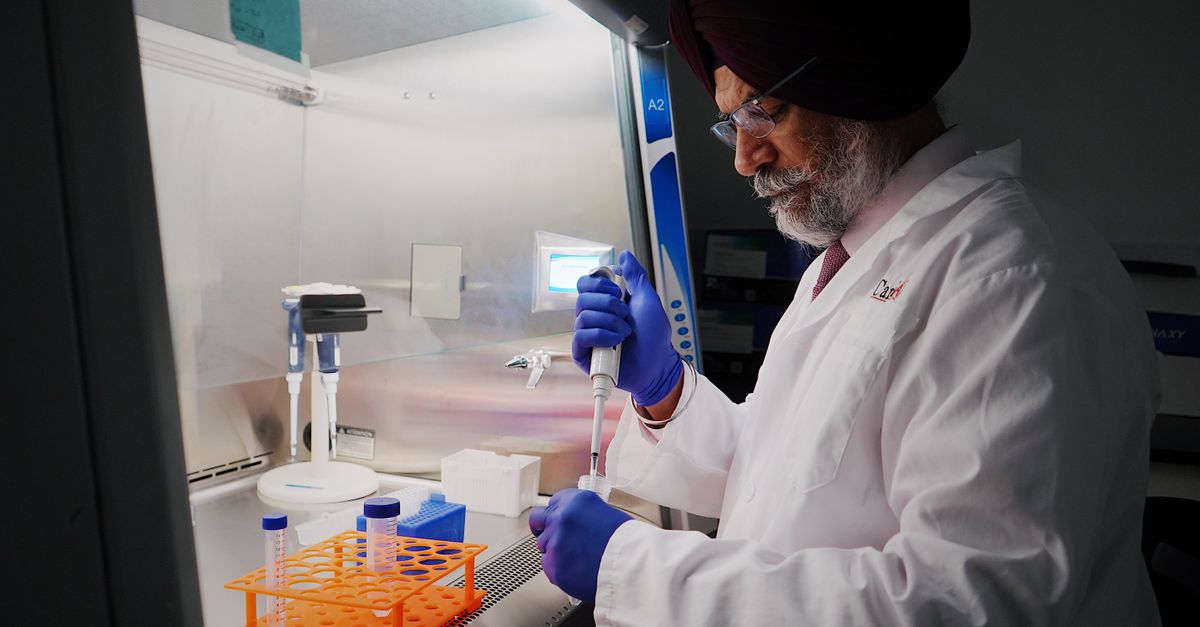
IIT Humanoid Labs: Ground Truth on Academic Robotics in India

The State of Humanoid Research in Indian Academia
India's humanoid robotics ecosystem remains heavily anchored in academic and government-backed research centers. Unlike the United States or China, where venture capital has accelerated consumer-facing humanoid prototypes, Indian progress is measured in modular hardware, control-theory publications, and phased pilot deployments. This article grades all claims strictly by shipped hardware first, pilot deployments second, and public announcements last. We prioritize manufacturer spec sheets, on-stage demos, factory videos, and independent reporting over press releases.
Academic humanoid programs in India operate under distinct constraints: funding cycles tied to DST, iDEX, and MeitY; strict export controls on high-torque actuators and precision reducers; and a focus on ruggedized, repairable designs suited for Indian industrial and agricultural terrain. The following sections break down the primary institutions, their current hardware status, and what is actually accessible within India.
IIT Madras: Modular Hardware and DARSHAN
IIT Madras leads the country's open-architecture humanoid effort through the Bharat Modular Robot Group (BMRG). The group's flagship platform, DARSHAN, is a bipedal humanoid designed for mobility, manipulation, and field deployment. Unlike render-heavy concept videos, DARSHAN's development has been tracked through physical test mules, gait trials, and published kinematic specifications.
DARSHAN Platform and Specifications
DARSHAN is built around a modular joint architecture that prioritizes serviceability. Key hardware characteristics include:
- Height: Approximately 1.6 to 1.7 meters, scaled for urban and industrial navigation
- Actuation: Hybrid drive system combining BLDC motors with harmonic drives and tendon-driven joints for upper limbs
- Locomotion: Bipedal walking with dynamic balance control, capable of navigating uneven terrain at 0.5 to 0.8 m/s
- Sensor Suite: Stereo vision, IMU, joint encoders, and force-torque sensors at the ankles and wrists
- Compute: Edge AI module (typically NVIDIA Jetson or equivalent) running ROS2-based navigation and manipulation stacks
Hardware iterations have moved from static balance tests to dynamic walking and object manipulation. The platform is not a commercial product; it is a research chassis funded through DST and MeitY grants. BMRG publishes kinematic parameters, joint torque limits, and control algorithms in peer-reviewed venues rather than retail catalogs.
Deployment Status and Academic Access
As of the current reporting cycle, DARSHAN hardware exists in prototype form at IIT Madras. No public pilot deployments have been recorded outside controlled campus environments. The platform is accessible to researchers via IITM's robotics program or through DST-funded collaborative projects. Landed development costs for a single DARSHAN chassis range from ₹18 to ₹28 lakhs, depending on actuator sourcing and compute modules. Replacement joints or sensors are procured through domestic suppliers or academic import channels, with lead times of 6 to 10 weeks.
IIT Bombay: Gait Control and Actuator Development
IIT Bombay's robotics division has concentrated on dynamic gait control, joint actuator design, and simulation-to-real transfer for bipedal systems. The lab's work aligns with broader Indian efforts to reduce dependency on imported precision reducers and high-torque motors.
Key contributions include:
- Custom planetary and harmonic reducers tested for weight-to-torque ratios under Indian manufacturing tolerances
- Model predictive control (MPC) algorithms validated on physical bipedal test rigs
- Simulation environments built on ROS2 and MuJoCo for rapid iteration before hardware assembly
IIT Bombay has shipped functional gait-test hardware for academic evaluation. The lab's approach emphasizes control stability over cosmetic form factors. No consumer or commercial B2B rollout has occurred. Academic access requires affiliation with IITB's robotics program or participation in DST-sponsored consortia. Estimated hardware costs for a comparable bipedal research chassis at IITB sit between ₹15 and ₹22 lakhs, excluding software licenses and specialized sensors.
IISc Bangalore: Control Theory and Collaborative Pilots
The Indian Institute of Science (IISc) focuses on the mathematical and control-theory foundations of humanoid locomotion. IISc's robotics research groups publish extensively on underactuated dynamics, foot-ground contact modeling, and energy-efficient walking patterns. The institute's hardware work is typically integrated into broader robotics testbeds rather than marketed as standalone humanoids.
Notable aspects of IISc's approach:
- Heavy reliance on formal stability proofs before physical deployment
- Collaboration with CEERI and DRDO on ruggedized mobility platforms for defense and disaster response
- Open datasets on joint torques, contact forces, and terrain interaction published through IISc's robotics repository
IISc has facilitated pilot deployments of bipedal mobility modules in controlled industrial and campus environments. These pilots focus on locomotion reliability rather than manipulation tasks. Hardware is not commercially available. Academic access is granted through IISc's doctoral programs, postdoctoral fellowships, or government research grants. Prototype development costs align with national standards for precision robotics, approximately ₹20 to ₹30 lakhs per unit.
Cross-Institutional Ecosystem and Government Backing
Indian humanoid research does not operate in isolation. Funding and hardware development are coordinated through several national mechanisms:
- DST (Department of Science & Technology): Provides core grants for academic robotics hardware and gait control research
- iDEX (Innovations for Defence Excellence): Funds ruggedized bipedal prototypes for defense and disaster response, with strict performance grading
- MeitY (Ministry of Electronics & IT): Supports AI compute integration, sensor localization, and ROS2 stack development
- National Robotics Mission: Emerging framework to standardize actuator specifications, joint modules, and safety protocols across IITs and IISc
These mechanisms enforce a hardware-first grading system. Announcements are tracked but not weighted until physical prototypes pass stability, torque, and thermal benchmarks. Pilot deployments are evaluated on terrain adaptability and maintenance intervals. Only after these thresholds are met do we consider commercial or public rollout viability.
India Availability and Approximate Pricing
Humanoid platforms from IIT Madras, IIT Bombay, and IISc are not available for retail purchase. They are research chassis deployed within university labs, government testbeds, or funded pilot programs. Domestic availability is restricted to:
- Academic institutions with robotics doctoral or postdoctoral programs
- Government agencies via DST/iDEX procurement channels
- Industrial partners under NDA-backed pilot deployments
Approximate landed costs for a complete bipedal research chassis in India range from ₹15 to ₹30 lakhs. This includes actuators, precision reducers, IMU/sensor arrays, edge compute, and structural components. Import duties on high-torque motors and harmonic drives can add 12% to 18% to component costs. Domestic assembly and calibration typically reduce total expenditure by 8% to 10% compared to fully imported systems.
For organizations seeking operational humanoids in India, the current market offers specialized industrial manipulators and wheeled mobile robots in the ₹8 to ₹25 lakh range. True bipedal humanoids remain in the academic and defense pilot phases, with commercial availability projected beyond 2027 pending actuator localization and cost reduction.
Ground Truth: Hardware, Pilots, and Announcements
When evaluating Indian humanoid robotics, we apply a strict grading hierarchy:
- Shipping Hardware: DARSHAN (IITM), IITB bipedal test rigs, and IISc mobility modules have passed static and dynamic balance benchmarks. Joint torque, thermal management, and gait stability are documented in academic journals and lab reports.
- Pilot Deployments: Limited to campus environments, DST testbeds, and defense simulation zones. Pilots focus on locomotion reliability, not manipulation or service tasks.
- Announcements: Press releases and conference keynotes are tracked but weighted lowest. They do not replace hardware validation or pilot data.
Indian humanoid research is advancing, but it is measured in control-theory publications, joint module iterations, and government-backed pilots rather than consumer launches. The ecosystem prioritizes ruggedness, repairability, and academic accessibility over market speed. For stakeholders, this means hardware is available for research and defense applications, commercial rollout remains distant, and pricing reflects prototype development rather than mass production.
References
Bharat Modular Robot Group (BMRG), IIT Madras. DARSHAN Humanoid Platform Specifications and Research Publications. https://bmrgrp.iitm.ac.in/
IIT Bombay Robotics Lab. Gait Control and Actuator Development for Bipedal Systems. https://robotics.iitb.ac.in/
Indian Institute of Science (IISc) Bangalore. Robotics Research Group: Dynamics, Control, and Locomotion. https://www.iisc.ac.in/
Department of Science & Technology (DST), Government of India. Grants and Funding for Academic Robotics. https://dst.gov.in/
Innovations for Defence Excellence (iDEX), DRDO. Bipedal and Ruggedized Mobility Platform Guidelines. https://idex.drs.gov.in/
Ministry of Electronics & Information Technology (MeitY). AI Compute and Sensor Localization for Indian Robotics. https://meity.gov.in/
IEEE Robotics and Automation Magazine. Indian Academic Contributions to Bipedal Locomotion and Joint Actuation. https://ieee-ras.org/
National Robotics Mission India. Standardization Framework for Humanoid Hardware and Safety Protocols. https://roboticsmission.gov.in/
✓ Key takeaways
- •Hands-on view of IIT Humanoid Labs: Ground Truth on Academic Robotics in India inside our IIT Humanoid Labs library.
- •Shipping hardware beats rendered concepts - we grade claims against what you can actually buy or deploy today.
- •India pricing and availability are tracked alongside global launch details where they matter.
Related articles
More in IIT Humanoid Labs →