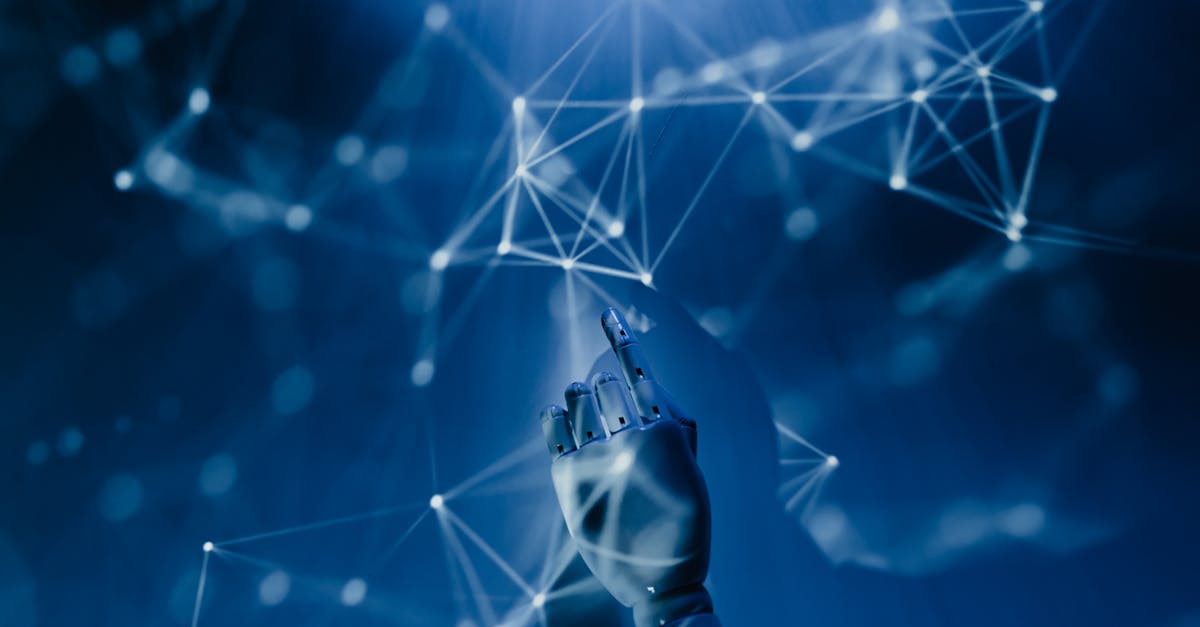
Imitation Learning in Humanoid Robotics: From Teleoperation to Behavior Cloning
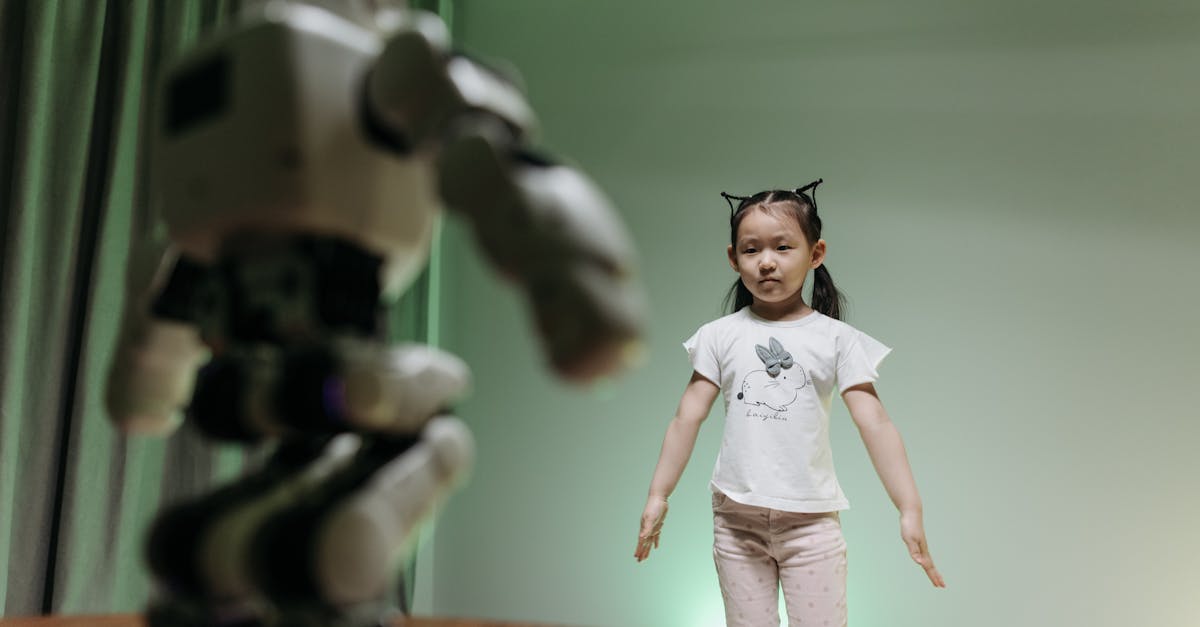
Understanding Imitation Learning in Robotics
Imitation Learning (IL) represents a fundamental shift in how humanoid robots acquire skills. Unlike Reinforcement Learning (RL), where agents learn through trial-and-error rewards, IL focuses on learning directly from human demonstrations. In the context of industrial automation and service robotics, this methodology bridges the gap between general-purpose AI and specific physical tasks. The core premise is simple: a robot observes a human performing a task and attempts to replicate the trajectory or control policy. However, the engineering reality involves complex data pipelines, high-fidelity sensors, and rigorous validation protocols.
For RobotWale, the distinction is critical. We grade claims by shipping hardware first, pilot deployments second, and announcements last. In the current state of the industry, few humanoid robots operate on pure imitation learning without human oversight. Most systems rely on a hybrid approach where teleoperation provides the initial dataset, and behavior cloning refines the policy. This article examines the technical architecture of these systems, the hardware requirements, and their viability in the Indian ecosystem.
Teleoperation and Data Collection Pipelines
Teleoperation serves as the primary data acquisition engine for imitation learning. It involves a human operator controlling the robot’s actuators in real-time, often through a remote interface. The data collected during these sessions constitutes the training set for the behavior cloning model.
The Human-in-the-Loop Mechanism
In modern teleoperation setups, the human does not merely send joystick commands. Instead, they wear haptic feedback suits or use VR controllers that map their arm movements to the robot’s kinematics. Systems like Figure AI’s Figure 01 utilize a teleoperation backend where humans guide the robot through tasks like stacking boxes or folding laundry. The robot records proprioceptive data (joint angles, motor torques) alongside visual data (camera feeds).
This approach allows for rapid skill acquisition without the need for millions of simulated trials. However, it introduces latency and safety risks. In a manufacturing setting, a lag of even 200 milliseconds can cause a robot to drop a fragile payload. Consequently, data filtering is essential. Engineers must curate the dataset to remove teleoperator errors, ensuring the model learns from high-quality demonstrations rather than noisy inputs.
Hardware Requirements for Teleoperation
Implementing teleoperation requires significant hardware investment beyond the robot itself. It typically involves:
- High-bandwidth Connectivity: 5G or dedicated Wi-Fi 6E networks to transmit video streams and control signals.
- Controller Interfaces: Haptic gloves or VR headsets (e.g., Meta Quest Pro or custom exoskeletons).
- Edge Computing: On-robot processors capable of running low-latency inference during the demo phase.
Without this infrastructure, the teleoperation pipeline becomes a bottleneck. For Indian enterprises, latency in remote areas can degrade the quality of the demonstration data, leading to poor policy convergence.
Behavior Cloning and Generalization
Behavior Cloning (BC) is the supervised learning phase where the robot maps sensory inputs to actions based on the teleoperation data. The robot is treated as a neural network classifier, predicting the next action given the current state.
The Distribution Shift Problem
The primary challenge in BC is the "distribution shift." If a robot is trained on demonstrations performed in a controlled factory environment, it often fails when deployed in a slightly different warehouse layout. This occurs because the robot encounters states during deployment that were not present in the training data. When the robot makes a mistake, it lacks the ability to correct itself because it relies solely on the learned policy, not a reward signal.
Companies like Google DeepMind have addressed this with models like RT-1 and RT-2. These vision-language-action models use natural language instructions alongside visual data to generalize better. However, they require massive computational resources and vast datasets of human demonstrations.
Real-World Deployment Cases
To date, pure behavior cloning without fallbacks is rare in shipping hardware. Agility Robotics’ Digit has demonstrated the ability to navigate uneven terrain, but its core navigation often relies on classical control layers supplemented by learned policies. Tesla Optimus claims to use imitation learning for manipulation, but full autonomy remains in the beta phase. In pilot deployments, the robot often reverts to teleoperation if the confidence score of its policy drops below a threshold.
This hybrid safety net is crucial for Indian industrial clients who cannot afford downtime. A robot that fails mid-task without human intervention poses a liability risk.
Market Landscape and India Availability
The viability of imitation learning in India depends heavily on cost and local support infrastructure. While the technology is mature in the US and China, the Indian market faces unique constraints.
Hardware Availability and Pricing
As of 2024, no fully autonomous humanoid robot is widely available for purchase in India at consumer prices. Most units are sold as enterprise solutions with pilot terms.
- Agility Robotics Digit: Available for enterprise pilots. Estimated landed cost in India is approximately INR 1.5 Crore to 2.5 Crore ($200k-$300k USD) depending on software bundling and service contracts.
- Figure 01: Currently limited to pilot programs with partners like BMW. Availability in India is not publicly confirmed. Estimated landed cost exceeds INR 5 Crore.
- Tesla Optimus: Beta testing ongoing. No official price sheet for India. Estimates suggest a target price of $20,000-$30,000 in the long term, but early units will cost significantly more.
For Indian manufacturers, the cost barrier is steep. However, the value proposition lies in replacing hazardous tasks. If a humanoid can perform a task that currently requires a human in a toxic environment, the ROI calculation shifts from labor savings to risk mitigation.
Integration Challenges in India
Indian factories often have inconsistent infrastructure. Variable power supply and uneven flooring challenge the stability of humanoid robots trained on idealized data. To make imitation learning viable, manufacturers must provide robust sim-to-real transfer tools. This allows companies to test policies in a simulated Indian factory environment before deploying them physically.
Technical Challenges and Limitations
Despite the hype surrounding imitation learning, several technical hurdles remain unresolved for mass deployment.
Dataset Scarcity
Imitation learning is data-hungry. A single task, such as folding laundry, may require hundreds of hours of teleoperation to perfect the policy. Generating this data is labor-intensive. Unlike software where code can be written once, physical robots require physical demonstrations.
Safety and Liability
If a robot behaves unexpectedly during a deployment, the liability falls on the manufacturer. In imitation learning, the "black box" nature of neural networks makes debugging difficult. If the model predicts a wrong action, understanding why it happened requires deep inspection of the weights.
Scalability of Autonomy
Current systems struggle with generalization. A robot trained to grasp a specific cup may fail with a slightly different cup. This limits the scalability of the solution. Until the robot can handle out-of-distribution inputs, it remains a specialized tool rather than a general-purpose worker.
Conclusion
Imitation learning offers a promising pathway for humanoid robotics, moving away from hard-coded scripts toward adaptable, learned behaviors. However, the current state of the technology relies heavily on teleoperation and pilot deployments. For Indian enterprises, the focus should be on pilot programs with clear ROI metrics rather than purchasing full autonomy. As hardware costs decrease and data pipelines mature, the shift from teleoperation to true autonomy will define the next decade of robotics.
Until then, RobotWale advises caution. Verify claims against shipping hardware and independent reporting. The hype cycle often outpaces the engineering reality.
✓ Key takeaways
- •Hands-on view of Imitation Learning in Humanoid Robotics: From Teleoperation to Behavior Cloning inside our Imitation Learning library.
- •Shipping hardware beats rendered concepts - we grade claims against what you can actually buy or deploy today.
- •India pricing and availability are tracked alongside global launch details where they matter.
References
Related articles
More in Imitation Learning →