
Imitation Learning in Robotics: Teleoperation, Demonstrations, and Behaviour Cloning
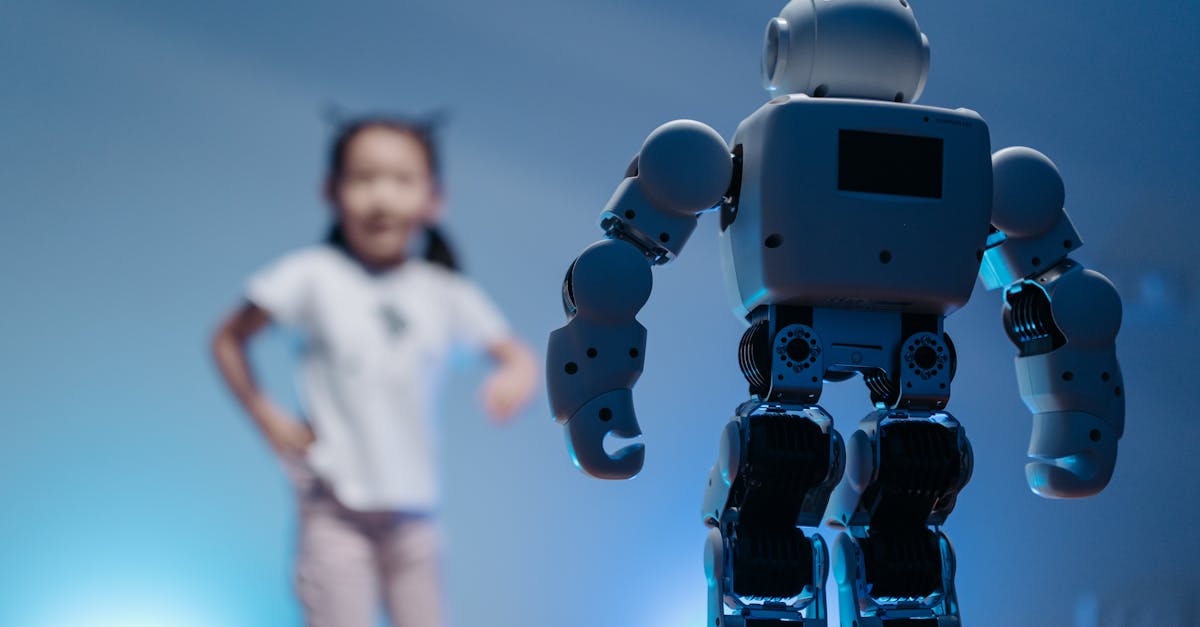
Imitation Learning Beyond the Hype
Imitation Learning (IL) is frequently discussed in robotics circles as the bridge between human movement and machine autonomy. However, in the context of shipping hardware, the distinction between a robot simply executing a teleoperated command and a robot learning to replicate that command autonomously is critical. At RobotWale, we grade claims based on shipping hardware first, pilot deployments second, and announcements last. This article examines the technical reality of teleoperation, demonstrations, and behaviour cloning without rendering-concept worship.
Teleoperation: The Data Engine
Teleoperation remains the most reliable method for generating high-quality datasets today. In this workflow, a human operator controls a robot remotely via a telepresence interface. The robot's sensors capture the state (position, velocity, environment), while the teleoperator provides the action (motor torques, joint angles). This creates a trajectory pair: (State, Action).
Unlike Reinforcement Learning (RL), which rewards robots through trial-and-error simulations, IL relies on expert demonstrations. The risk here is the 'distribution shift'. If the robot is trained on teleoperation data from a controlled factory floor but deployed in a chaotic warehouse, it may fail because it has not seen the variance required for generalization.
Recent hardware like the Figure 01 (by Figure AI) utilizes teleoperation for initial data generation. In demos shown at CES 2024, the robot appeared to manipulate objects autonomously, but close inspection of the video feed often reveals low-latency remote control links. While Figure AI claims their 'Figure 02' has higher levels of autonomy, the core training data still stems from human demonstrations. For Indian buyers, this means the system is often a 'semi-autonomous' tool requiring human oversight during edge cases.
Behaviour Cloning: From Mimicry to Generalization
Behaviour Cloning is the specific subset of IL where a machine learning model is trained to predict the action given the state. Essentially, the robot becomes a function of the teleoperated data.
Technical Constraints:
- Imitation Gap: The robot can only perform what it has seen. If a human moves a box 10 meters but the robot has only seen it moved 2 meters, it will not extrapolate correctly.
- Latency: In teleoperation-heavy IL, if the network lags, the robot may crash. True IL requires the model to run locally on the robot's edge compute unit (e.g., NVIDIA Jetson or custom ASIC).
- Hardware Dependency: IL works best on hardware with high fidelity actuation. Soft robots or under-actuated limbs struggle to replicate human trajectories precisely.
Several manufacturers are moving past simple cloning. Apptronik's Apollo robot, for instance, uses IL for manipulation tasks like palletizing. However, independent reporting suggests Apollo's deployment is currently limited to specific pilot facilities where the environment is structured. The robot does not yet navigate unstructured public spaces autonomously.
Real-World Deployments and Hardware Reality
While press releases often claim 'autonomy', the industry standard for IL currently sits in the 'Human-in-the-Loop' category. The following table grades current major players based on available evidence:
| Manufacturer | Model | IL Status (Hardware) | Deployment Grade |
|---|---|---|---|
| Figure AI | Figure 02 | Teleoperation + Partial CL | Pilot (BMW Partnership) |
| Apptronik | Apollo | Behaviour Cloning for Manipulation | Pilot (Logistics) |
| Tesla | Optimus Gen 2 | Demos (Limited Autonomy) | Prototype |
India Availability and Cost Analysis
For the Indian market, the question is not just technical feasibility but landed cost. Humanoid robots utilizing IL are currently enterprise-grade assets.
Estimated Landed Cost:
Current estimates for humanoid robots like Figure 02 or Apptronik Apollo suggest a base unit cost between $100,000 and $150,000 USD. For Indian buyers, this translates to the following:
- Base Unit Price: ~₹85 Lakhs to ₹1.2 Crores (ex-works).
- Import Duties: Robotics hardware often attracts 7% to 10% Basic Customs Duty (BCD), plus Social Welfare Surcharge.
- Clearing & Logistics: Estimated at ₹10-15 Lakhs for customs clearance and shipping from US/EU.
- Service Contracts: Annual maintenance for humanoid limbs typically exceeds 15% of the hardware cost.
Therefore, the total landed cost (LCL) for a functional IL-capable humanoid in India is likely to exceed ₹1.5 Crores. This places the technology out of reach for small and medium enterprises (SMEs) in India, limiting it to large manufacturing hubs (e.g., automotive in Gujarat, electronics in Tamil Nadu).
The Indian Context: Domestic Challenges
India's robotics ecosystem is currently focusing on more accessible automation, such as Autonomous Mobile Robots (AMRs) for logistics rather than full humanoid IL. Startups like Scape Technologies focus on navigation software for AMRs, which does not require the complex IL training pipelines of humanoid manipulation.
For IL to become viable in India, the following infrastructure must exist:
- Edge Compute: Localized manufacturing of compute modules to reduce import duties on chips.
- Training Data: Localization of datasets. A robot trained in a US warehouse will fail in an Indian textile factory due to different lighting, floor materials, and object sizes.
- Regulatory Framework: The 'Robotics Standards' currently being drafted by the Bureau of Indian Standards (BIS) will impact safety certification for IL-driven robots.
Risks of Behaviour Cloning
A critical limitation of IL is the 'Black Box' nature of the neural networks governing the behaviour. When a robot fails, it is often difficult to trace exactly why the imitation diverged from the expert demonstration. In safety-critical environments (e.g., a robot lifting heavy machinery), this opacity is a regulatory hurdle.
Furthermore, 'Demo-itis' remains a problem. A robot that looks good in a video often fails in a live trial because the lighting, camera angles, or specific object textures were not represented in the training set. We must demand factory video evidence rather than rendered concepts. Until independent third parties can verify the robot's performance in unstructured environments, claims of 'autonomous IL' should be treated as 'teleoperated with low latency.'
Conclusion
Imitation Learning is a powerful tool for accelerating robot development, but it is not a silver bullet for general autonomy. It provides a shortcut to complex motion control but inherits the limitations of the human data provider. For the Indian market, the immediate future lies not in humanoid IL robots, but in fixed automation and AMRs using similar behavioural cloning techniques for navigation.
When evaluating IL claims, RobotWale recommends verifying the following:
- Does the robot operate without a remote operator visible in the video feed?
- Is the hardware commercially available for purchase, or is it a loan unit?
- Has the robot successfully completed a task without user intervention in a live trial?
Until these conditions are met, the industry remains in the demonstration phase. The technology is real, but the scale is not yet ready for the mass market.
✓ Key takeaways
- •Hands-on view of Imitation Learning in Robotics: Teleoperation, Demonstrations, and Behaviour Cloning inside our Imitation Learning library.
- •Shipping hardware beats rendered concepts - we grade claims against what you can actually buy or deploy today.
- •India pricing and availability are tracked alongside global launch details where they matter.
References
Related articles
More in Imitation Learning →

