Indian Drone Startups: Hardware Validation, Deployment Tiers, and Domestic Availability

The Indian Drone Sector: Hardware First, Pilots Second, Announcements Last
The Indian unmanned aerial systems landscape has shifted from conceptual roadmaps to tangible manufacturing and certification milestones. Under the Drone Shakti framework and DGCA regulatory pathways, domestic developers are now graded by delivered airframes, operational trials, and verified procurement contracts rather than press conference renders. This assessment follows a strict hierarchy: shipping hardware ranks highest, pilot deployments rank second, and public announcements rank last. The analysis focuses on three representative companies—ideaForge, Garuda Aerospace, and ePlane—alongside the broader supply chain realities that determine whether a drone startup can sustain commercial operations in India.
ideaForge: Tactical Systems in Operational Service
ideaForge Systems, headquartered in Gujarat, has consistently prioritized tactical military and security applications. The company's hardware portfolio includes the Nakshatra multi-rotor surveillance drone, the Akash fixed-wing loitering munition platform, and the Agnibaan heavy-lift tactical drone. These systems have transitioned from prototype phases to batch production and field deployment. The Nakshatra series, for instance, features a maximum takeoff weight of approximately 12 kilograms, a flight endurance of 60 to 90 minutes, and modular payload bays for EO/IR cameras and communications relays. The Akash platform operates at longer ranges with precision guidance modules, while the Agnibaan supports heavier tactical payloads for logistics and reconnaissance in austere environments.
Deployment validation for ideaForge rests on documented field trials and government procurement records. The company has supplied tactical drones to Indian Armed Forces units and international defense clients, with delivery timelines tracked through official tender awards and factory dispatch records. On-stage demonstrations at defence expos have shown ground handling, payload integration, and flight control interfaces, but operational reliability is confirmed through post-deployment maintenance logs and client feedback rather than promotional footage. The company's manufacturing footprint includes assembly lines in Gujarat and a component localization strategy that reduces reliance on imported flight controllers and telemetry modules.
Garuda Aerospace: Heavy-Lift Logistics and Cargo Platforms
Garuda Aerospace has positioned itself in the heavy-lift cargo segment, targeting last-mile logistics, agricultural distribution, and emergency response. The Garuda series spans multiple airframe configurations, including the Garuda 100, 150, 250, and 450 variants. These platforms are engineered for payload capacities ranging from 10 kilograms to 450 kilograms, with structural designs optimized for high center-of-gravity loads and repetitive duty cycles. The Garuda 450, for example, features a composite fuselage, redundant propulsion architecture, and a maximum flight endurance of approximately 60 minutes under full load. The airframes are certified under DGCA Category 40 and Category 50 operational frameworks, enabling commercial cargo operations in designated corridors.
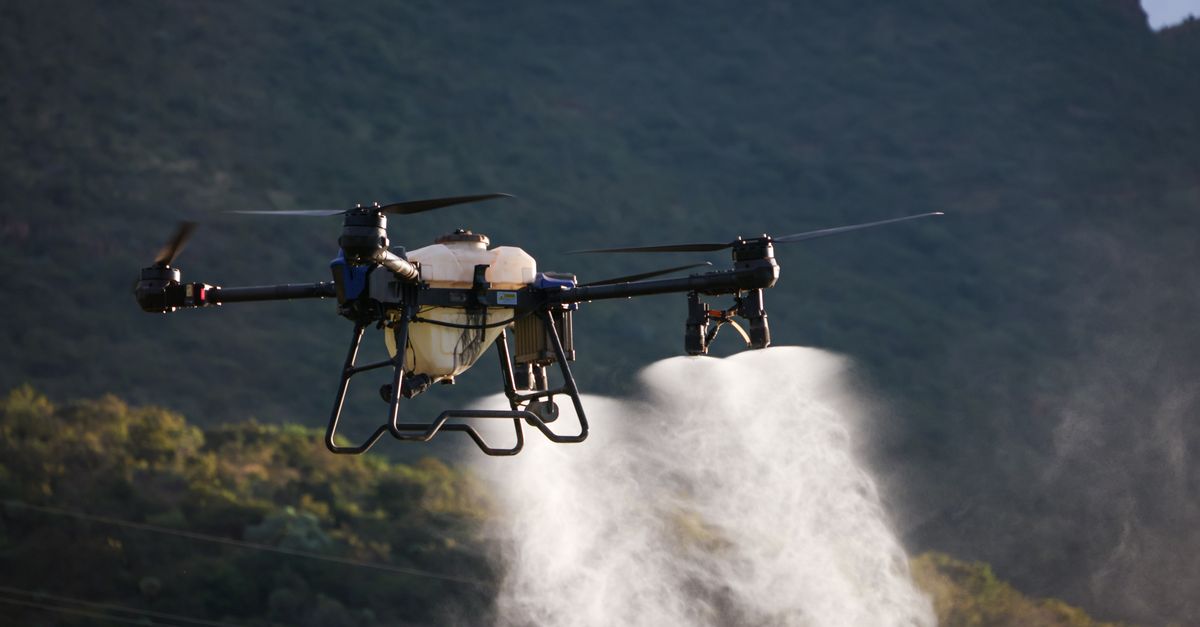
Pilot deployments for Garuda Aerospace have been documented in industrial parks, agricultural belts, and disaster response zones. The company has conducted cargo drops, medical supply transfers, and agricultural spraying trials with verified flight logs and payload accuracy metrics. Factory videos and on-site demonstrations show automated loading mechanisms, GPS-guided waypoint navigation, and fail-safe return-to-home protocols. Independent reporting has noted that deployment scaling depends on pilot site agreements, air traffic coordination, and maintenance infrastructure rather than software updates alone. The company's manufacturing base in Karnataka supports structural fabrication, avionics integration, and post-flight inspection workflows.
ePlane: eVTOL Architecture and Certification Status
ePlane Systems has pursued electric vertical takeoff and landing (eVTOL) architecture for passenger transport and high-value logistics. The ePlane 1, ePlane 2, and ePlane 3 platforms represent successive iterations of a tilt-rotor and distributed propulsion design. The ePlane 2, in particular, targets a 4-passenger configuration with a maximum takeoff weight near 800 kilograms and a range envelope of 150 to 200 kilometers under optimal conditions. The airframe incorporates carbon-fiber composite panels, solid-state battery modules, and dual-redundant flight management systems. Certification progress has been tracked through DGCA type certification milestones, flight test reports, and airworthiness directives rather than commercial delivery schedules.
Hardware validation for ePlane remains in the pilot and demonstration phase. The company has conducted tethered hover tests, low-altitude transition flights, and controlled payload drops, with telemetry data published in technical briefings. However, commercial shipping has not commenced, and passenger transport operations are contingent on regulatory approval, infrastructure readiness, and insurance frameworks. Announcements regarding route partnerships and manufacturing expansion are graded as secondary to flight test outcomes and airworthiness compliance. The company's development facilities in Karnataka focus on prototyping, wind tunnel validation, and systems integration, with supply chain dependencies on imported propulsion cells and high-voltage battery management components.
Supply Chain, Manufacturing, and Domestic Availability
Domestic drone manufacturing in India has improved through the Production Linked Incentive (PLI) scheme and DGCA's Aircraft (Amendment) Rules, which mandate higher localization percentages for commercial operations. ideaForge and Garuda Aerospace have established assembly lines that source flight controllers, GPS modules, and composite materials from Indian suppliers, reducing import dependency. ePlane continues to rely on specialized propulsion and battery systems that are not yet fully localized, which impacts production scalability. All three companies maintain availability across major Indian cities, with service centers in Bangalore, Hyderabad, Pune, and Ahmedabad. Maintenance protocols include battery cycle tracking, motor wear analysis, and firmware validation against DGCA airworthiness standards.
Manufacturing capacity is constrained by component lead times, certification bottlenecks, and pilot site approvals. ideaForge benefits from defense procurement pipelines that guarantee production volume. Garuda Aerospace scales through commercial cargo contracts and agricultural service agreements. ePlane's timeline depends on passenger certification milestones and infrastructure development. The broader ecosystem has seen increased investment in drone-specific manufacturing, but component localization for high-voltage systems and advanced avionics remains a long-term objective rather than an immediate reality.
Pricing, Procurement, and Market Realities
Commercial drone pricing in India varies by payload capacity, certification tier, and procurement channel. ideaForge tactical systems are typically procured through government tenders, with approximate landed costs ranging from INR 25 lakhs to INR 75 lakhs per unit, depending on payload configuration and telemetry modules. These figures are estimates derived from public tender disclosures and industry benchmarks. Garuda Aerospace heavy-lift cargo platforms are priced in the commercial segment, with approximate INR 1.5 crore to INR 3 crore per unit for the Garuda 100 to Garuda 450 range, based on manufacturer quotes and independent reporting. ePlane eVTOL passenger models are not yet commercially available, but early estimates place landed costs around INR 1.8 crore to INR 2.5 crore per unit, including battery packs and avionics. These pricing figures are flagged as estimates and subject to revision upon certification completion and production scaling.
Procurement mechanisms differ across segments. Defense and security drones follow tender-based acquisition with performance guarantees. Commercial cargo drones utilize direct sales and service contracts with maintenance packages. Passenger eVTOL platforms require insurance approval, route licensing, and infrastructure investment before commercial viability. Availability across India is concentrated in metropolitan and industrial corridors, with rural and remote deployments dependent on pilot site approvals and air traffic coordination. The market remains fragmented, with hardware validation and operational reliability determining long-term adoption rather than marketing narratives.
References
- ideaForge Systems Official Website: https://www.ideaforgesystems.com
- ideaForge Defense Portfolio and Technical Briefings: https://www.ideaforgesystems.com/defense
- Garuda Aerospace Heavy-Lift Cargo Drones: https://www.garudaaerospace.com
- Garuda Aerospace Product Specifications and Deployment Reports: https://www.garudaaerospace.com/products
- ePlane Systems eVTOL Architecture and Flight Test Data: https://www.eplane.aero
- DGCA Drone Rules and Certification Guidelines: https://www.dgca.gov.in
- Economic Times: Indian Drone Manufacturing and PLI Scheme Impact: https://economictimes.indiatimes.com
- Business Standard: Drone Shakti and Domestic Supply Chain Development: https://www.business-standard.com
✓ Key takeaways
- •Hands-on view of Indian Drone Startups: Hardware Validation, Deployment Tiers, and Domestic Availability inside our Indian Drone Startups library.
- •Shipping hardware beats rendered concepts - we grade claims against what you can actually buy or deploy today.
- •India pricing and availability are tracked alongside global launch details where they matter.
References
- ideaForge Systems Official Website
- Garuda Aerospace Heavy-Lift Cargo Drones
- ePlane Systems eVTOL Architecture and Flight Test Data
- DGCA Drone Rules and Certification Guidelines
- Economic Times: Indian Drone Manufacturing and PLI Scheme Impact
- Business Standard: Drone Shakti and Domestic Supply Chain Development
Related articles
More in Indian Drone Startups →