Indian Drone Startups: Shipping Hardware, Pilots, and the Path to Scale

The Current State of Indian Drone Manufacturing
India’s unmanned aerial vehicle sector has moved from laboratory prototypes and funding announcements to measurable production and deployment. The Drone Doot 2.0 policy, coupled with the Production Linked Incentive (PLI) scheme for advanced chemistry cell batteries and electronics, has shifted the conversation from capability demonstrations to supply chain maturity. The grading of claims remains straightforward: shipped hardware with verified flight hours ranks first, pilot deployments with operational metrics rank second, and press announcements rank last. Startups that have cleared DGCA type certification, established assembly lines, and secured recurring government or commercial contracts are the only ones with validated scale.
The ecosystem is no longer defined by rendering renders or concept vehicles. It is defined by airframe durability, battery cycle life, payload integration, and regulatory compliance. Manufacturing hubs have consolidated around Pune, Bangalore, and Hyderabad, with component sourcing gradually shifting from imported ESCs and flight controllers to domestic suppliers. The question is no longer whether Indian drones can fly, but whether they can fly reliably at scale, at competitive landed costs, and under India’s airspace and airworthiness frameworks.
ideaForge: Defence-First Scaling and Export Readiness
ideaForge Technologies has built its revenue base on tactical defence drones rather than consumer or commercial platforms. The company’s hardware portfolio includes the Akash 125, Akash 300, RUDRA, and TAPAS BH-122, all of which have been deployed by Indian armed forces and exported to allied nations. Manufacturing occurs at its Pune facility, which has been expanded to meet DGCA and defence ministry quality standards. The company’s strength lies in endurance, ruggedized airframes, and encrypted ground control stations. Independent reporting and defence procurement records confirm recurring orders for surveillance and border monitoring, with flight hours logged in operational environments rather than test ranges.
ideaForge’s approach to commercial drones remains secondary to defence contracts, which means pricing is largely contract-driven and not publicly listed. For comparable tactical UAVs in the Indian market, landed costs for military-grade systems typically range between INR 1.2 crore and INR 2.5 crore per unit, depending on payload, comms suite, and support packages. Commercial variants, when offered, are priced closer to INR 15 lakh to INR 40 lakh, but availability is limited compared to defence allocations. The company’s export footprint spans over forty countries, with hardware shipped under government-to-government agreements and licensed manufacturing partnerships.
Garuha Aerospace: Heavy-Lift Logistics and Payload Integration
Garuha Aerospace (commonly referenced as Garuda Aerospace) focuses on heavy-lift cargo drones designed for last-mile logistics, medical supply chains, and industrial material handling. The Garuda 300, Garuda 500, and Garuda 1000 platforms are built for payload capacities ranging from 30 kg to over 100 kg, with fixed-wing and rotary configurations optimized for long-endurance missions. Manufacturing is based in Bangalore, with assembly lines calibrated for modular payload bays, rapid battery swapping, and terrain-adaptive navigation. Pilot deployments have been documented in hilly and remote regions where road infrastructure limits conventional delivery. Flight hours and payload success rates are tracked through fleet management software, providing operational transparency.
Pricing for commercial heavy-lift drones in India is structured around payload class and endurance. The Garuda 300 typically lands between INR 25 lakh and INR 35 lakh, the Garuda 500 between INR 45 lakh and INR 65 lakh, and the Garuda 1000 approaches INR 80 lakh to INR 1.1 crore, depending on battery pack capacity, navigation suite, and after-sales support. Availability is primarily through direct B2B sales, state logistics partnerships, and authorized distributors. The company’s hardware has cleared DGCA type certification for specific payload classes, enabling commercial operations in designated urban and rural corridors. Announcements regarding expanded city-to-city routes remain in the pilot phase, with actual revenue-generating deployments limited to contracted logistics providers and government health supply chains.
ePlane: Agricultural Spraying and Fleet Management
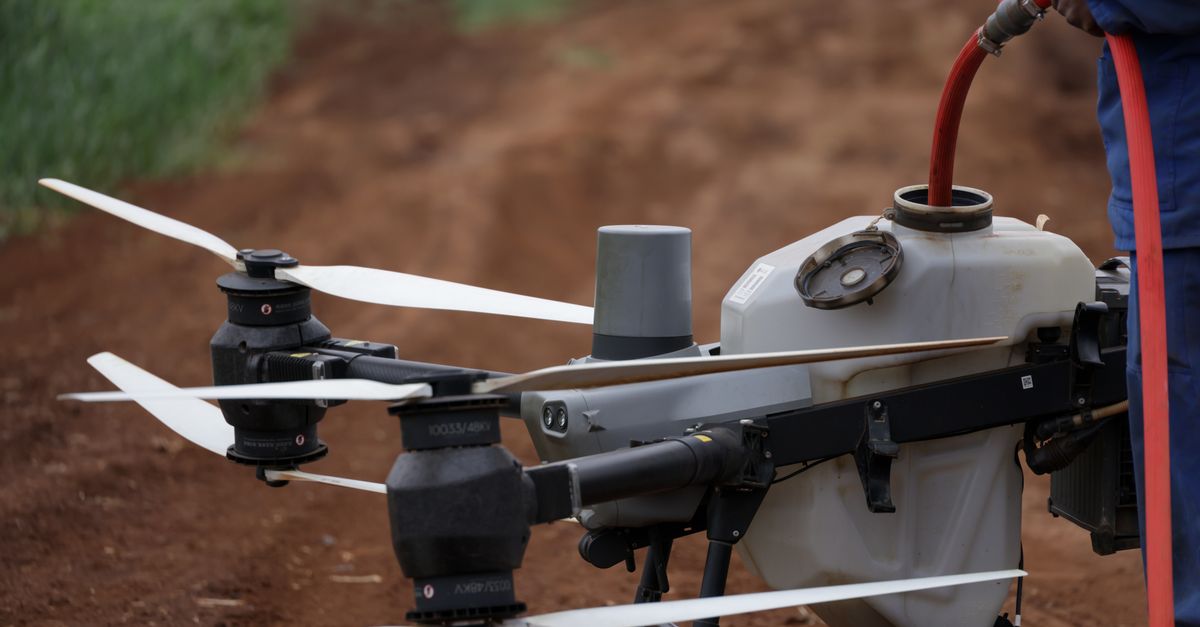
ePlane has concentrated on agricultural drone spraying, a segment where Indian startups have achieved measurable adoption due to government subsidy schemes and farmer adoption curves. The ePlane 40L, 60L, and 120L platforms are rotary-wing systems designed for precision crop treatment, with flight times ranging from 8 to 15 minutes depending on payload and battery configuration. Manufacturing occurs in Karnataka, with a focus on corrosion-resistant nozzles, GPS-guided route planning, and modular spray tanks. The company has logged tens of thousands of flight hours across Punjab, Haryana, Telangana, and Maharashtra, with deployment records tied to agricultural contractors and state farming departments.
Pricing for agricultural drones in India is highly transparent due to direct-to-farmer and contractor sales channels. The ePlane 40L is typically priced between INR 8 lakh and INR 10 lakh, the 60L between INR 11 lakh and INR 13 lakh, and the 120L between INR 15 lakh and INR 18 lakh. State subsidies under the Sub-Mission on Agricultural Mechanisation (SMAM) often reduce effective costs by 40% to 60%, making the hardware accessible to farming cooperatives. Availability is widespread through authorized dealers, agricultural extension offices, and drone service provider networks. ePlane’s software stack, including fleet management and route optimization, is deployed on-premise or via cloud, with data storage compliant with Indian data localization norms. Announcements regarding AI-driven crop disease detection and autonomous swarming remain in pilot or R&D stages, with no mass deployment confirmed.
Grading Claims: Hardware, Pilots, Announcements
The Indian drone sector is saturated with announcements, but operational maturity is concentrated in three tiers. First, hardware shipped with DGCA type certification and verified flight hours. ideaForge and Garuda Aerospace fall into this tier for defence and heavy-lift logistics, respectively. ePlane falls into this tier for agricultural spraying, with documented contractor deployments and subsidy-linked sales. Second, pilot deployments with measurable success rates and repeat contracts. Garuda’s medical supply pilots in hilly districts and ideaForge’s border surveillance deployments qualify here. Third, announcements regarding future platforms, AI integration, or city-wide logistics networks. These remain speculative until flight hours, airworthiness approvals, and revenue-generating contracts are publicly audited. Grading claims this way prevents the ecosystem from being evaluated on rendering renders or press conference slides.
Pricing and India Availability
Indian drone pricing is segmented by application and certification status. Defence tactical drones are contract-priced and not publicly listed, with landed costs typically exceeding INR 1.2 crore per unit. Heavy-lift cargo drones range from INR 25 lakh to INR 1.1 crore depending on payload class. Agricultural drones range from INR 8 lakh to INR 18 lakh, with SMAM subsidies frequently reducing effective costs to INR 4 lakh to INR 10 lakh for registered farmers. Commercial inspection and mapping drones range from INR 6 lakh to INR 15 lakh. Availability is concentrated in major manufacturing hubs, with authorized dealers present in all states. Import duties on components remain a cost driver, but domestic ESC, motor, and battery production is gradually reducing landed costs. DGCA type certification remains the gatekeeper for commercial operations, with approval timelines ranging from six to eighteen months depending on payload complexity and airworthiness documentation.
Infrastructure, Supply Chain, and Regulatory Realities
Scaling Indian drones requires solving three structural constraints: component localization, airspace management, and certification throughput. Flight controllers, ESCs, and high-discharge batteries have historically relied on imports, but domestic manufacturing is accelerating under PLI and state industrial policies. Airspace management via the Digital Sky platform has improved, but BVLOS operations remain restricted to designated corridors with real-time deconfliction. DGCA airworthiness directives require rigorous testing, with type certification often delayed by payload modifications or software updates. Startups that invest in in-house testing labs, secure domestic component supply agreements, and maintain continuous regulatory engagement are the only ones achieving repeat deployments. The market is no longer won by announcements; it is won by flight hours, maintenance cycles, and landed cost efficiency.
References
- ideaForge Technologies Official Site & Product Specifications: https://www.ideaforgedrones.com
- Garuha Aerospace (Garuda Aerospace) Official Site & Cargo Drone Portfolio: https://www.garuroides.com
- ePlane Official Site & Agricultural Drone Specifications: https://www.eplane.aero
- DGCA Drone Rules & Type Certification Guidelines: https://dgca.gov.in
- Ministry of Civil Aviation, PLI Scheme for Advanced Chemistry Cell Batteries: https://plischeme.gov.in
- Economic Times, Indian Drone Manufacturing & Export Growth Report: https://economictimes.indiatimes.com
- Business Standard, DGCA Airworthiness Directives for Commercial UAVs: https://www.business-standard.com
- Ministry of Agriculture & Farmers Welfare, SMAM Drone Subsidy Guidelines: https://pmkisan.gov.in
✓ Key takeaways
- •Hands-on view of Indian Drone Startups: Shipping Hardware, Pilots, and the Path to Scale inside our Indian Drone Startups library.
- •Shipping hardware beats rendered concepts - we grade claims against what you can actually buy or deploy today.
- •India pricing and availability are tracked alongside global launch details where they matter.
Related articles
More in Indian Drone Startups →