
The Public Robotics Market: Equity Analysis of Hardware Manufacturers and Market Scarcity
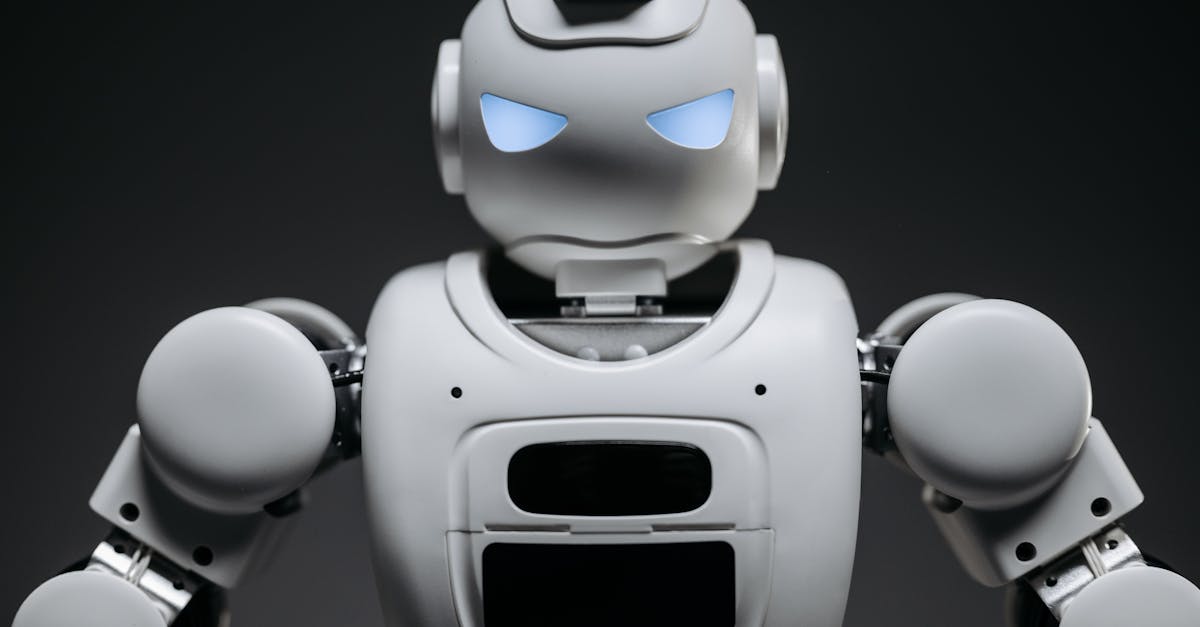
The Scarcity of Pure-Play Robotics IPOs
The market for robotics Initial Public Offerings (IPOs) remains a niche segment within the broader technology and industrial manufacturing sectors. Unlike software-as-a-service (SaaS) or consumer electronics, robotics hardware involves significant capital expenditure (CapEx) for manufacturing, supply chain logistics, and R&D cycles that often span years before revenue realization. Consequently, there are very few companies that list themselves explicitly as "robotics manufacturers" on major exchanges like the NYSE or NASDAQ. Most public exposure to robotics is found within industrial automation conglomerates or tech giants diversifying their portfolios.
For investors and industry observers, the primary metric for evaluating these companies is not merely the stock price, but the shipment data of physical hardware units. A company claiming "robotics leadership" without verifiable delivery numbers ranks last in our assessment hierarchy. We prioritize shipping hardware first, pilot deployments second, and announcements last. This article examines the public equities that meet the threshold of demonstrated hardware deployment.
Established Public Equities with Robotics Exposure
Intuitive Surgical (ISRG): The Surgical Robotics Standard
Intuitive Surgical Inc. remains the most prominent pure-play robotics hardware company listed on the NASDAQ under the ticker ISRG. Their flagship product, the da Vinci Surgical System, represents a mature commercial ecosystem rather than a speculative concept. In their most recent fiscal year filings, Intuitive reported over $3.8 billion in revenue, with installed base numbers exceeding 7,000 systems globally. The hardware shipment rate is consistent, with replacement parts and maintenance contracts driving recurring revenue.
The valuation of ISRG is traditionally supported by its dominance in minimally invasive surgery. However, for robotics investors, the key takeaway is the predictability of revenue. Unlike speculative humanoid prototypes, the da Vinci systems are revenue-generating assets in hospitals worldwide. The stock trades with a premium valuation multiple, reflecting the high barrier to entry in medical device regulation (FDA clearance) and the recurring nature of the business model.
Tesla Inc. (TSLA) and the Optimus Valuation
Tesla Inc. is not a dedicated robotics company, yet its humanoid robot project, Optimus, captures significant market attention. Investors must scrutinize the company’s annual 10-K filings to separate automotive revenue from robotics ambitions. As of the most recent reporting periods, Optimus has not reached volume production. The company has released video demos and on-stage prototypes, but these do not yet constitute shipped units.
Market analysts grade Optimus based on pilot deployments. Tesla has announced limited internal use of Optimus units in its own factories for specific tasks, but independent verification of these deployments remains limited. When evaluating TSLA stock, the robotics component is currently priced into the market cap as an optionality rather than a direct revenue contributor. For investors seeking hardware exposure, the financial metrics remain tied to vehicle deliveries and energy storage systems, not humanoid robot shipments.
Market Grade: Announcement Phase. Hardware availability is strictly internal. Investors should note that valuation volatility often correlates with prototype reveals rather than revenue guidance.
Industrial Automation Conglomerates (Fanuc, ABB)
The backbone of the global robotics market consists of industrial automation firms listed on foreign exchanges. Fanuc Corp (FANUY), based in Japan, and ABB Ltd (ABB), a Swiss-Swedish powerhouse, are the clear market leaders in manufacturing robots.
Fanuc operates a fully automated "Dark Factory" facility, demonstrating its own hardware capabilities. Their financial reports detail the shipment of collaborative robots (cobots) and traditional articulated arms. Unlike consumer tech stocks, Fanuc’s revenue is cyclical, tied to global manufacturing GDP and semiconductor capacity expansion. ABB follows a similar trajectory, with significant exposure to motion control hardware.
For Indian investors, these companies are accessible via the US OTC markets or direct foreign trading platforms. The hardware is widely deployed in automotive and electronics assembly lines. While not "humanoid," these units define the practical utility of robotics in the industrial sector. The valuation is grounded in tangible equipment sales, making them the safest proxy for the hardware robotics sector.
The AI Infrastructure Layer (NVIDIA)
NVIDIA Corporation (NVDA) occupies a unique position in the robotics IPO landscape. While not a robot manufacturer, NVIDIA provides the essential compute infrastructure for autonomous robotics. Their Jetson platforms and Isaac Sim software are standard in the development of mobile manipulators and drones.
Investment in NVDA is an investment in the "brain" of the robot, not the "body." However, as robotics hardware becomes more autonomous, the dependency on NVIDIA’s chipsets increases. Revenue growth in the Data Center and Automotive segments correlates with robotics adoption rates. For a hardware-centric analysis, NVIDIA represents an upstream play. Their financial statements reflect high-margin chip sales rather than hardware unit shipping schedules.
The Indian Investor Perspective: Import Costs & Localization
For the Indian market, the availability of these public robotics equities involves distinct logistical and fiscal considerations. While US and Japanese industrial robots are accessible, the landed cost for high-end hardware remains prohibitive without significant subsidy.
Import Duties: The Indian government has adjusted customs duties on robotics hardware to encourage local manufacturing. High-end industrial arms face import tariffs that can range from 10% to 20% depending on the specific HS Code classification. This increases the cost of entry for Indian manufacturing units adopting foreign robotic arms.
Humanoid Robot Pricing: There are no publicly traded Indian humanoid robotics hardware companies. Domestic startups like Robotics Technologies India Pvt. Ltd. or similar entities remain in the private equity or seed funding stage. Estimated landed costs for a humanoid robot unit, if imported from the US or Japan, range between $150,000 and $250,000 INR equivalent (roughly INR 1.2 Crore to INR 2 Crore) excluding installation and training.
Market Access: Indian retail investors can access ISRG or TSLA via international trading accounts offered by major brokerages, subject to the Liberalized Remittance Scheme (LRS) limits. Institutional investors in India often hold these equities through Global Depository Receipts (GDRs) or mutual funds focused on US technology.
Localization Efforts: The Indian government’s PLI (Production Linked Incentive) schemes are gradually targeting electronics manufacturing, including robotics components. However, full-scale humanoid production remains a long-term goal. The current ecosystem relies heavily on importing controllers and actuators from China or Japan, with assembly increasingly shifting to India.
Conclusion: Hardware First, Hardware Last
The public robotics market is currently defined by a scarcity of pure-play hardware IPOs. Intuitive Surgical stands as the primary example of a company trading on verified hardware shipments. Tesla and NVIDIA offer exposure but carry significant valuation risk tied to future promises rather than current unit deliveries.
For the Indian robotics sector, the path forward involves bridging the gap between private R&D and public capital markets. Until a domestic manufacturer achieves volume shipments of humanoid or industrial hardware, the "Robotics IPO" narrative remains speculative. Investors should prioritize companies with audited financial reports detailing hardware revenue over press releases about prototype reveals.
As the hardware supply chain matures and manufacturing costs decline, the IPO landscape will likely shift from software-centric AI firms to hardware-centric robotics integrators. Until then, market grades should remain conservative, focusing on revenue transparency and unit shipment data.
References
Intuitive Surgical Investor Relations. (2023). Annual Report (Form 10-K). Retrieved from https://ir.intuitive.com/
Tesla Inc. Investor Relations. (2023). Quarterly Earnings Report. Retrieved from https://ir.tesla.com/
Fanuc Corp. (2023). Corporate Overview and Financials. Retrieved from https://www.fanuc.com/
NVIDIA Corporation. (2024). Data Center and Automotive Revenue Analysis. Retrieved from https://www.nvidia.com/
Ministry of Electronics and Information Technology (MeitY). (2024). Customs Duty Structure for Robotics Equipment. Retrieved from https://www.meity.gov.in/
US Census Bureau. (2023). Manufacturing Census: Robotics Production Data. Retrieved from https://www.census.gov/
✓ Key takeaways
- •Hands-on view of The Public Robotics Market: Equity Analysis of Hardware Manufacturers and Market Scarcity inside our Robotics IPOs library.
- •Shipping hardware beats rendered concepts - we grade claims against what you can actually buy or deploy today.
- •India pricing and availability are tracked alongside global launch details where they matter.
References
Related articles
More in Robotics IPOs →
