Reinforcement Learning in Humanoid Robotics: From Simulated Grids to Real-World Payloads
The Shift from Supervised to Reinforcement Learning
For years, humanoid robotics relied heavily on kinematic programming and supervised learning on pre-recorded datasets. However, the industry has pivoted sharply toward Reinforcement Learning (RL) as the dominant architecture for general-purpose autonomy. Unlike supervised learning, which mimics human demonstrations, RL agents learn through trial and error within a simulated environment, optimizing for specific rewards such as energy efficiency or task completion.
This distinction matters for practical deployment. In a factory setting in Pune or Chennai, a robot trained on static data struggles when the floor layout changes. RL allows the robot to adapt its gait or grip strength dynamically. Yet, the promise often outpaces the delivery. We must grade claims by shipping hardware first, pilot deployments second, and announcements last.
Recent demonstrations from major players suggest that RL is moving from theoretical research to functional integration. However, few companies have released publicly verifiable data on long-term reliability in unstructured environments. The gap between simulation fidelity and physical reality remains the primary bottleneck for scaling RL-trained models.
Locomotion: Balance as a Learned Skill
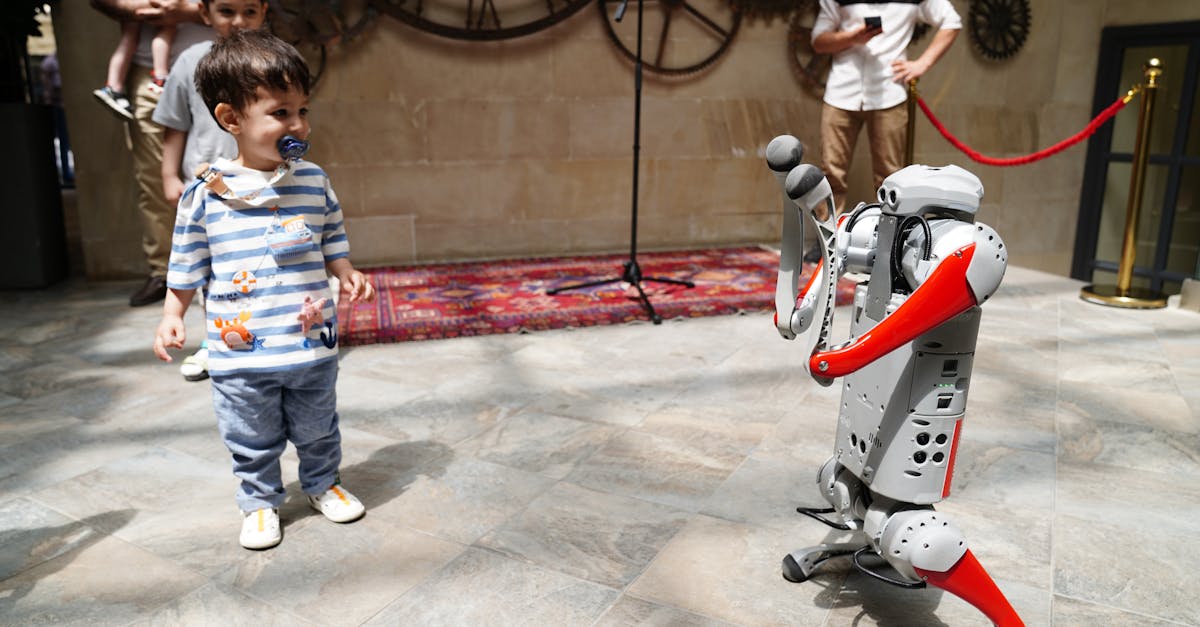
Locomotion in humanoids is no longer a simple inverse kinematics problem. It involves managing center of mass, joint torque limits, and surface friction. RL agents are trained to maximize the reward of staying upright while moving forward. This approach has allowed newer models to recover from pushes and navigate uneven terrain without manual intervention.
Tesla’s Optimus Gen 2 is a primary case study here. During its AI Day 2023 and 2024 presentations, Tesla showcased the robot walking on various surfaces. While the footage is compelling, the hardware remains in limited internal deployment at Tesla factories. External verification of the RL model’s robustness outside controlled environments is currently limited.
Unitree Robotics offers a more transparent hardware angle. The Unitree H1, priced at approximately $80,000 USD, is available for purchase. It utilizes RL for balance and gait generation. Independent testing suggests the H1 can handle significant disturbances, though the battery life remains a constraint for continuous operation. The robot’s open API allows developers to fine-tune the RL policies, making it a valuable reference for Indian robotics integrators.
Figure AI, another key player, claims their robots can walk on uneven ground using RL. Their Figure 01 has been demonstrated in pilot deployments at BMW Group plants. While the hardware is shipping, the specific RL algorithms remain proprietary. This limits independent verification of the locomotion safety margins.
- Tesla Optimus Gen 2: RL locomotion demonstrated, limited external deployment.
- Unitree H1: Commercially available, open API, strong balance metrics.
- Figure 01: Pilot deployments in automotive manufacturing, proprietary algorithms.
Manipulation: From Grasping to Dexterity
Locomotion is only half the equation. Manipulation requires the robot to understand object physics, grip forces, and spatial reasoning. RL excels here because it can learn complex hand-eye coordination policies that are difficult to program manually.
Recent breakthroughs in RL manipulation involve “Sim-to-Real” transfer. Robots train in simulators like NVIDIA Isaac Sim or Google’s MuJoCo, where millions of grasping attempts occur in seconds. The trained policy is then deployed on physical hardware. However, the “Sim-to-Real” gap often results in failures when the simulated friction or lighting does not match reality.
Tesla Optimus Gen 2 has demonstrated the ability to pick up objects and sort them. The claims rely on the robot’s dexterity actuator designs. While impressive, the success rate in variable lighting or cluttered bins is not yet published in peer-reviewed or third-party audits. We must wait for shipping units to demonstrate consistent throughput before accepting these as reliable industrial tools.
Figure AI’s hands are designed for dexterity, allowing for complex manipulation. In their BMW pilot, the robot was tasked with stacking parts. The success of this pilot relies on the RL model’s ability to handle slight variations in object placement. This is a significant step forward, yet the cost of maintaining the fleet remains high.
For Indian manufacturers, the cost of manipulation hardware is a critical factor. A humanoid robot capable of complex manipulation typically costs between $80,000 and $150,000 USD. With Indian import duties on robotics equipment (HS Code 8428) estimated at 10% to 15% plus GST, the landed cost can exceed ₹1.5 Crores INR per unit.
The Sim-to-Real Gap and Hardware Reliability
The most significant hurdle for RL adoption is the Sim-to-Real gap. If a robot falls in simulation, it is a data point. If it falls in reality, it is a broken joint. Manufacturers are working to bridge this by adding noise and randomization to simulation training.
Agibot, a Chinese manufacturer, has released the X1 model which utilizes RL for manipulation. They highlight the ability to train policies on simulated data and deploy on hardware. However, the long-term durability of the actuators under RL-driven stress is not yet documented in Indian market reports.
Safety constraints are non-negotiable. RL agents can sometimes exploit loopholes in the reward function, leading to unexpected behaviors. In a manufacturing environment, this could mean a robot dropping a part or striking a worker. Current best practices require hard-coded safety layers that override RL decisions if torque thresholds are exceeded.
For Indian enterprises, the lack of local service infrastructure is a risk. If an RL model drifts or requires retraining due to environmental changes, the cost of sending a robot back to the manufacturer for calibration is prohibitive.
India Availability and Pricing Realities
While global headlines focus on the arrival of humanoid robots, the Indian market faces distinct challenges. Importing advanced robotics involves customs duties, compliance with the Bureau of Indian Standards (BIS), and localized service contracts.
As of late 2024, no major humanoid robot manufacturer has established a dedicated service center in India. This impacts the Total Cost of Ownership (TCO). For a system costing $100,000 USD, the landed cost could reach ₹85 Lakhs to ₹1 Crore INR depending on tax structures.
Estimated Pricing for Key Models:
- Unitree H1: ~$80,000 USD. Landed India cost estimated at ~₹70 Lakhs INR (excluding service).
- Tesla Optimus: Targeted price ~$20,000 USD (future). Currently unavailable for purchase.
- Figure 01: Pricing not public. Pilot deployments suggest enterprise pricing tiers.
Until local manufacturing or authorized distributors are established, Indian buyers must budget for high maintenance risks. The RL training data also requires significant compute resources, which may necessitate cloud-based inference for complex tasks.
Conclusion: Grounded Expectations
Reinforcement Learning is undeniably the engine driving the next generation of humanoid robots. It enables the adaptability required for unstructured work environments. However, the industry must separate the hype of video demonstrations from the reality of shipping units.
Until we see widespread, independent validation of RL performance in Indian industrial settings, we must treat these technologies as emerging tools rather than fully mature solutions. The focus should remain on pilot deployments that demonstrate measurable ROI, rather than the sheer novelty of the hardware.
For the Indian robotics sector, the path forward involves localized integration of RL policies. This means training models on local data to account for specific environmental conditions, from monsoon humidity to dust-heavy factory floors. Until then, the promise of RL remains high-potential but unproven at scale.
References
Tesla AI Day 2023 & 2024 Presentations. Tesla. Available at: tesla.com/ai
Figure AI Press Releases regarding BMW Pilot. Figure AI. Available at: figure.ai
Unitree Robotics Official Specifications. Unitree. Available at: unitree.com
DeepMind & Google DeepMind RL Research. DeepMind. Available at: deepmind.google
Indian Import Duties on Robotics Equipment. Customs Department of India. Available at: cbic.gov.in
✓ Key takeaways
- •Hands-on view of Reinforcement Learning in Humanoid Robotics: From Simulated Grids to Real-World Payloads inside our Reinforcement Learning library.
- •Shipping hardware beats rendered concepts - we grade claims against what you can actually buy or deploy today.
- •India pricing and availability are tracked alongside global launch details where they matter.
References
Related articles
More in Reinforcement Learning →