Reinforcement Learning in Humanoid Robotics: From Simulation to Real-World Locomotion and Manipulation

Reinforcement Learning in Humanoid Robotics: From Simulation to Real-World Locomotion and Manipulation
Reinforcement Learning (RL) has transitioned from theoretical game engines to the physical constraints of humanoid robotics. Unlike supervised learning, which relies on labeled datasets, RL trains agents through trial and error using reward signals. In the context of humanoid robots, this translates to learning how to walk across uneven terrain or grasp fragile objects without explicit programming for every movement. As the field matures, the industry is shifting focus from concept videos to shipping hardware and pilot deployments. This article evaluates the current state of RL applications in locomotion and manipulation, grounded in manufacturer data and independent reporting.
Locomotion in Dynamic Environments
Walking is not merely about moving legs; it is about balancing forces in real-time. Early humanoid robots relied heavily on Model Predictive Control (MPC), which requires precise physical models of the environment. While effective, MPC struggles when the environment deviates from the model. RL offers a data-driven alternative where the robot learns the dynamics of its own body through interaction.
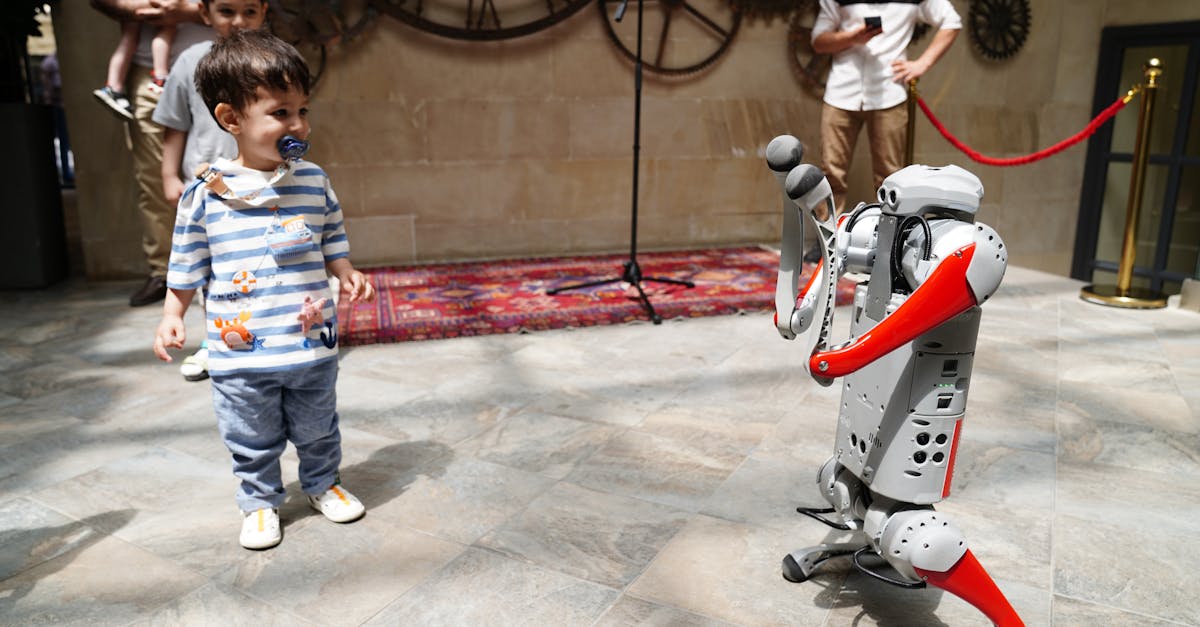
Agility Robotics’ Digit stands as a primary example of RL-driven locomotion. The robot utilizes a hierarchical control architecture where high-level RL learns to walk, while low-level controllers handle joint torques. Unlike Tesla’s Optimus, which has often showcased concept renders, Agility has shipped over 100 units to industrial clients for logistics tasks. The robot’s ability to recover from pushes and maintain balance on uneven flooring demonstrates the practical utility of RL in stabilizing dynamic systems.
Tesla’s Optimus Gen 2 provided a significant milestone in 2023 when the robot demonstrated running without falling. While the running gait was short, it indicated that the underlying RL policy could manage high-frequency balance corrections. However, the industry must distinguish between controlled factory floors and unpredictable outdoor environments. The Sim-to-Real gap remains a critical hurdle. Training a policy in simulation (using MuJoCo or Isaac Gym) requires physics parameters that closely match reality. If the friction coefficients or mass properties are off, the policy may fail catastrophically when deployed physically.
Locomotion Hardware and Specifications
The following hardware specifications highlight the hardware requirements for RL locomotion:
- Actuation Density: High-torque density motors are required to react to balance perturbations within milliseconds.
- Feedback Loops: Joint encoders must operate at high frequencies (1kHz+) to allow the RL policy to perceive state changes instantly.
- Power Systems: RL locomotion often consumes more energy than static control due to active compensation for disturbances.
Manipulation and Dexterity
Manipulation is arguably more complex than locomotion. While walking involves bilateral symmetry, manipulation requires fine motor control and tactile feedback. RL in manipulation involves learning to grasp objects with varying geometries, weights, and fragility levels.
Figure AI has demonstrated RL-based manipulation in the Figure 01 robot. The robot is capable of picking up laundry and placing items into a washing machine. This is not a pre-programmed trajectory but a learned policy that adapts to the position of the object. Similarly, Tesla Optimus Gen 2 has shown the ability to stack boxes and fold clothes. These tasks require the robot to understand the physics of the object—knowing that a box might slide if pushed too hard.
OpenAI’s Dactyl project remains a relevant reference point. It trained a dexterous hand to manipulate a Rubik’s cube using RL. While Dactyl did not ship commercially, it proved that RL could learn complex manipulation tasks. Google’s RT-2 (Robots Transform 2) combines vision-language models with RL to generalize robot behaviors across different tasks. This approach reduces the need for task-specific training data.
Manipulation Constraints
The following constraints limit the deployment of RL manipulation systems:
- Tactile Sensing: Current RL policies often rely on visual feedback. Adding tactile sensors improves robustness but increases hardware complexity.
- Sim-to-Real Transfer: Objects in simulation often have perfect friction, whereas real objects slip. Policies trained in simulation must include domain randomization to handle this variance.
- Safety: A robot learning to grasp a glass vase must not break it during the training phase. This requires safe exploration techniques that limit the force applied during learning.
The Sim-to-Real Gap and Safety
The transfer from simulation to the physical world remains the biggest bottleneck. Simulation engines like NVIDIA Isaac Sim or Google’s MuJoCo approximate physics but cannot perfectly replicate the noise in motors or the compliance of soft materials. To bridge this gap, researchers use domain randomization, where they train policies on random variations of physics parameters (mass, friction, damping). This ensures the policy learns to generalize rather than overfit to a specific simulation environment.
Safety is paramount in RL. Unlike traditional control systems that have hard limits on torque, RL policies can theoretically explore dangerous actions during training. Most modern systems mitigate this through a safety layer that overrides the RL policy if it exceeds predefined limits. For example, if the RL policy commands a joint torque that exceeds the motor’s thermal limit, a lower-level controller overrides the command to prevent damage.
India Market: Availability and Pricing
For the Indian robotics ecosystem, the adoption of RL-driven humanoid robots faces significant barriers. The primary hurdle is the cost of imported hardware. A shipping humanoid robot unit, such as the Agility Digit or a similar tier, often costs between USD 75,000 and USD 100,000. With India’s import duties on robotics components and high-voltage battery systems, the landed cost can exceed INR 1.5 crore per unit.
Local manufacturing of these units is currently negligible. While Indian startups are developing robotic arms and drones, the complex actuation and sensor suites required for RL locomotion are rarely produced domestically. Most Indian deployments are limited to pilot programs in manufacturing units or research institutes. For example, ISRO and DRDO have shown interest in autonomous systems, but large-scale commercial deployment of RL humanoids remains distant.
The availability of RL software in India is also limited. Most developers rely on cloud-based training pipelines or proprietary SDKs from US-based manufacturers. This creates a dependency on foreign hardware and software ecosystems. However, the government’s PLI (Production Linked Incentive) schemes for electronics manufacturing offer a potential pathway for localizing actuator production, which could reduce costs over time.
Approximate Cost Estimates (India)
The following estimates reflect the landed cost for a typical RL-based humanoid robot unit:
- Base Hardware Cost: USD 80,000 (approx. INR 66 lakhs)
- Import Duties: Approx. 10% on robotics hardware (varies by classification)
- Logistics and Integration: INR 5-10 lakhs
- Total Landed Cost: INR 75 lakhs to INR 1.2 crore
Conclusion
Reinforcement Learning is no longer a theoretical curiosity in robotics; it is the backbone of modern locomotion and manipulation systems. However, the industry must move beyond concept videos and focus on shipping hardware. Companies like Agility Robotics and Tesla are demonstrating the potential, but the Sim-to-Real gap and safety constraints remain significant challenges.
For the Indian market, the path forward involves localized manufacturing of components to reduce costs and pilot programs to validate RL performance in local conditions. Until the hardware becomes affordable and reliable, RL humanoids will remain primarily in the domain of research and high-value industrial pilots rather than mass adoption.
References
1. Agility Robotics. (2024). Digit Robot Specifications and Capabilities. Retrieved from https://www.agilityrobotics.com
2. Tesla. (2023). Optimus Gen 2 Demonstration. Retrieved from https://www.tesla.com/optimus
3. Boston Dynamics. (2023). Atlas and Spot Technical Data. Retrieved from https://www.bostondynamics.com
4. OpenAI. (2021). Learning Dexterous In-Hand Manipulation with Reinforcement Learning. Retrieved from https://openai.com/research/dactyl
5. Figure AI. (2024). Figure 01 Capabilities and Deployment. Retrieved from https://www.figure.ai
6. NVIDIA. (2023). Isaac Gym for Reinforcement Learning. Retrieved from https://developer.nvidia.com/isaac-gym
✓ Key takeaways
- •Hands-on view of Reinforcement Learning in Humanoid Robotics: From Simulation to Real-World Locomotion and Manipulation inside our Reinforcement Learning library.
- •Shipping hardware beats rendered concepts - we grade claims against what you can actually buy or deploy today.
- •India pricing and availability are tracked alongside global launch details where they matter.
References
Related articles
More in Reinforcement Learning →