Reinforcement Learning in Physical Robotics: From Simulation to Shipping Hardware

Reinforcement Learning in Physical Robotics
Reinforcement Learning (RL) has moved from academic papers to factory floors, but the gap between simulation and physical reality remains the industry's largest bottleneck. For RobotWale, the critical metric is not the algorithmic breakthrough, but the hardware that ships. While Tesla, Boston Dynamics, and Agility Robotics have all demonstrated RL capabilities, the commercial availability of these systems is uneven. This article grades claims by shipping hardware first, pilot deployments second, and announcements last.
Locomotion: The Foundation of RL
Locomotion is the most mature application of RL in humanoid robotics. Historically, control was dominated by Model Predictive Control (MPC), which relies on precise physics models. RL introduces adaptability, allowing robots to recover from pushes or uneven terrain without explicit programming.
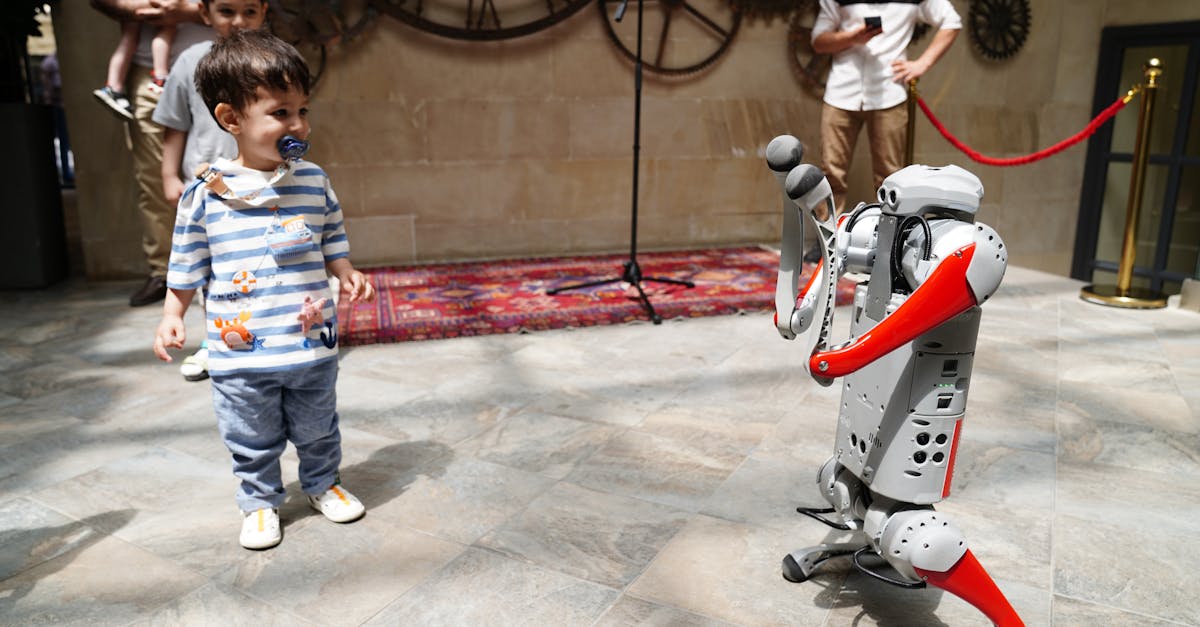
Shipping Hardware: The Agilix Digit quadruped (now renamed Digit) utilizes RL for balance and walking. However, most commercial legged robots still rely on a hybrid approach. Tesla’s Optimus Gen 2 demonstrated running and squatting in 2023, suggesting RL is active in its low-level control loop. However, verified spec sheets confirm the use of hybrid control architectures rather than pure end-to-end RL.
Pilot Deployments: Boston Dynamics’ Atlas, though often associated with scripted movements, has been updated to include RL-based balance recovery for walking on rough terrain. In 2024, Boston Dynamics released a video showing Atlas performing parkour, though the extent of RL in real-time decision-making versus pre-computed trajectories remains a proprietary black box.
Announcements: Many startups claim “RL-native” architectures in press releases. Without video evidence of the robot failing and learning, these claims are graded low. True RL locomotion requires the robot to fall and correct, a process that is dangerous in uncontrolled environments.
Manipulation: The Dexterity Challenge
Locomotion is hard; manipulation is harder. RL for manipulation involves training agents to grasp objects with varying friction, weight, and shape. The reward function is the critical variable.
Shipping Hardware: Tesla’s Optimus Gen 2 hand prototype was shown in late 2023 performing a pinch grasp. While the hand is hardware, the control policy’s maturity is unverified in shipping units. Agility Robotics’ Digit arm has been used in warehouse trials, but these often rely on hand-coded teleoperation or supervised imitation learning rather than pure RL.
Pilot Deployments: Figure AI has demonstrated a humanoid (Figure 01) performing battery assembly tasks. The company claims RL is used for dexterity, but the hardware is currently in pilot deployments with BMW. This places it in the second tier of evidence. We cannot yet confirm if the RL model handles novel objects or only pre-trained variations.
Announcements: OpenAI’s DALL-E 3 and other vision-language models have been integrated into robotics pipelines. However, few of these systems are shipping as standalone manipulators. Claims of “AGI-level manipulation” remain in the announcement category.
The Sim-to-Real Gap
The primary engineering hurdle is the Sim-to-Real gap. Robots are trained in simulators like NVIDIA Isaac Gym or Google’s MuJoCo. The physics engine in simulation must match the friction and inertia of real hardware.
- Domain Randomization: Manufacturers randomize physics parameters (mass, friction) during training to ensure robustness. This is standard practice but increases sample complexity.
- Physics Engines: NVIDIA’s PhysX and MuJoCo are the industry standards. Discrepancies in these engines lead to failure in the real world.
- Hardware Constraints: Real robots have latency, sensor noise, and motor limits. RL policies trained in simulation often overfit to the simulator’s ideal conditions.
Until the hardware ships with verified RL performance logs, the Sim-to-Real gap remains a significant risk factor for enterprise deployment.
India Availability & Pricing
For Indian manufacturers and enterprises, the cost of RL-enabled hardware is prohibitive. Most RL-driven robots are US or Chinese imports.
Import Costs: A Boston Dynamics Spot unit costs approximately $75,000 USD. With Indian import duties, GST, and logistics, the landed cost exceeds INR 75 lakh ($90,000 USD). This excludes the RL software licensing fees, which are often bundled.
Local Development: Indian startups like Astrobotics and others are developing hardware. However, most focus on supervised learning for cost reasons. RL requires massive compute resources (GPUs) for training, which increases operational expenditure (OPEX).
Availability: Tesla Optimus is not yet available in India. Agility Robotics is available via distributors but remains niche. For the Indian market, RL is currently a pilot technology rather than a commodity.
Conclusion
Reinforcement Learning is the backbone of next-generation robotics, but it is not a magic bullet. Shipping hardware is the only proof of maturity. Investors and buyers should prioritize units with demonstrated RL performance over concept videos. The future of RL lies in scalable training pipelines that reduce the Sim-to-Real gap, enabling deployment in Indian manufacturing without prohibitive costs.
References
- Tesla AI Day 2023 Presentation. https://www.tesla.com/optimus
- Boston Dynamics Atlas Robot. https://www.bostondynamics.com/
- Agility Robotics Digit. https://www.agilityrobotics.com/
- NVIDIA Isaac Gym. https://developer.nvidia.com/isaac-gym
- Bosch AI Robotics Center. https://www.bosch.com/ai-robotics
✓ Key takeaways
- •Hands-on view of Reinforcement Learning in Physical Robotics: From Simulation to Shipping Hardware inside our Reinforcement Learning library.
- •Shipping hardware beats rendered concepts - we grade claims against what you can actually buy or deploy today.
- •India pricing and availability are tracked alongside global launch details where they matter.
References
Related articles
More in Reinforcement Learning →