
The Race for Robotics Foundation Models: From General Policies to Physical Deployment
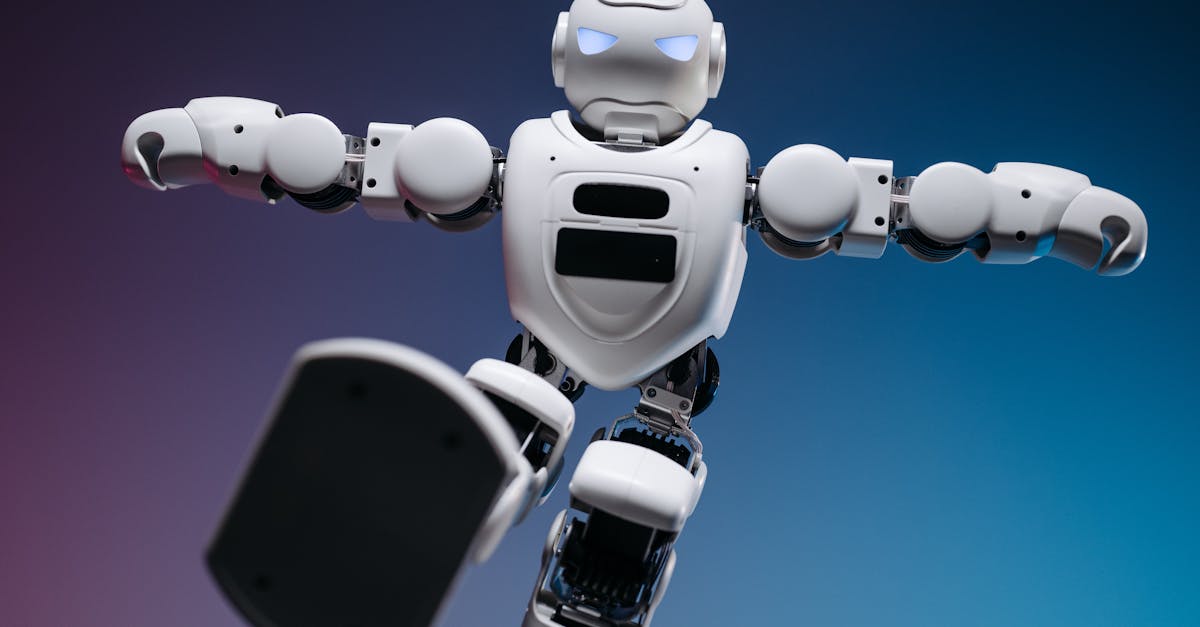
The Architecture Shift: From Hard-Coded Rules to Foundation Models
The robotics industry is undergoing a fundamental architectural shift. For decades, the prevailing paradigm involved hard-coded state machines and task-specific reinforcement learning, where a robot's behavior was strictly bounded by its programming. Today, the conversation has pivoted toward Robotics Foundation Models (RFMs). These are large-scale machine learning systems, often derived from Vision-Language-Action (VLA) architectures, designed to interpret natural language instructions and translate them into physical robot actions.
Unlike traditional controllers that rely on explicit geometric planning, foundation models leverage massive datasets of human demonstrations and web-scale information to generalize behavior. The promise is a shift from specialized automation to general-purpose agents capable of handling unforeseen scenarios. However, RobotWale grades these claims by observing shipping hardware first, pilot deployments second, and announcements last. As of 2024, while the software layer is maturing rapidly, the physical instantiation of these models remains the primary bottleneck.
The Contenders: Pi, RT-2, and Groot
Google RT-2: The Research Benchmark
Google DeepMind’s RT-2 is arguably the most prominent research project in this space. It treats robot control as a language task, converting image-text pairs into sequences of action tokens. In early demos, the system demonstrated the ability to follow instructions like “pick up the empty water bottle” and navigate to a recycling bin.
Despite its impressive research outputs, RT-2 has not yet been integrated into a commercially shipping robotic platform. It remains a research prototype primarily running in simulation or controlled lab environments. While it offers a glimpse into the potential of VLA models, the gap between ‘demonstrated ability’ and ‘reliable deployment’ remains significant. There is no public roadmap detailing RT-2’s adoption in mass-produced hardware.
Tesla Optimus and Dojo: The Groot Ecosystem
Tesla’s approach is grounded in the sheer volume of real-world data. The company utilizes its Optimus humanoid robot to collect data, which is then processed through the Dojo supercomputer to train its neural networks. This ecosystem, often referred to under the umbrella of ‘Groot,’ aims to create a general-purpose model where the robot learns from millions of hours of video.
Tesla has moved past the announcement phase. The Optimus Gen 2 robot has been deployed in limited pilot programs within Tesla’s own factories, particularly in the Fremont facility. While the full general model is still in development, the hardware is shipping. The hardware itself is a key differentiator; Tesla controls both the model and the robot body, allowing for tight integration between the software and the actuators.
Figure AI and the Pi Model
Figure AI represents a third major contender, focusing heavily on the partnership between software intelligence and hardware agility. Their “Pi” model is designed to understand instructions and execute them using the Figure 01 robot. They have secured a strategic partnership with BMW to deploy robots on the assembly line.
This deployment status places Figure AI ahead of purely research-based projects in terms of the “shipping hardware” metric. However, the deployment is currently limited to specific pilot environments within BMW’s plants. The technology is being validated in controlled settings before broader commercial release. The model’s ability to handle the nuances of a factory floor without human intervention remains the critical metric for long-term viability.
NVIDIA’s GR00T: The Simulation Bridge
NVIDIA has positioned itself as the infrastructure provider for this ecosystem through Project GR00T. This is not a single robot manufacturer but a foundation for training robots in simulation (Isaac Sim) and transferring that knowledge to real hardware. Their approach leverages the “sim-to-real” paradigm, where models are trained in high-fidelity virtual environments before being deployed on physical units.
This strategy reduces the risk of hardware damage during the learning phase. While NVIDIA does not manufacture the robots themselves, their software stack is becoming a critical dependency for many robotics startups looking to implement foundation models. The validation comes through their partnerships with hardware manufacturers who utilize the NVIDIA Isaac platform.
The Reality Check: Shipping vs. Hype
The distinction between a foundation model that works in a video and one that works in a factory is the defining characteristic of the current robotics market. A common pitfall in the sector is “rendered-concept worship,” where high-fidelity animations of robots performing tasks are mistaken for engineering reality. The editorial voice at RobotWale emphasizes that until the model runs on shipped hardware, it remains a research claim.
Tesla and Figure AI have crossed the threshold of the “shipping hardware” metric, albeit in limited quantities. Google RT-2 remains firmly in the “research” category. The risk in the current landscape is the “AI winter” effect for robotics; if hardware cannot support the compute requirements of these foundation models, the software promise will falter. The hardware must not only possess the necessary actuators but also the edge computing power to run these models with low latency.
India Context: Availability and Pricing
For the Indian market, the availability of robotics foundation models is tied directly to the importation of the hardware they run on. Currently, there are no mass-market humanoid robots available for retail purchase in India. The market is almost exclusively B2B (Business-to-Business), targeting automotive, logistics, and heavy manufacturing sectors.
Hardware Costs and Import Duties:
The target price for the Tesla Optimus is approximately $20,000 USD. In the Indian context, this translates to a significantly higher landed cost. Import duties on high-tech robotics equipment can range from 15% to 25%, excluding Goods and Services Tax (GST) at 18%. Consequently, a base model Optimus unit would likely land in India at a cost of approximately ₹18 to ₹22 Lakhs ($22,000 - $27,000 range) before service contracts and integration.
Figure AI and BMW:
Figure AI’s robots are currently deployed exclusively in BMW’s US and German facilities. There is no announced availability for the Indian market. Given the pricing of similar high-end industrial robotic arms in India (which often exceed ₹50 Lakhs for specialized units), the Figure 01 would likely fall into a similar premium bracket for enterprise procurement.
Software Localization:
The foundation models themselves, such as RT-2 or Groot, are software layers. Their deployment in India depends on the localization of the training data. If a model is trained primarily on US or European datasets, its performance in Indian environments (which may have different lighting conditions, language dialects, or infrastructure layouts) will degrade without fine-tuning. This creates a hurdle for widespread adoption in the Indian logistics and manufacturing sector.
The Path Forward: General Policy vs. Specialized Automation
The ultimate goal of these foundation models is the “general policy.” This is the ability for a robot to perform a task it has never seen before, based on a text prompt. While the research is compelling, the industry must prioritize reliability over generalization. A robot that fails 10% of the time is unusable in a high-volume factory setting.
For Indian manufacturers, the immediate priority is not adopting the latest foundation model but securing reliable robotic infrastructure. However, as these models mature and the cost of inference drops, the software layer will become the primary value driver. We expect to see a hybrid model emerge where Indian hardware manufacturers license foundation models from US tech giants to power their own robotic bodies.
Conclusion
The race for Robotics Foundation Models is defined by the gap between software capability and physical reliability. While projects like RT-2, Groot, and Pi demonstrate immense potential, the “shipping hardware” metric remains the only valid proof point. Tesla and Figure AI are leading the physical deployment, while Google and NVIDIA lead the software infrastructure. For India, the cost of entry remains high, and the localization of data is the critical next step.
Until the hardware is widely available at a price point accessible to the Indian SME sector, these models remain powerful tools for the enterprise, not the economy. The hype cycle will continue to generate interest, but the editorial focus must remain on the pilots that are actually running, not the renderings that are promising.
✓ Key takeaways
- •Hands-on view of The Race for Robotics Foundation Models: From General Policies to Physical Deployment inside our Robotics Foundation Models library.
- •Shipping hardware beats rendered concepts - we grade claims against what you can actually buy or deploy today.
- •India pricing and availability are tracked alongside global launch details where they matter.
References
Related articles
More in Robotics Foundation Models →
