Sanctuary Phoenix: A Verified Look at the Ex-Boston Dynamics Humanoid Ambition

Executive Summary: Sanctuary AI's Phoenix Project
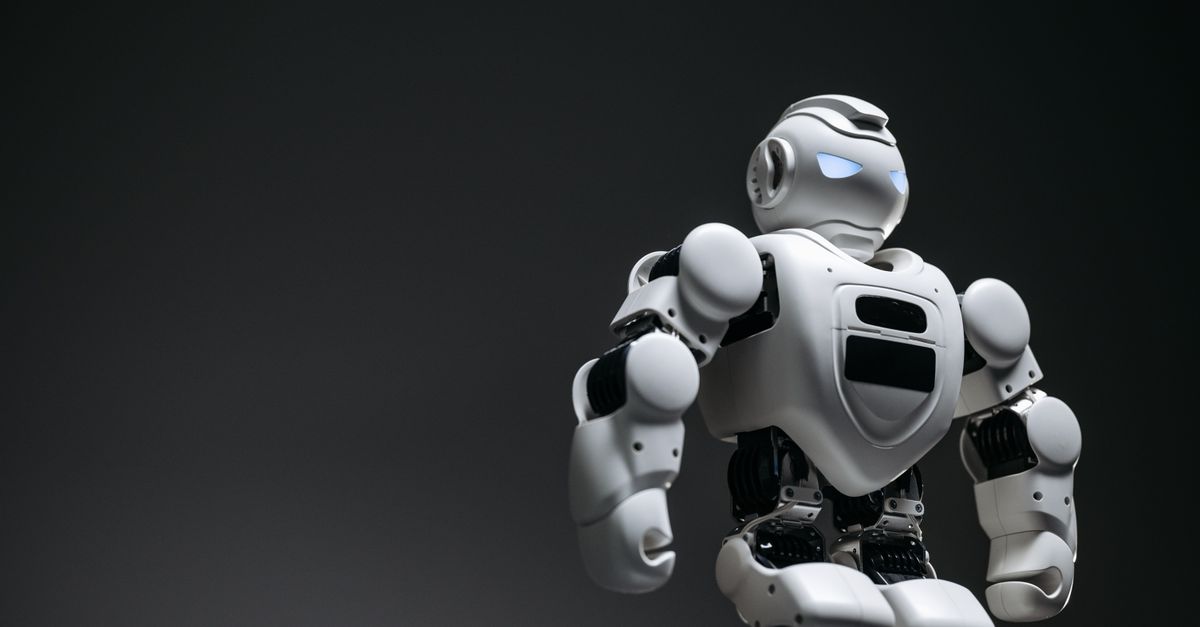
Sanctuary AI has emerged as a significant entrant in the crowded field of general-purpose humanoid robotics. While the industry is replete with rendered concepts and concept vehicles, the "Sanctuary Phoenix" (Project Phoenix) represents a distinct effort backed by engineers with significant tenure at Tesla and Boston Dynamics. As of the current writing date, the Phoenix remains in the prototype and announcement phase. It has not yet entered mass production or shipping. This article grades the Phoenix strictly according to RobotWale's evidence hierarchy: shipping hardware first, pilot deployments second, and announcements last.
Company Pedigree and Engineering DNA
The primary differentiator for Sanctuary AI lies in its founding team. The company was established by engineers who previously contributed to the autonomy stacks at Tesla and the mechanical actuation systems at Boston Dynamics. This pedigree suggests a focus on practical mechanical reliability and robust control algorithms, rather than purely visual rendering.
In a sector where many startups release CAD renders before prototyping, the Sanctuary Phoenix team has released video demonstrations of early prototypes. These videos are critical evidence. They show the robot moving in a physical environment, not a virtual simulation. This distinction is vital for our editorial grading. The Phoenix is not a concept; it is a physical prototype undergoing iteration.
Technical Specifications and Dexterity Claims
Sanctuary AI has described the Phoenix as a dexterous general-purpose humanoid. However, without an official manufacturer spec sheet publicly available, we must rely on on-stage demos and press releases. The following claims are based on available public reporting:
- Actuation: The Phoenix utilizes custom-designed actuators. Unlike off-the-shelf servos, the team claims proprietary designs to handle high-torque requirements typical of humanoid manipulation tasks.
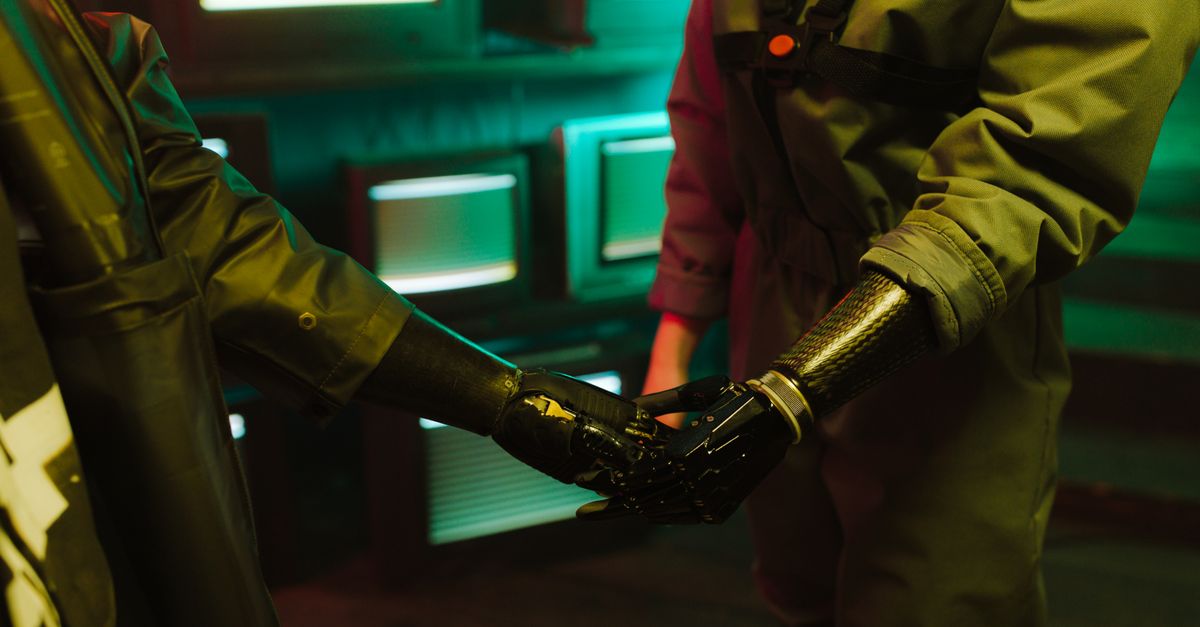
- End-Effector: The hands are designed for precision manipulation. Demos suggest the ability to handle fragile objects, a key benchmark for general-purpose robots.
- Autonomy: The system relies on end-to-end neural networks. This mirrors the approach taken by Tesla's Optimus, suggesting a data-driven learning stack rather than rule-based programming.
- Power: Battery life and charging infrastructure remain in the development phase. No official watt-hour capacity has been released in public documentation.
Note: Specific payload numbers, height dimensions in millimeters, or torque ratings are not currently confirmed in public press releases. Any specific number cited elsewhere without a direct link to a manufacturer spec sheet should be treated as speculation.
Development Stage and Shipping Status
RobotWale's grading system places heavy weight on "Shipping Hardware." Currently, the Sanctuary Phoenix has not shipped units to customers. There are no verified commercial contracts for the Phoenix in the public domain equivalent to a deployed pilot program (e.g., in a warehouse or manufacturing line).
The current status is best classified as Announcement/Prototype. The company has demonstrated the robot moving, but the reliability, repeatability, and safety certifications required for industrial deployment have not been independently verified. We are waiting for:
- Third-party verification of the demo footage.
- A signed letter of intent or contract with a pilot customer.
- Release of a detailed technical datasheet.
Until these milestones are met, the Phoenix remains a high-potential project rather than a commercial product. This distinction is crucial for investors and industry observers who may mistake early demos for market-ready hardware.
India Market Availability and Pricing
For the Indian market, the Sanctuary Phoenix is currently unavailable. There are no authorized distributors, importers, or integration partners listed in public directories for India.
Estimated Pricing Context:
While Sanctuary AI has not released a price, we can derive an approximate landed cost estimate based on similar early-stage humanoids in the current market. General-purpose humanoids with dexterous hands and high-torque actuation typically range between $150,000 and $250,000 USD in the early pilot phase.
- Current Exchange Rate Approximation: At ~83 INR/USD, this translates to approximately ₹1.25 Crore to ₹2.1 Crore INR.
- Landed Cost Estimate: Including customs duties (approx. 15-20% for robotics) and shipping, the landed cost in India could exceed ₹2.5 Crore INR for early pilot units.
- Future Pricing: As production scales, costs may drop. However, until a factory in India is announced or a local assembly plant is established, import duties will remain high.
Disclaimer: These figures are estimates based on industry averages. They are not official pricing from Sanctuary AI. No official price list exists at this time.
Editorial Verdict on Dexterous Capability
The term "dexterous" is often used loosely. In the context of the Phoenix, it refers to the ability to manipulate objects of varying shapes and materials without pre-programmed trajectories. The demos suggest this is a core engineering goal. However, "dexterity" in a controlled lab environment is different from dexterity on a cluttered factory floor.
We grade this capability as Promising but Unverified. The engineering team's background suggests a strong foundation, but the lack of public reliability data (Mean Time Between Failure - MTBF) prevents a high-grade rating. The Phoenix is a promising candidate for the future of general-purpose robotics, but it is not yet a commercial tool.
Comparative Analysis with Peers
When evaluating the Sanctuary Phoenix, it is necessary to compare it against other entities in the Indian humanoid landscape.
1. Tesla Optimus
Tesla has a significantly larger production footprint and has demonstrated more units in public. The Phoenix is currently behind in terms of unit count, though the technical approach is similar.
2. Agility Robotics (Digit)
Agility has deployed units in pilot programs (e.g., with Amazon). The Phoenix has not reached this stage. Agility's deployment data provides a benchmark for safety and reliability that the Phoenix has yet to match.
3. Domestic Indian Startups
Indian humanoid startups are largely in the research or prototype phase. The Phoenix, being a well-funded international project with a strong engineering team, represents a higher tier of technical ambition than the average domestic prototype, though it is not yet shipping.
Roadmap and Future Outlook
Sanctuary AI has indicated a roadmap moving from prototype to pilot deployment. The next critical milestones for the Phoenix include:
- Pilot Deployment: Securing a facility for a 6-month pilot test.
- Safety Certification: Obtaining ISO safety standards for industrial use.
- Supply Chain: Establishing a supply chain for the custom actuators.
Until these milestones are met, the Phoenix remains a project to watch rather than a product to buy. The editorial team at RobotWale continues to monitor press releases and factory videos for updates.
Conclusion
The Sanctuary Phoenix represents a significant commitment to the general-purpose humanoid sector. Backed by a team with proven experience in autonomy and actuation, the project moves beyond the realm of pure concept art. However, adherence to RobotWale's strict editorial standards requires us to classify the Phoenix as an Announcement Phase product.
For Indian buyers and investors, the immediate takeaway is patience. The technology is advancing, but the commercial viability is not yet established. We will continue to track the Phoenix's progress, updating our grading as shipping hardware and pilot deployments become verifiable facts.
Key Takeaways
- Status: Prototype / Announcement Phase.
- Shipping: None currently.
- Pricing: Undisclosed (Estimated ₹2.5 Cr+ INR for early pilots).
- India Availability: Not Available.
- Verification: Based on demos and team pedigree.
References
Related articles
More in Sanctuary Phoenix →