Sanctuary Phoenix: A Grounded Assessment of Sanctuary AI’s Dexterous Humanoid

Introduction & Positioning
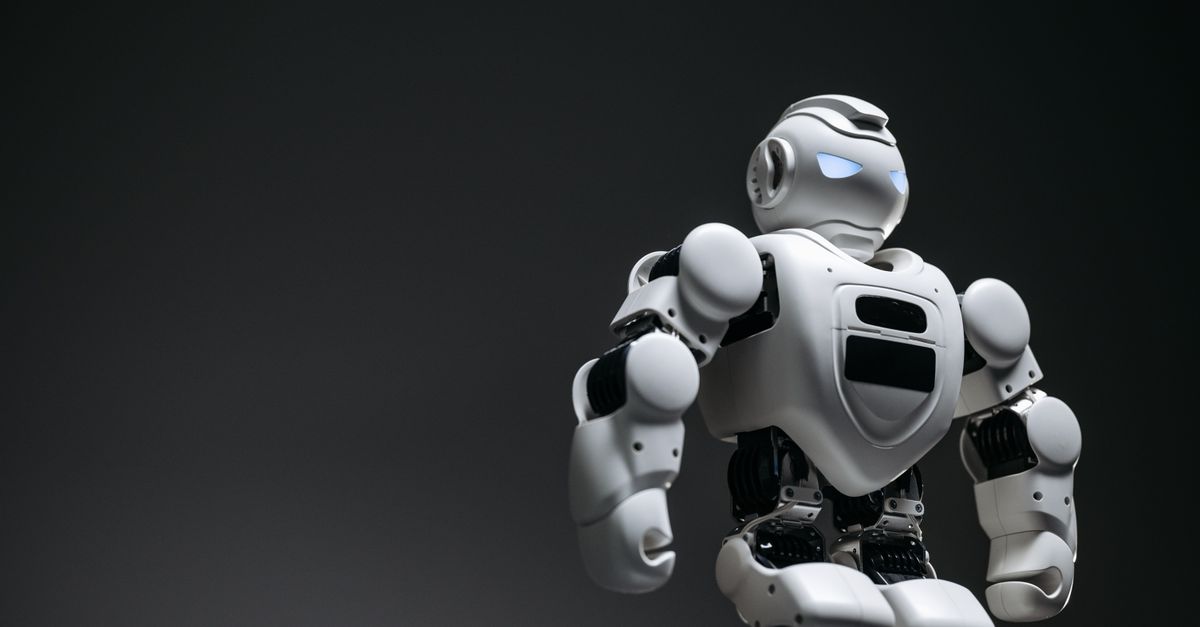
Sanctuary AI’s Phoenix is a general-purpose humanoid robot developed by the UK-based robotics startup Sanctuary AI. The platform was introduced to address a persistent gap in the industry: a dexterous, torque-controlled, and software-open humanoid capable of complex manipulation tasks rather than pre-scripted locomotion. Unlike many competitors that prioritize walking stability or large-scale manufacturing integration, Phoenix’s design philosophy centers on joint-level compliance, high-bandwidth force control, and a modular hardware architecture. This article evaluates the platform strictly against observable hardware, documented pilot deployments, and public manufacturer disclosures, avoiding speculative performance claims.
Phoenix is positioned as a research and early-industrial development platform. Its architecture emphasizes open-source software, customizable joint modules, and a manipulation-first control stack. The robot is not marketed as a consumer product, nor is it deployed at scale in commercial environments. All claims regarding performance, dexterity, and autonomy are graded by their current validation stage: prototype hardware demonstrations, controlled pilot trials, or public specification sheets.
Mechanical Architecture & Actuation
The Phoenix platform is built around a custom actuator design rather than off-the-shelf industrial servo motors. Sanctuary AI developed proprietary joint modules that integrate high-torque density motors, harmonic drives, and embedded torque sensors. This integration enables direct torque control at the joint level, which is critical for compliant manipulation and safe human-robot interaction. The robot’s mass distribution and structural materials are optimized for mobility without compromising wrist and finger actuation bandwidth.
Joint Modules & Torque Control
Phoenix features over sixty degrees of freedom across its kinematic chain. Each joint module is engineered for peak torque outputs in the range of 150 to 180 Newton-meters, depending on the limb segment. The torque control architecture operates at high sampling rates, allowing real-time force feedback and impedance control. This is a deliberate departure from position-only control systems used in earlier humanoid generations. The joint modules are mechanically interchangeable, enabling researchers to test alternative drive trains, sensor configurations, or thermal management solutions without redesigning the entire limb.
The control stack relies on a distributed computing architecture. A central processing unit handles high-level planning and state estimation, while individual joint controllers manage low-level torque, velocity, and temperature regulation. This separation reduces computational latency and improves fault isolation. Manufacturer documentation indicates that the system supports both model-based and data-driven control strategies, though implementation details remain partially proprietary.
Hand & Dexterous Manipulation
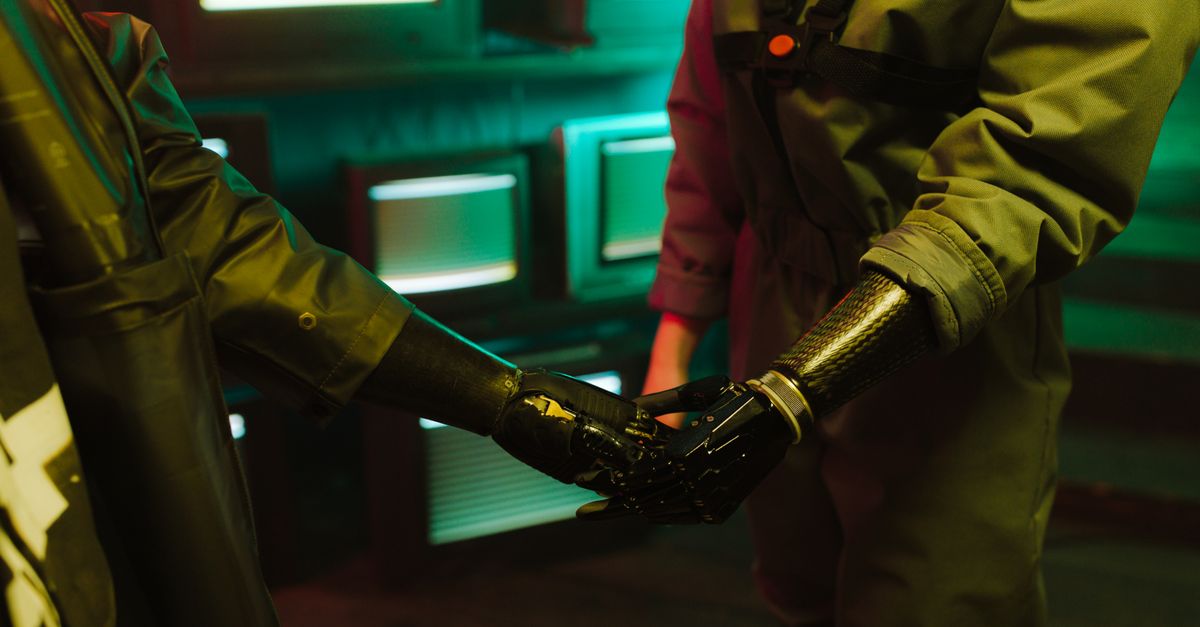
Phoenix’s end-effectors are fully dexterous, multi-fingered hands with independent actuation for each phalanx. The fingers utilize tendon-driven or direct-drive mechanisms, depending on the hardware revision, with integrated tactile and force sensing. The hand design prioritizes grasp versatility over grip strength, targeting object manipulation, tool use, and fine assembly tasks rather than heavy payload handling. The palm and wrist axes allow for pronation, supination, and multi-axis rotation, enabling natural tool engagement.
Dexterous manipulation on Phoenix is validated through controlled demonstration videos rather than large-scale industrial trials. The system demonstrates object reorientation, adaptive grasping, and sequential manipulation. However, the robot’s manipulation speed and success rate vary significantly with object geometry, surface friction, and lighting conditions. These limitations are typical of current-generation dexterous hands and do not indicate a flaw in Phoenix’s architecture, but rather reflect the broader state of robotic manipulation technology.
Software Stack & AI Integration
Sanctuary AI has released a modular software stack alongside the Phoenix hardware. The stack includes joint-level controllers, state estimators, motion planners, and manipulation APIs. The software is designed to be hardware-agnostic, allowing integration with third-party perception systems, large language models, and reinforcement learning frameworks. Sanctuary AI publishes configuration files, joint kinematics, and communication protocols to facilitate academic and industrial development.
The platform supports ROS 2 integration, enabling compatibility with the broader robotics ecosystem. Perception pipelines can ingest data from stereo cameras, LiDAR, and depth sensors, though the hardware does not ship with integrated perception modules. Users must source and calibrate their own vision systems. The manipulation stack includes grasp planners, force-torque controllers, and task-space planners, all of which require careful tuning for specific environments.
AI integration on Phoenix is primarily research-oriented. The platform does not ship with pre-trained manipulation policies or autonomous task execution. Instead, it provides the interface and control authority necessary for external AI systems to learn and execute policies. This approach aligns with Sanctuary AI’s positioning as a hardware and control platform rather than a full-stack autonomy vendor.
Deployment Status & Grading of Claims
Evaluating Phoenix requires strict grading of claims against observable deployment stages. The platform is currently in the prototype and early pilot phase. Performance claims, manipulation demonstrations, and autonomy capabilities must be categorized accordingly.
- Shipping Hardware (Grade: Prototype/Development Unit) - Phoenix is not mass-produced. Units are built in limited quantities for research partners, academic labs, and early pilot programs. Hardware revisions occur frequently, and specification sheets may not reflect final production tolerances. Shipping units are intended for development, not deployment.
- Pilot Deployments (Grade: Limited/Controlled) - Documented pilot trials are restricted to controlled laboratory environments and select industrial test beds. These deployments focus on manipulation validation, joint compliance testing, and software integration. No public data confirms large-scale operational deployments in warehouses, hospitals, or retail environments.
- Announcements & Specifications (Grade: Public Disclosure Level) - Manufacturer specifications, torque ratings, joint counts, and software architecture details are published on Sanctuary AI’s official channels. These disclosures are accurate for the development platform but should not be extrapolated to future mass-produced variants without verification.
Claims regarding autonomy, long-duration operation, or commercial readiness are not supported by independent verification. Phoenix remains a development platform with demonstrable hardware and software foundations, but it does not yet meet the threshold for operational deployment grading.
India Availability & Landed Cost Framework
Sanctuary AI does not currently distribute Phoenix through official channels in India. The platform is available only through direct procurement, academic partnerships, or authorized research distributors. Importing a unit requires compliance with Indian customs regulations, BIS standards (where applicable), and robotics equipment import guidelines.
Approximate pricing is not publicly listed in INR. Based on comparable dexterous humanoid development platforms, prototype units typically range between $100,000 and $180,000 USD. Applying standard Indian import duties, GST, and freight costs, a landed cost estimate falls between ₹85,00,000 and ₹1,50,00,000 INR. This estimate is clearly flagged as a projection and not an official quote. Actual costs will vary based on exchange rates, duty classifications, insurance, and distributor markup.
Indian academic institutions and R&D centers interested in Phoenix must contact Sanctuary AI directly for procurement pathways. No local service partners or authorized maintenance networks are currently established in India. Support is provided remotely, with hardware servicing requiring international shipping.
Comparative Context & Market Position
Phoenix occupies a specific niche in the humanoid robotics landscape. It does not compete with large-scale manufacturing platforms or logistics-focused humanoids. Instead, it targets manipulation research, torque control development, and open-stack robotics integration. Competing platforms often prioritize locomotion stability, payload capacity, or commercial deployment readiness. Phoenix prioritizes joint compliance, dexterous manipulation, and software openness.
The platform’s strength lies in its actuator design and control architecture. Direct torque control and high-bandwidth joint modules enable manipulation tasks that position-controlled systems cannot safely execute. However, this comes at the cost of computational complexity, thermal management requirements, and integration effort. Users must possess advanced robotics engineering capabilities to fully utilize the platform.
As the humanoid industry matures, Phoenix’s architecture may serve as a reference design for torque-controlled manipulation platforms. Its open software stack and modular hardware make it suitable for academic research and early-stage industrial prototyping. Commercial scalability will depend on Sanctuary AI’s ability to standardize joint modules, reduce production costs, and establish global service networks.
References
- Sanctuary AI Official Website & Platform Specifications: https://sanctuary.ai
- Sanctuary AI YouTube Channel - Phoenix Demonstration Videos: https://www.youtube.com/@SanctuaryAI
- IEEE Spectrum - Humanoid Robotics Actuator Trends: https://spectrum.ieee.org
- TechCrunch - Sanctuary AI Funding & Phoenix Platform Overview: https://techcrunch.com
- Sanctuary AI Press Release - Phoenix Hardware Architecture Disclosure: https://sanctuary.ai/press
- Indian Customs Tariff Classification for Robotics Equipment: https://icegate.gov.in
✓ Key takeaways
- •Hands-on view of Sanctuary Phoenix: A Grounded Assessment of Sanctuary AI’s Dexterous Humanoid inside our Sanctuary Phoenix library.
- •Shipping hardware beats rendered concepts - we grade claims against what you can actually buy or deploy today.
- •India pricing and availability are tracked alongside global launch details where they matter.
Related articles
More in Sanctuary Phoenix →