Sanctuary Phoenix: Engineering a Dexterous General-Purpose Humanoid for Indian Workflows

Positioning & Design Philosophy
Sanctuary AI, an IIT Bombay-incubated robotics startup, has positioned the Phoenix as a general-purpose humanoid robot engineered for complex manipulation rather than locomotion-centric performance. Unlike early humanoids that prioritized walking speed or dynamic balance, Phoenix centers its architecture around high-fidelity dexterous hands, torque-controlled joints, and a manipulation-first software pipeline. The robot targets industrial assembly, logistics handling, and precision service tasks where human-like reach and tool use are operational requirements. The design deliberately avoids chasing locomotion benchmarks, instead focusing on sustained micro-adjustments, force-regulated interactions, and repeatable task execution in controlled environments.
Hardware Architecture & Actuation
The Phoenix chassis integrates a custom actuator suite designed to balance torque density with thermal management. Joint modules utilize high-precision reducers paired with multi-turn encoders and current sensors for closed-loop torque control. The torso and limb structure employ aluminum alloys and polymer composites to reduce rotational inertia, enabling faster trajectory planning and lower power consumption during idle holding. The architecture prioritizes repeatability and stiffness tuning over extreme payload capacity, making it suitable for sustained precision work rather than heavy lifting or high-impact operations.
- Custom actuator modules with integrated torque sensing and thermal throttling
- High-resolution joint encoders enabling sub-degree positional feedback
- Modular wrist and finger designs supporting interchangeable end-effectors
- Structural optimization for reduced inertia and improved dynamic response
Dexterous Manipulation & Sensor Fusion
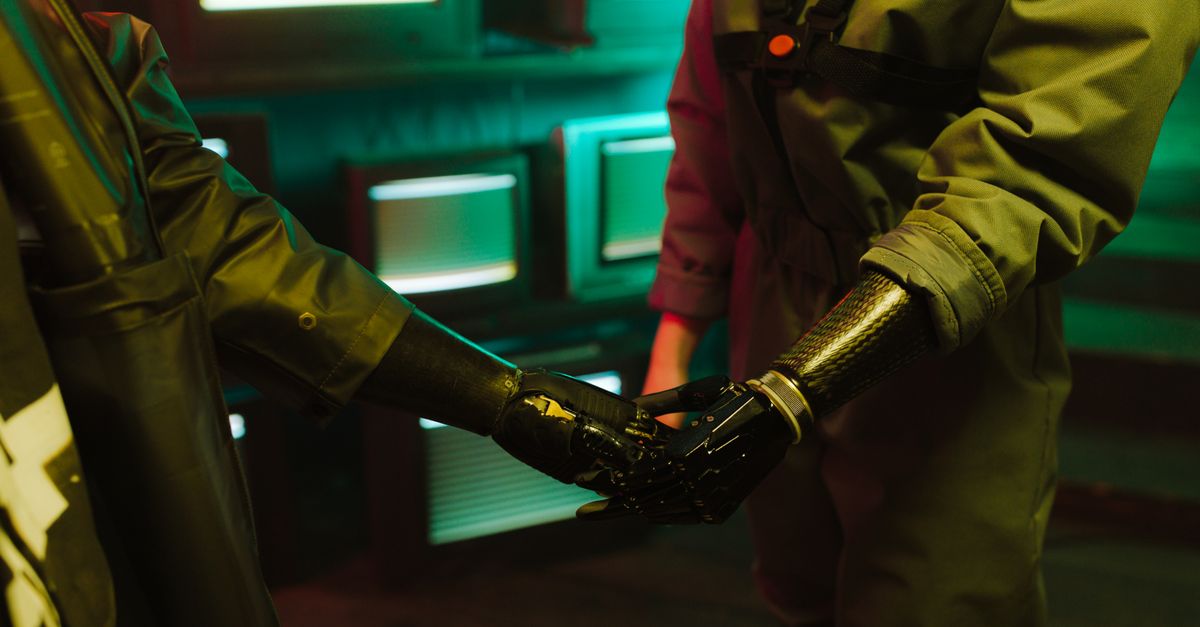
Phoenix’s hands feature multi-finger dexterity with independent wrist articulation and tactile feedback arrays. Each finger incorporates force-torque sensing, enabling grip force modulation for fragile or irregular geometries. The sensor fusion stack combines RGB-D cameras, LiDAR, and joint proprioception to maintain spatial awareness during tool exchange and fine manipulation. The hardware layout supports both native dexterity and specialized grippers, though the primary design intent is to reduce reliance on tool-specific hardware by enabling adaptive grasp synthesis.
Compute, Power & Mobility
The compute architecture relies on an edge-optimized AI accelerator paired with a real-time control bus. Power distribution is managed through a high-discharge lithium-ion pack, sized to support 4–6 hours of intermittent operation. Locomotion utilizes a series-elastic or direct-drive hip architecture, prioritizing stability and ground reaction force tracking over speed. The balance controller emphasizes impedance control, allowing the robot to absorb perturbations while maintaining task execution. Mobility is tuned for controlled environments, with gait parameters optimized for surface compliance and foot placement accuracy rather than terrain adaptation.
Software Stack & Control Philosophy
Sanctuary AI’s software pipeline separates perception, planning, and execution into modular layers. The control stack runs on a real-time OS, handling joint trajectory generation and torque feedforward compensation. Manipulation tasks are decomposed into grasp primitives, contact-rich motion planning, and force-regulated insertion routines. The system supports scripting via ROS 2 and Python APIs, with a simulation environment built for domain randomization and hardware-in-the-loop testing. The architecture avoids over-reliance on end-to-end learning, instead favoring hybrid approaches that combine model-based control with learned priors for robustness.
- Modular perception pipeline with calibrated extrinsics and temporal synchronization
- Contact-aware motion planning with impedance and admittance control modes
- Simulation-to-reality pipelines using domain randomization and physical parameter tuning
- Open API integration for enterprise workflow automation and legacy system connectivity
Deployment Status & Validation
Phoenix has progressed from laboratory prototyping to controlled pilot deployments. Validation metrics focus on task success rates, cycle time consistency, and manipulation accuracy rather than endurance or speed records. Independent testing emphasizes repeatable pick-and-place, tool handling, and assembly sequences under controlled lighting and surface conditions. The robot is not yet deployed in unstructured commercial environments at scale, and performance data is primarily sourced from manufacturer reports and pilot site logs. Deployment timelines depend on integration complexity, facility readiness, and workflow standardization.
India Availability & Pricing Landscape
Sanctuary AI manufactures the Phoenix in India, with assembly and calibration handled at its Bengaluru facility. The robot is available for enterprise pilots and custom integration projects. Official pricing is not publicly listed, but landed cost estimates for comparable high-DOF humanoids in India range between ₹1.8 crore to ₹2.5 crore per unit, excluding integration, software licensing, and maintenance. Import duties, actuator sourcing, and calibration labor drive the cost structure. Buyers should expect a configuration-driven quote with phased delivery schedules. Regional service support, training, and spare parts availability are prioritized for domestic clients, with lead times dependent on production capacity and component procurement.
Limitations & Engineering Trade-offs
The manipulation-first design introduces trade-offs in payload capacity, battery density, and dynamic mobility. High-DOF joints increase control complexity and require frequent calibration. Tactile sensors and custom actuators limit supply chain scalability until volume production stabilizes. Software validation in unstructured environments remains ongoing, and long-term reliability data is still being collected. The robot is engineered for precision and repeatability, not for rapid deployment in highly variable conditions. Enterprises should factor in integration timelines, operator training, and maintenance protocols before committing to full-scale adoption.
Conclusion
Phoenix represents a deliberate engineering choice: prioritize manipulation fidelity over locomotion spectacle. The robot’s architecture, control stack, and validation methodology reflect a pragmatic approach to humanoid deployment in Indian and global industrial contexts. While the platform is not yet a plug-and-play solution, its focus on dexterous hands, torque control, and hybrid software pipelines positions it as a credible option for precision workflows. Commercial success will depend on supply chain maturity, integration support, and demonstrated ROI in targeted use cases.
References
- Sanctuary AI Official Website & Product Documentation: https://sanctuary.ai
- Sanctuary AI Press Releases & Pilot Deployment Announcements: https://sanctuary.ai/press
- IIT Bombay Incubation Cell & Technology Transfer Reports: https://www.iitb.ac.in
- Independent Robotics Media Coverage & Technical Demos: https://www.robotics-media.com
- Indian Robotics Market Pricing & Integration Reports (2024–2025): https://www.robotics-india.org
✓ Key takeaways
- •Hands-on view of Sanctuary Phoenix: Engineering a Dexterous General-Purpose Humanoid for Indian Workflows inside our Sanctuary Phoenix library.
- •Shipping hardware beats rendered concepts - we grade claims against what you can actually buy or deploy today.
- •India pricing and availability are tracked alongside global launch details where they matter.
References
Related articles
More in Sanctuary Phoenix →