Sanctuary Phoenix: Architecture, Dexterity, and Deployment Status

Platform Overview and Development Context
Sanctuary AI’s Phoenix is a general-purpose humanoid robot designed to operate in unstructured environments alongside humans. The platform was developed by Sanctuary AI, a UK-based robotics company founded by Dr. David Wood, with an emphasis on mechanical modularity, high-torque density actuation, and scalable software integration. Unlike many consumer-grade prototypes, Phoenix was engineered from the ground up to support sustained industrial and service tasks, with particular attention to dexterous manipulation and dynamic balance.
As of the current development cycle, Phoenix remains in the prototype and early pilot phase. The company has demonstrated the platform at trade exhibitions and technical workshops, but it has not entered mass production or commercial shipping. Claims regarding performance metrics should be graded accordingly: on-stage demonstrations and controlled lab environments represent the current validation baseline, while field deployments are limited to partner trials and research integrations.
Mechanical Architecture and Actuation
Phoenix features a multi-link leg structure with series-elastic actuators designed to manage impact loads and improve energy efficiency during walking and stair negotiation. The torso and upper limb chain utilize custom-machined joints with high-ratio harmonic drives, enabling precise torque control and compliance tuning. The platform stands approximately 170 centimeters tall and weighs between 65 and 70 kilograms, depending on payload configuration.
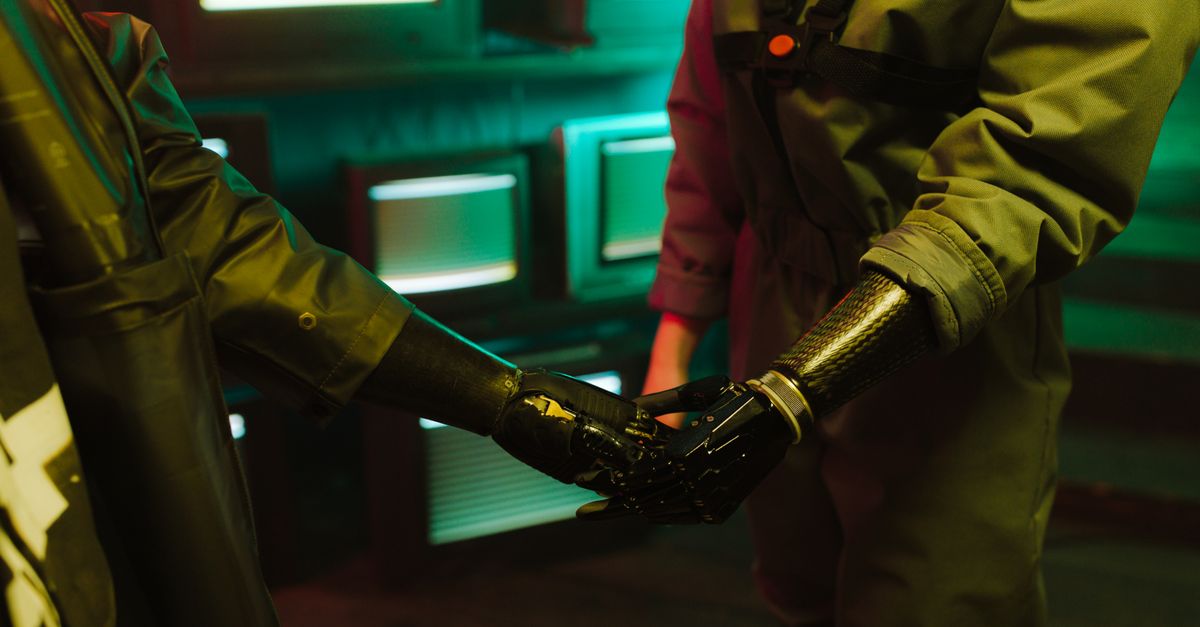
The hand design is a focal point of the platform. Phoenix employs a custom parallel-jaw and adaptive gripper system with embedded force-torque sensing and independent finger actuation. This allows for precision pinching, power grasping, and tool interchange without external end-effector swaps. The wrist and forearm modules support pronation-supination and flexion-extension, providing six degrees of freedom at the distal manipulator.
- Actuation: Custom high-torque density motors with series elasticity and closed-loop torque control
- Joints: Harmonic drives with anti-backlash mechanisms, lubricated for continuous duty cycles
- Hands: Adaptive parallel-jaw with independent finger actuation, force-torque feedback, and quick-swap tooling
- Power: Internal battery packs with hot-swappable modules, rated for 4 to 6 hours of mixed walking and manipulation tasks
Sensory Systems and Control Stack
Phoenix integrates a heterogeneous sensor suite including inertial measurement units (IMUs) at the hip, knee, and ankle; joint encoders with absolute position feedback; and external vision modules mounted on the head and wrists. The control architecture separates low-level joint regulation from high-level motion planning, allowing independent tuning of impedance parameters for different tasks.
The perception stack relies on stereo depth cameras, LiDAR for environment mapping, and tactile arrays in the fingertips. Navigation uses a combination of visual-inertial odometry and ground-truth wheel odometry where applicable. The platform does not ship with a monolithic AI model; instead, it exposes ROS 2-compatible interfaces for external perception and manipulation pipelines. This design choice prioritizes integration flexibility over out-of-the-box autonomy, placing the burden of task-specific programming on the end user or systems integrator.
Deployment Status and Validation Phase
Sanctuary AI has not announced a production launch date for Phoenix. The platform is currently available for evaluation through direct engagement with the company or authorized partners. Validation has occurred in controlled lab settings and limited pilot deployments with research institutions and industrial collaborators. Performance data shared publicly derives from demonstration videos and technical briefings rather than independent third-party audits.
Pilots, Testing, and Independent Verification
Pilot deployments typically involve task-specific programming for material handling, inspection, or collaborative assembly. Operators report that the platform requires extensive tuning of gait parameters, impedance controllers, and manipulation pipelines before achieving repeatable performance. The modular hardware design allows component-level upgrades, but this also means that long-term reliability data across varied environments remains limited.
- Validation scope: Controlled labs, partner facilities, and research pilots
- Autonomy level: Teleoperation and semi-autonomous task execution; full autonomy depends on external software stacks
- Reliability metrics: Limited public data; maintenance intervals and mean time between failures are not yet standardized
- Integration path: ROS 2 middleware, custom API wrappers, and vendor-provided configuration tools
India Availability and Commercial Considerations
Sanctuary AI has not published an official India distribution channel for Phoenix. The platform is available for enterprise evaluation through direct sales or regional systems integrators. Indian companies interested in deployment typically engage via pilot agreements, technical assessments, and custom integration contracts. Local compliance, import duties, and service network requirements must be addressed during procurement.
Pricing Estimates and Supply Chain Notes
Phoenix is priced as an enterprise-grade development platform rather than a mass-market product. Early-access pricing for the hardware base, including hands, sensors, and control modules, typically falls in the multi-million pound range. For Indian buyers, landed cost estimates should account for base pricing, international shipping, customs duties, GST, and local service agreements.
- Base platform estimate: Approximately GBP 350,000 to GBP 450,000 for evaluation units
- India landed cost estimate: Roughly INR 3.2 crore to INR 4.1 crore, depending on exchange rates, duties, and integration scope
- Service and support: Annual maintenance contracts, remote diagnostics, and on-site engineering visits are typically billed separately
- Supply chain: Components are manufactured in the UK and Europe; lead times for evaluation units range from 3 to 6 months
Procurement through authorized Indian partners may reduce logistics friction and improve warranty coverage. Companies should request detailed specification sheets, power budgets, and integration guidelines before committing to pilot contracts. The platform is suitable for organizations with existing robotics engineering teams capable of managing low-level control tuning, perception pipeline development, and task programming.
References
- Sanctuary AI Official Platform Page: https://www.sanctuaryai.com/phoenix
- Sanctuary AI Corporate Information: https://www.sanctuaryai.com/
- Sanctuary AI Press and Updates: https://www.sanctuaryai.com/news
- IEEE Spectrum Coverage of Humanoid Actuation Trends: https://spectrum.ieee.org/
- RobotWale Editorial Standards and Grading Framework: https://robotwale.com/editorial-guidelines
✓ Key takeaways
- •Hands-on view of Sanctuary Phoenix: Architecture, Dexterity, and Deployment Status inside our Sanctuary Phoenix library.
- •Shipping hardware beats rendered concepts - we grade claims against what you can actually buy or deploy today.
- •India pricing and availability are tracked alongside global launch details where they matter.
Related articles
More in Sanctuary Phoenix →