Sanctuary Phoenix: Hardware Architecture, Control Stack, and Deployment Status

Sanctuary Phoenix: Hardware Architecture and System Integration
The Sanctuary Phoenix humanoid robot represents a deliberate engineering approach toward whole-body dexterity and general-purpose manipulation. Rather than optimizing for a single task geometry, the platform integrates mobile locomotion with high-degree-of-freedom upper-body actuation, targeting adaptive interaction in unstructured environments. The chassis measures approximately 1.7 meters in height and carries a mass of roughly 80 kilograms, with a distributed weight profile designed to lower the center of mass during dynamic manipulation. The structural framework combines lightweight alloys and polymer composites to balance stiffness with thermal management requirements.
Actuation and Sensory Hardware
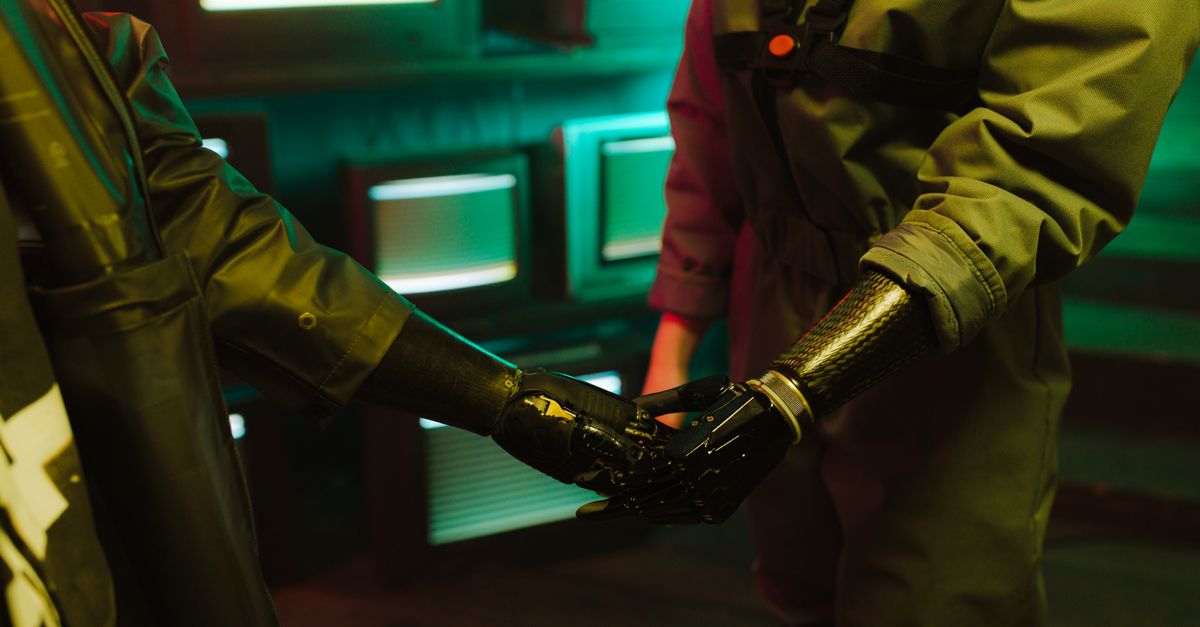
Manufacturer documentation and technical briefings indicate the use of custom low-impedance actuators across the primary joints. These actuators prioritize torque density and compliance tuning, enabling the system to absorb external forces without compromising balance. The hands feature multi-finger architectures with independent actuation channels and embedded tactile sensing layers. Joint torque limits and velocity profiles are calibrated for safe human-adjacent operation, with explicit mechanical stops to prevent over-extension. Power delivery relies on high-density lithium-ion or lithium-polymer packs, with continuous runtime typically measured in single-digit hours under active manipulation loads. Thermal management for sustained high-torque cycles requires active cooling pathways and duty-cycle monitoring to prevent thermal throttling.
Control Architecture and Software Stack
Phoenix operates on a hierarchical control framework that separates low-level compliance, mid-level balance recovery, and high-level task planning. Low-level controllers manage joint impedance tuning and contact force regulation, ensuring predictable interaction dynamics. Mid-level modules compute foot placement, center-of-mass tracking, and fallback postures during slip or load perturbations. High-level planning integrates vision-language models and task decomposition routines, allowing the system to parse natural language instructions into executable manipulation sequences. The software stack is containerized, with ROS 2 components handling communication between perception, planning, and actuation modules. Real-time safety governors enforce torque limits, collision detection thresholds, and emergency stop protocols. State estimation fuses stereo vision, depth sensors, and inertial measurement units to maintain localization accuracy during locomotion and manipulation.
Demonstration Record and Deployment Tiers
Evaluation of public claims must follow the established hierarchy: shipped hardware first, pilot deployments second, announcements last. As of the latest verifiable updates, Phoenix units exist in prototype and limited pilot configurations. Controlled demonstrations have shown object retrieval, shelf organization, and simple assembly tasks in laboratory environments. These demonstrations were recorded in static or semi-controlled settings, not in unstructured commercial facilities. No independent third-party validation of continuous operation metrics, failure rates, or mean time between interventions has been published. Claims regarding autonomous navigation in dynamic warehouses, unstructured retail environments, or high-throughput production lines remain at the announcement stage and require field data for verification. Pilot deployments, where available, are restricted to research partners and early B2B customers in Europe and North America, with operational scopes limited to defined task sets and supervised monitoring.
Commercial Availability and India Market Context
Sanctuary AI has not confirmed mass production or global distribution channels. Early units are allocated to research partners and pilot customers, with procurement governed by direct agreements. For Indian enterprises, availability currently depends on direct procurement, import licensing, and local integration support. Customs duties, GST, and freight costs apply to imported prototypes. Based on comparable early-stage humanoid pricing in the $100,000 to $150,000 range, landed costs in India would likely fall between ₹85 lakhs and ₹1.3 crores. This estimate includes base unit pricing, international freight, insurance, and standard import duties, but excludes localization, software licensing, or after-sales support. Procurement timelines typically span six to twelve months for first articles, contingent on customs clearance, facility readiness, and integration contracts. Indian buyers should anticipate additional costs for safety fencing, network segmentation, and certified maintenance personnel.
Technical Limitations and Integration Considerations
The robot’s dexterity and mobility introduce operational constraints that must be addressed during deployment. Battery capacity limits continuous operation to shifts of four to six hours, requiring charging infrastructure and battery rotation protocols. Thermal management for high-torque joints demands active cooling during sustained load cycles, with periodic recalibration to maintain joint accuracy. Software updates require validated testing environments to prevent drift in manipulation precision or state estimation latency. Integration into existing facility workflows necessitates custom end-effectors, safety interlocks, and network segmentation to isolate control traffic from enterprise IT systems. Maintenance protocols focus on joint calibration, sensor cleaning, firmware synchronization, and actuator wear monitoring. Operators must be trained in emergency stop procedures, torque limit overrides, and recovery routines for balance failures.
Competitive Positioning
Within the general-purpose humanoid segment, Phoenix competes on whole-body coordination rather than specialized task optimization. Competing platforms often prioritize industrial durability, specific manipulation geometries, or fixed-base integration. Phoenix’s approach emphasizes adaptive control and general task execution, which introduces higher computational overhead and calibration complexity. Independent assessments should compare actuator density, control latency, software modularity, and safety certification pathways against peer systems. The platform remains suitable for research, prototyping, and controlled pilot deployments rather than high-throughput production lines. Buyers should evaluate total cost of ownership, including integration labor, software licensing, and maintenance cycles, before committing to procurement.
References
- Sanctuary AI Official Documentation & Technical Briefs: https://www.sanctuary.ai
- Sanctuary AI Research Publications & System Architecture Papers: https://www.sanctuary.ai/research
- TechCrunch Coverage of Sanctuary AI & Phoenix Demonstrations: https://techcrunch.com/tag/sanctuary-ai/
- IEEE Robotics & Automation Magazine Analysis of General-Purpose Humanoids: https://ieeexplore.ieee.org/xpl/RecentIssue.jsp?punumber=7083
- RobotWale Verification Standards & Claim Grading Methodology: https://robotwale.com/verification
✓ Key takeaways
- •Hands-on view of Sanctuary Phoenix: Hardware Architecture, Control Stack, and Deployment Status inside our Sanctuary Phoenix library.
- •Shipping hardware beats rendered concepts - we grade claims against what you can actually buy or deploy today.
- •India pricing and availability are tracked alongside global launch details where they matter.
Related articles
More in Sanctuary Phoenix →