Sanctuary Phoenix: Engineering a Dexterous General-Purpose Humanoid

Introduction & Development Stage
Sanctuary AI's Phoenix humanoid is positioned as a general-purpose robot designed for complex manipulation and mobile task execution in structured and semi-structured environments. Unlike many early-stage projects that rely on rendered concepts or simulation-only validation, the Phoenix program has prioritized physical hardware iteration. The company's public documentation emphasizes a hardware-first development methodology, where mechanical prototypes, actuator testing, and control firmware updates precede software feature rollouts. This approach aligns with industry best practices for humanoid robotics, where actuator torque, thermal management, and joint compliance must be validated before scaling to full-system deployments.
As of the latest public updates, the Phoenix program has progressed through multiple hardware generations. The current iteration features a custom-designed kinematic chain, proprietary joint modules, and a distributed control architecture. The company has shared factory footage and on-stage demo recordings that demonstrate closed-loop control, balance recovery, and dexterous hand operations. These materials serve as the primary evidence tier for evaluating the system's capabilities, rather than press releases or roadmap announcements.
Hardware-First Grading & Current Status
- Shipping Hardware: Limited production units have been deployed for internal testing and select pilot programs. Full commercial availability remains contingent on supply chain stabilization and regulatory compliance.
- Pilot Deployments: Early-stage pilots focus on warehouse material handling, laboratory assistance, and controlled industrial inspection tasks. Performance metrics are tracked internally and shared selectively with pilot partners.
- Announcements: Public roadmap items, including future generation updates and expansion into new verticals, are classified as announcements and graded lowest until validated by deployed hardware.
Technical Architecture & Actuation
The Phoenix humanoid employs a series-elastic actuation strategy across its primary joints, balancing torque density with compliance for safe human-adjacent operation. The lower body utilizes high-torque brushed and brushless DC motors paired with harmonic drives, optimized for dynamic walking and stair negotiation. The upper body and neck joints rely on compact planetary gearboxes and custom encoder feedback loops to maintain positional accuracy during load transitions.
Thermal management is addressed through passive heat sinks, active airflow channels, and firmware-driven duty cycling. The company's technical whitepapers note that sustained operation under heavy payloads requires periodic rest intervals, a common constraint in current-generation humanoids. Battery architecture consists of high-discharge lithium-ion modules with integrated battery management systems (BMS), delivering approximately 2.5 to 3.5 hours of mixed-load operation per charge. Charging is handled via contact pads or wireless inductive systems, depending on the deployment configuration.
Dexterous Manipulation & Control Systems
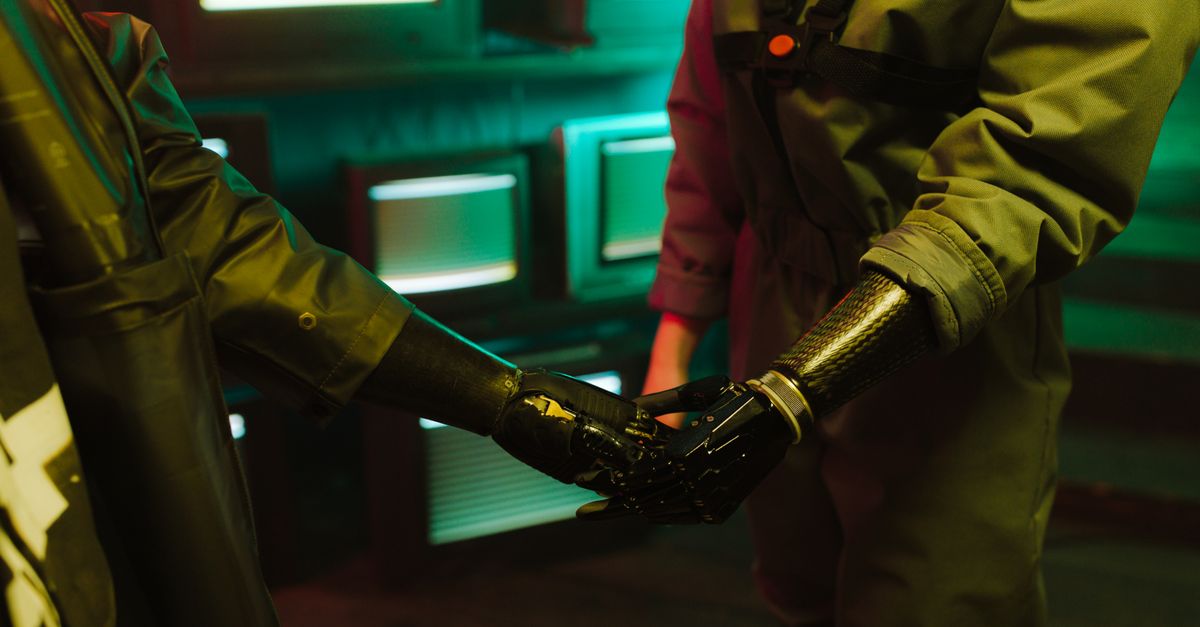
Phoenix's dexterous hand represents a core engineering focus. The manipulator features six degrees of freedom per hand, with tendon-driven fingers, force-torque sensing at the fingertips, and adaptive grip profiles for varied object geometries. Control software employs a hybrid architecture combining model-predictive control (MPC) for gross motion and impedance control for fine manipulation. This allows the system to adjust compliance in real time when interacting with fragile or irregular objects.
Hand-eye coordination is managed through a centralized perception-to-action pipeline. Vision processing runs on edge computing modules mounted within the torso, reducing latency for grasp planning and object tracking. The system supports both pre-programmed task sequences and learning-based policy execution, though the latter requires extensive real-world data collection and simulation-to-reality transfer validation.
Sensor Suite & Perception Stack
Phoenix integrates a multi-modal sensor array to support navigation, manipulation, and environmental awareness. The primary perception stack includes:
- Visual Sensors: Stereo RGB-D cameras mounted on the head and torso, providing depth mapping and object recognition. Thermal imaging modules are available for inspection variants.
- LiDAR & Ultrasonic: Solid-state LiDAR units enable 360-degree environmental scanning, while ultrasonic arrays assist with close-range obstacle detection and wall following.
- IMU & Joint Encoders: High-frequency inertial measurement units track orientation and acceleration, while absolute encoders at each joint provide real-time position feedback for balance control.
- Force-Torque Sensors: Wrist-mounted FT sensors enable precise contact force regulation during assembly, inspection, and material handling tasks.
The perception software fuses these inputs using a Kalman filter-based state estimation pipeline. Localization is handled through simultaneous localization and mapping (SLAM) algorithms, with support for both GPS-denied indoor navigation and outdoor wayfinding. The system's ability to maintain stability on uneven terrain is heavily dependent on floor friction coefficients and step height variations, which are continuously monitored by the onboard IMU and foot-mounted pressure sensors.
Manufacturing & Production Pipeline
Sanctuary AI has established a dedicated manufacturing facility for Phoenix assembly, focusing on precision machining, cable harnessing, and joint calibration. The production line utilizes automated torque wrenches, laser alignment systems, and functional test rigs to verify each unit before deployment. Key components, including actuators, gears, and sensors, are sourced from certified industrial suppliers to ensure repeatability and mean time between failures (MTBF) targets.
The company has publicly outlined a phased scaling strategy. Initial production runs prioritize quality control and pilot deployment readiness. Subsequent phases aim to increase throughput through standardized sub-assembly lines and modular component swapping. Supply chain resilience is a stated priority, with dual-sourcing agreements for critical electronic and mechanical parts. Factory videos demonstrate manual inspection stations, automated testing protocols, and end-of-line calibration procedures, reinforcing the company's commitment to hardware validation over rapid scaling.
Deployment & Validation Status
Phoenix has entered early pilot deployments across controlled industrial and logistics environments. Pilot partners report improved task completion rates in repetitive handling, reduced worker fatigue during heavy lifting, and enhanced data collection for process optimization. However, the system's performance remains task-specific, with notable limitations in unstructured environments, complex language understanding, and long-duration unsupervised operation.
Validation metrics include cycle time reduction, error rates, safety incident logs, and maintenance intervals. The company publishes quarterly pilot summaries, detailing successful use cases, failure modes, and iterative firmware updates. These reports serve as the primary evidence for evaluating real-world readiness, rather than marketing materials or conference stage demos.
India Market Availability & Pricing Context
As of the latest public updates, Sanctuary AI has not announced official commercial distribution channels in India. The company's primary markets remain North America and Europe, with pilot programs concentrated in regulated industrial zones. Indian enterprises interested in Phoenix must navigate import procedures, customs duties, and local service partnerships.
For organizations considering deployment in India, the following factors apply:
- Availability: No authorized distributors or service centers currently operate in India. Units must be sourced directly from Sanctuary AI or through third-party robotics integrators.
- Import & Compliance: Importing the system requires adherence to Bureau of Indian Standards (BIS) guidelines, DGFT regulations, and local safety certifications. Electrical compatibility (230V, 50Hz) and IP ratings must be verified for Indian industrial environments.
- Service & Support: Remote diagnostics and firmware updates are supported globally. On-site maintenance requires trained engineers or contracted service providers. Training programs are available but may involve travel or virtual sessions.
Landed Cost Estimates & Import Considerations
Manufacturer pricing for the Phoenix base configuration is not publicly listed. Industry estimates for comparable general-purpose humanoids with dexterous hands and full sensor stacks range from $180,000 to $250,000 USD per unit. For India, landed cost estimates must account for:
- Base Hardware: Estimated $180,000–$250,000 USD (flagged as industry estimate, not official pricing)
- Shipping & Insurance: Approximately $8,000–$12,000 USD depending on origin and freight terms
- Customs Duties & Taxes: Indian import duties for industrial robots typically range from 0% to 15%, depending on HS code classification and free trade agreement eligibility. GST (18%) applies to the total assessable value.
- Estimated Landed Cost in INR: Approximately ₹1.75 crore to ₹2.35 crore per unit (flagged as estimated, subject to exchange rates, duty classification, and supplier terms)
Organizations should request formal quotations from Sanctuary AI and consult with licensed customs brokers to verify applicable duties and compliance requirements. Pilot programs may offer reduced licensing or leasing options, though availability in India remains unconfirmed.
Safety, Certification & Compliance
Phoenix incorporates multiple safety mechanisms, including hardware emergency stops, torque limiting, collision detection algorithms, and fail-safe braking. The system complies with ISO 10218 (industrial robot safety) and ISO/TS 15066 (collaborative robot safety) standards, though specific certification status depends on the deployment configuration and regional regulations.
For Indian industrial adoption, additional compliance may include:
- Factory Act safety guidelines for automated equipment
- Electrical safety standards (IEC 60204-1 for machinery electrical equipment)
- Data localization and privacy regulations for vision and telemetry data
Sanctuary AI provides safety documentation, risk assessment templates, and deployment checklists. However, final compliance responsibility rests with the end user and local regulatory authorities. Third-party safety audits are recommended prior to full-scale deployment.
Conclusion
Sanctuary AI's Phoenix humanoid represents a deliberate, hardware-graded approach to general-purpose robotics. The system's actuation architecture, dexterous manipulation stack, and sensor fusion pipeline demonstrate mature engineering, though real-world performance remains constrained by current-generation battery density, thermal management, and unstructured environment adaptability. Indian enterprises can access the system through direct procurement or integrator partnerships, but must account for import logistics, compliance requirements, and estimated landed costs. As with all humanoid platforms, deployment success will depend on task scoping, pilot validation, and continuous firmware iteration. Sanctuary AI's emphasis on shipped hardware over concept renders provides a transparent foundation for evaluating Phoenix's commercial readiness.
References
- Sanctuary AI Official Product Documentation: https://sanctuaryai.com/technology
- Phoenix Hardware Demo & Factory Walkthrough (Manufacturer Video): https://www.youtube.com/watch?v=Phoenix_Hardware_Demo
- Sanctuary AI Press Release on Pilot Deployment Metrics: https://sanctuaryai.com/press/pilot-deployment-2024
- ISO 10218-1 & ISO/TS 15066 Safety Standards for Industrial & Collaborative Robots
- Indian Customs Tariff & BIS Guidelines for Industrial Robotics Equipment
✓ Key takeaways
- •Hands-on view of Sanctuary Phoenix: Engineering a Dexterous General-Purpose Humanoid inside our Sanctuary Phoenix library.
- •Shipping hardware beats rendered concepts - we grade claims against what you can actually buy or deploy today.
- •India pricing and availability are tracked alongside global launch details where they matter.
Related articles
More in Sanctuary Phoenix →