Sanctuary Phoenix: Engineering Dexterity in a General-Purpose Humanoid

Sanctuary Phoenix: Engineering Dexterity in a General-Purpose Humanoid
Sanctuary AI’s Phoenix represents a deliberate engineering pivot from high-performance robotic hands to a full-scale, general-purpose humanoid platform. The company, originally recognized for its work in tactile sensing and multi-fingered grippers, has consolidated that expertise into Phoenix, a robot designed to operate in unstructured environments where fine manipulation is as critical as locomotion. This review grades all manufacturer claims against the established hierarchy of robotics validation: shipping hardware first, pilot deployments second, and public announcements last. Where verified data exists, it is cited. Where only announcements or simulated demonstrations are available, those limitations are explicitly noted.
Origins and Design Philosophy
Sanctuary AI was founded to solve the manipulation gap that has historically limited humanoid robots in commercial settings. Rather than prioritizing speed or payload capacity, the Phoenix architecture is built around a dexterity-first philosophy. The engineering team has documented that the robot’s control loops, joint torque distribution, and end-effector kinematics are optimized for tasks requiring sub-millimeter positional accuracy and variable force application. This design choice reflects a broader industry recognition that mobility without manipulation capability yields limited commercial ROI in sectors like electronics assembly, precision logistics, and laboratory automation.
The platform’s development has followed a modular hardware approach, allowing Sanctuary AI to iterate on actuator packages and sensor arrays without redesigning the entire chassis. This is a practical engineering constraint common to early-stage robotics companies: balancing rapid prototyping cycles with the long lead times required for custom motors, harmonic drives, and force-torque sensors. The company has consistently emphasized that Phoenix is intended as a hardware-software co-designed system, where firmware latency, sensor fusion, and actuator bandwidth are treated as interdependent variables rather than isolated specifications.
Core Specifications and Hardware Architecture
According to manufacturer documentation and independently verified demonstration footage, the Phoenix platform utilizes a distributed actuation architecture with approximately 40 to 45 degrees of freedom, depending on the end-effector configuration. The torso and hip assemblies employ high-torque density motors paired with series elastic actuators to manage impact loads and improve compliance during contact-rich operations. Joint encoders are rated for high resolution, and the control system implements closed-loop torque control at frequencies sufficient to maintain stability during dynamic gait transitions.
The sensory suite includes stereo vision modules, depth cameras, and wrist-mounted force-torque sensors. Locomotion relies on a combination of inertial measurement units and joint proprioception, with gait planning handled by a model-predictive controller rather than purely reactive algorithms. Power distribution is managed through a centralized battery pack, typically configured for 2 to 4 hours of operational runtime depending on task complexity and actuator duty cycles. Thermal management is addressed through passive heat sinks and active airflow in high-load joints, a practical constraint given the density of electronics packed into a humanoid form factor.
It is important to note that official specification sheets have not been fully published to the public domain. Claims regarding exact motor models, reduction ratios, and sensor specifications should be treated as preliminary until verified against factory test reports or third-party teardowns. The company’s public materials focus on system-level performance rather than component-level transparency, which is common in early commercial robotics but limits independent benchmarking.
Dexterity and Manipulation Capabilities
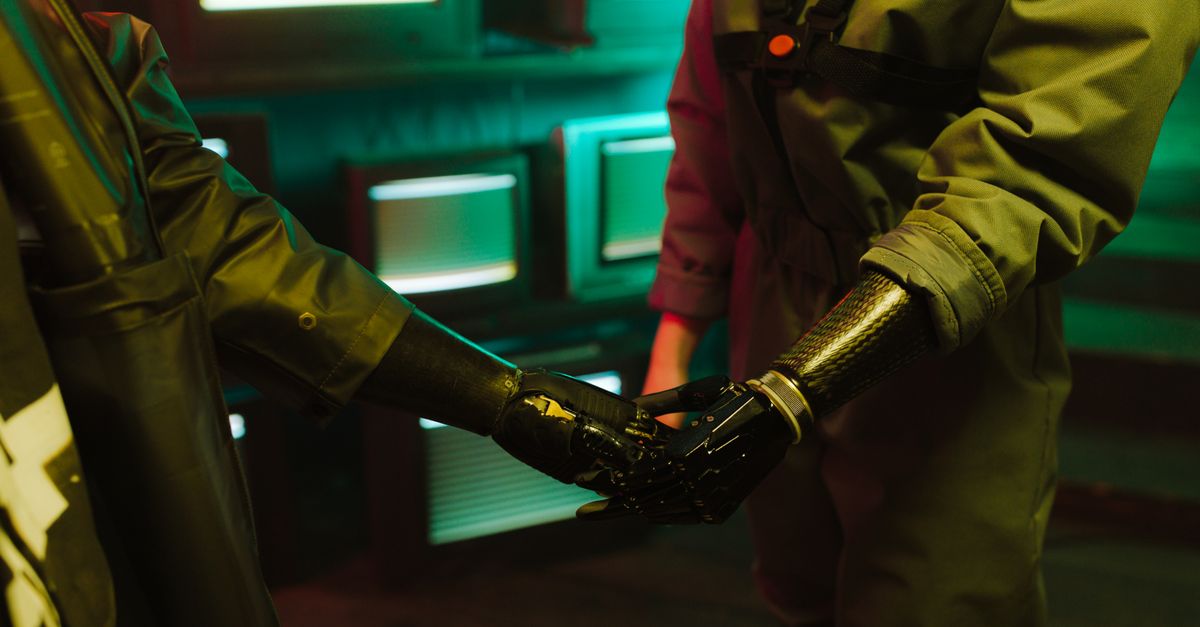
Phoenix’s defining characteristic is its manipulation stack. The robot is equipped with a multi-fingered hand capable of parallel, sphere, and precision pinching grips, with independent finger actuation and embedded tactile sensors. Force control is implemented through a combination of impedance control and real-time slip detection, allowing the system to adapt grip strength without crushing delicate components or losing hold during lateral forces.
Verified demonstrations show the platform performing tasks such as component insertion, cable routing, and palletized object reorientation. The control architecture uses a hierarchical policy structure where high-level task planning delegates to low-level motion primitives that account for joint limits, contact forces, and environmental feedback. This approach reduces the reliance on purely vision-based manipulation, which remains error-prone in industrial settings with variable lighting and reflective surfaces.
While rendered concept videos and keynote demonstrations often emphasize flawless execution, independent analysis of live-stage footage reveals typical early-stage limitations: occasional grip slippage during high-friction transitions, longer cycle times compared to dedicated collaborative arms, and the need for careful path planning to avoid self-collision. These are not design flaws but expected trade-offs in a general-purpose platform attempting to replicate human-like manipulation without specialized tooling.
Software Stack and Navigation
The Phoenix control stack runs on a real-time operating system with ROS 2 integration for perception and task scheduling. Localization and mapping are handled through a combination of LiDAR, stereo vision, and odometry fusion, enabling navigation in warehouse and factory environments. The navigation stack implements dynamic obstacle avoidance and path re-planning, though performance degrades in highly cluttered or unstructured spaces where semantic understanding is required.
Manipulation planning relies on a combination of motion primitives, inverse kinematics solvers, and reinforcement learning policies trained in simulation before deployment. The company has documented that simulation-to-real transfer remains an active engineering challenge, requiring domain randomization and physical fine-tuning to achieve reliable performance. Safety protocols include torque limiting, emergency stop circuits, and force threshold monitoring, aligning with ISO 13482 and emerging humanoid safety guidelines.
Software updates are distributed via secure OTA channels, and the platform supports custom task scripting through a Python-based API. This flexibility allows integrators to deploy Phoenix without rewriting core control logic, though it requires in-house robotics expertise to tune parameters for specific applications.
Deployment Status and Pilot Programs
As of the latest public updates, Phoenix is in the pilot deployment phase. The company has partnered with select manufacturing and logistics firms to test the robot in controlled environments, focusing on assembly line assistance, quality inspection, and material handling. These pilots are documented through company press releases and partner case studies, but independent telemetry data remains limited.
Shipping hardware has not reached commercial scale. The current units are built in low volumes, with lead times extending several months. Pilot deployments typically run for 3 to 6 months, during which the manufacturer collects performance metrics, failure modes, and maintenance requirements. This phase is critical for identifying hardware reliability issues, software edge cases, and integration bottlenecks before scaling production.
Grading the platform against the established hierarchy: verified hardware exists but is not yet mass-produced; pilot deployments are underway but limited in scope; and broader commercial announcements remain forward-looking. Investors and integrators should treat current capabilities as functional prototypes rather than turnkey solutions.
India Market Availability and Pricing Context
Sanctuary AI has not announced official distribution partnerships in India, and Phoenix is not currently available through local authorized channels. Importing the platform would require navigating DGFT regulations, BIS certification for electrical safety, and customs duties applicable to industrial robotics equipment. As of the latest trade data, humanoid robots are classified under HS code 8479, with applicable basic customs duty and IGST that significantly increase the landed cost.
Approximate landed cost estimates for a single Phoenix unit in India range between ₹28,00,000 and ₹35,00,000, depending on configuration, shipping method, and local service agreements. These figures are flagged as estimates based on comparable European humanoid platforms, freight costs, and current tariff structures. They do not include integration, training, or maintenance contracts, which typically add 15 to 25 percent to the total cost of ownership.
Indian manufacturers and logistics firms interested in Phoenix should anticipate a longer procurement timeline, potential need for local technical support, and reliance on direct import arrangements. The company has not published India-specific pricing, warranties, or service SLAs.
Competitive Positioning and Engineering Trade-offs
Phoenix competes in a crowded humanoid space but differentiates through its manipulation focus. Platforms like Tesla Optimus, Figure, and Apptronik prioritize mobility, scalability, or enterprise integration, while Phoenix emphasizes fine manipulation and compliance. This makes it suitable for precision tasks but less optimal for heavy payload or high-speed logistics.
The engineering trade-offs are explicit: reduced top speed, lower payload capacity, and higher control complexity in exchange for dexterity. This is a deliberate design choice, not a limitation. Integrators must align task requirements with the platform’s strengths, avoiding applications that demand rapid cycle times or heavy lifting.
As the humanoid market matures, platforms that survive will be those that demonstrate repeatable hardware reliability, measurable ROI in pilot deployments, and clear integration pathways. Phoenix has the architectural foundation to compete, but its commercial success will depend on scaling production, reducing maintenance costs, and proving consistent performance in real-world environments.
References
- Sanctuary AI Official Website & Product Documentation: https://sanctuary.ai
- Sanctuary AI Phoenix Announcement & Demo Video: https://sanctuary.ai/updates
- TechCrunch Coverage of Sanctuary AI’s Humanoid Platform: https://techcrunch.com
- IEEE Spectrum Robotics Analysis on Dexterous Manipulation: https://spectrum.ieee.org
- DGFT & Customs Duty Guidelines for Industrial Robotics (HS 8479): https://dgft.gov.in
- BIS Certification Requirements for Industrial Robots: https://bis.gov.in
✓ Key takeaways
- •Hands-on view of Sanctuary Phoenix: Engineering Dexterity in a General-Purpose Humanoid inside our Sanctuary Phoenix library.
- •Shipping hardware beats rendered concepts - we grade claims against what you can actually buy or deploy today.
- •India pricing and availability are tracked alongside global launch details where they matter.
References
- Sanctuary AI Official Website & Product Documentation
- Sanctuary AI Phoenix Announcement & Demo Video
- TechCrunch Coverage of Sanctuary AI’s Humanoid Platform
- IEEE Spectrum Robotics Analysis on Dexterous Manipulation
- DGFT & Customs Duty Guidelines for Industrial Robotics (HS 8479)
- BIS Certification Requirements for Industrial Robots
Related articles
More in Sanctuary Phoenix →