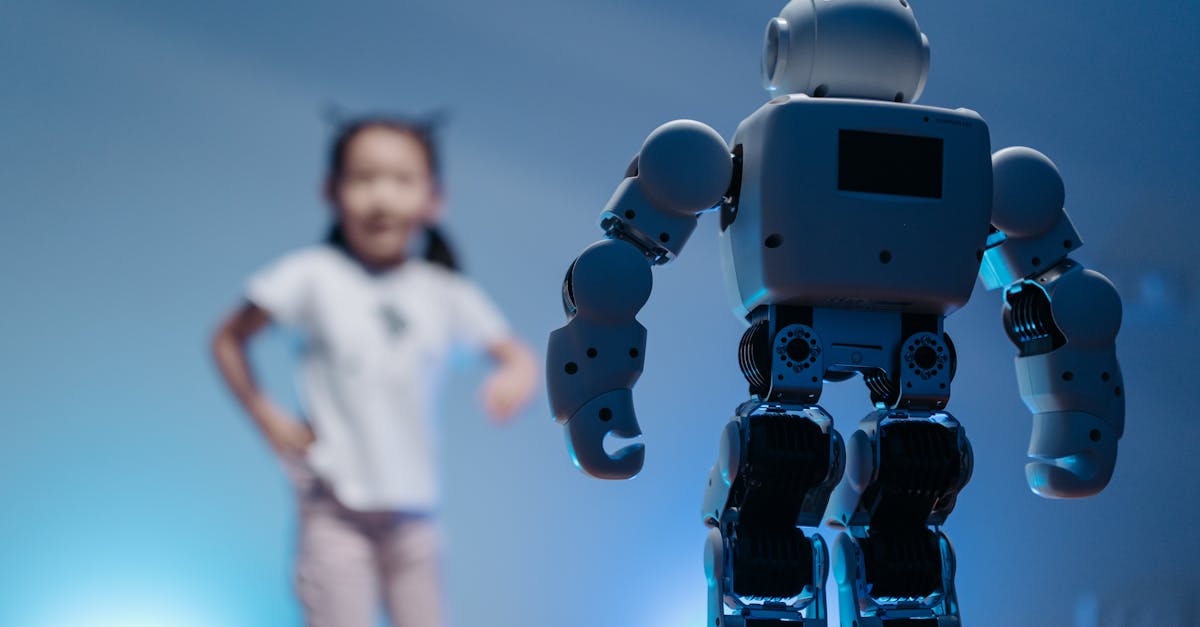
Unitree H1 & G1: Grounding the Humanoid Boom in Shipping Hardware and Actual Pricing

Introduction: From Drones to Legs
Unitree Robotics, long recognized for its quadruped robotic dogs and aerial drones, has pivoted aggressively into the humanoid sector. This shift marks a transition from recreational robotics to industrial and research-grade machines. Unlike many competitors who rely on concept renders or theoretical whitepapers, Unitree has prioritized physical prototypes. The H1 and G1 models represent the first tier of high-performance electric humanoids that are moving from prototype to pilot deployment. This article evaluates these systems based on available shipping hardware, verified specifications, and realistic cost structures for the Indian market.
The Unitree H1: High-Performance Grounding
The H1 stands as a benchmark in the current generation of all-electric humanoids. Standing at approximately 1.8 meters tall and weighing around 50 kilograms, the H1 is designed for dynamic motion rather than static display. The system utilizes 40 degrees of freedom (DOF) distributed across the body, including actuated arms and a full lower-body kinematic chain. Unlike hydraulic systems used in earlier generations, the H1 relies on high-torque density electric motors, reducing mechanical complexity and maintenance overhead.
Performance metrics released by the manufacturer indicate the H1 can achieve running speeds exceeding 3 meters per second. While this is faster than human sprinting, it requires significant energy reserves. The system integrates a battery pack designed for approximately two hours of operation under dynamic conditions. This runtime is a critical constraint for logistics applications where continuous operation is required without frequent recharging. The battery management system is integrated into the torso, balancing the center of gravity to prevent toppling during high-velocity maneuvers.
On the manipulation front, the H1 features compliant joints that allow for force control. This is essential for physical interaction with the environment. However, the grippers are not dexterous enough for delicate assembly tasks. They are better suited for general handling, such as carrying tools or moving objects on a factory floor. The system is open to third-party integration, allowing researchers to attach custom end-effectors. This openness positions the H1 as a research platform more than a standalone product.
H1 Specifications Breakdown
- Height: 1.8 meters (71 inches)
- Weight: 50 kg (110 lbs)
- DOF: 40 degrees of freedom
- Max Speed: >3 m/s (running)
- Battery Life: ~2 hours dynamic operation
The Unitree G1: The Budget Disruptor
Unitree has simultaneously introduced the G1, a significantly more affordable alternative. While the H1 targets high-end research and development labs, the G1 aims to lower the barrier to entry for smaller enterprises and individual developers. The G1 is designed to be a cost-effective solution for education, prototyping, and light-duty automation. It sacrifices the high-speed running capabilities of the H1 for a more stable, stationary posture.
The G1 costs a fraction of the H1, with pricing starting around $10,000 to $15,000 depending on configuration. This pricing strategy puts it in direct competition with lower-tier humanoid offerings from other manufacturers. However, the trade-off is in actuation density and payload capacity. The G1 is lighter, with a reduced footprint, making it suitable for indoor environments with tighter constraints. The control software is streamlined to reduce latency, though the processing power is lower than the H1's industrial-grade compute stack.
For the Indian market, the G1's lower price point makes it a viable candidate for university research programs. It allows institutions to deploy units without the capital expenditure required for the H1. The G1 supports ROS 2 (Robot Operating System), facilitating integration with existing robotic stacks. This compatibility is a key driver for adoption in academic settings. However, the lack of high-torque actuation limits its ability to perform heavy payload tasks.
G1 Technical Constraints
While the G1 is affordable, users must understand its limitations. The battery capacity is smaller, extending to roughly 1.5 hours of operation. The actuation system prioritizes energy efficiency over peak torque. This makes the G1 unsuitable for outdoor terrain that requires high ground clearance or high-speed traversal. It is best deployed on flat, indoor surfaces. The software update cycle is managed via the manufacturer's cloud server, requiring stable internet connectivity for parameter tuning.
India Availability and Landed Cost Analysis
For Indian stakeholders, the direct import of robotics hardware involves navigating complex customs regulations. The Base Customs Duty (BCD) for robotics is often subject to change, but currently falls between 10% and 20% depending on the classification. Additionally, the Integrated Goods and Services Tax (IGST) of 18% applies to the landed value. Social Welfare Surcharge (SWS) of 10% on the customs duty is also applicable. These factors significantly increase the final cost compared to the US Manufacturer's Suggested Retail Price (MSRP).
Estimates for the Unitree H1 landed in India place the cost between ₹55 to ₹65 Lakhs ($65,000 to $78,000 USD equivalent). This includes shipping, handling, and applicable taxes. For the G1, the landed cost is estimated between ₹8 to ₹10 Lakhs ($9,500 to $12,000 USD equivalent). These figures are subject to fluctuation based on global shipping rates and duty policies. Buyers should engage a customs broker to verify current GST rates for robotic hardware.
There is no official Unitree India office for direct sales at this time. Most units enter through third-party distributors or direct import by research institutes. This lack of a local service center poses a risk for maintenance. If a motor or sensor fails, the unit must be shipped back to the manufacturer or serviced by specialized third parties. This downtime can be costly for industrial deployments. Companies must factor in a spare parts budget to mitigate this risk.
Performance Reality Check: Shipping Hardware vs. Hype
Unitree has released videos of the H1 running, jumping, and recovering from pushes. These videos are critical evidence of shipping hardware. Unlike companies that show only CGI or static poses, Unitree has demonstrated dynamic locomotion. The H1 has been seen performing backflips and running on uneven terrain. This performance is not merely for show; it validates the control algorithms in the actuation system. However, these demos are often performed on controlled surfaces. Real-world deployment in unstructured environments remains a challenge.
The G1 has also been demonstrated in controlled environments. It showcases the ability to walk and recognize objects. However, the manipulation speed is slower compared to the H1. The focus is on stability rather than speed. This is a strategic choice for the G1, ensuring safety in shared spaces. For Indian manufacturing, this stability is more valuable than speed. A robot that stops when encountering an obstacle is safer than one that tries to recover from a complex fall.
Market Impact and Competitive Landscape
The entry of Unitree into the humanoid market with the H1 and G1 creates pressure on established players. Tesla's Optimus and Figure AI are facing a new metric: price-to-performance. Unitree's ability to ship hardware at these price points forces competitors to justify higher costs. For Tesla, the challenge is scaling production to match Unitree's volume. For Figure, the focus remains on high-end manipulation. Unitree is carving a niche in high-speed locomotion at a lower cost.
This pricing war benefits the Indian ecosystem. Lower costs mean more units can be deployed for research and development. Universities can afford G1 units for teaching robotics. Startups can prototype with H1 units to test logistics algorithms. However, the hardware gap remains. While the H1 is a shipping product, it does not yet offer full autonomy. It requires operator supervision. The "humanoid" label is accurate, but the "intelligence" label is still in development.
Conclusion: The Path Forward
Unitree Robotics has successfully moved the conversation from concept to hardware. The H1 and G1 are not just prototypes; they are production units that can be purchased today. They offer a transparent view of the current state of electric humanoid robotics. For the Indian market, they represent an opportunity to access advanced hardware at a fraction of the cost of Western competitors. However, buyers must be realistic about maintenance, battery life, and the need for operator supervision.
The future of these models depends on software updates and battery density improvements. If Unitree can extend battery life to four hours and improve the manipulation gripper, the H1 could become a viable industrial tool. Until then, the G1 remains the primary candidate for research and education. The robotics industry is shifting towards affordability, and Unitree is leading this charge with tangible, shippable products.
References
- Unitree Robotics Official Website: www.unitree.com
- Unitree H1 Product Page: Unitree H1 Specifications
- Unitree G1 Product Page: Unitree G1 Specifications
- Indian Customs Tariff: Central Board of Indirect Taxes and Customs
- TechCrunch Report on Humanoid Robotics: Unitree H1 and G1 Announcements
✓ Key takeaways
- •Hands-on view of Unitree H1 & G1: Grounding the Humanoid Boom in Shipping Hardware and Actual Pricing inside our Unitree H1 & G1 library.
- •Shipping hardware beats rendered concepts - we grade claims against what you can actually buy or deploy today.
- •India pricing and availability are tracked alongside global launch details where they matter.
References
Related articles
More in Unitree H1 & G1 →